Portmeirion divides visitors more reliably than almost anywhere else in North Wales.
Some spend four hours there and leave wishing they had more time. Others spend £20 on the entry fee, walk around the central piazza and feel distinctly short-changed in under 90 minutes. The difference between those two experiences is almost never the place itself. It is the preparation.
This is the guide that puts you in the first group.
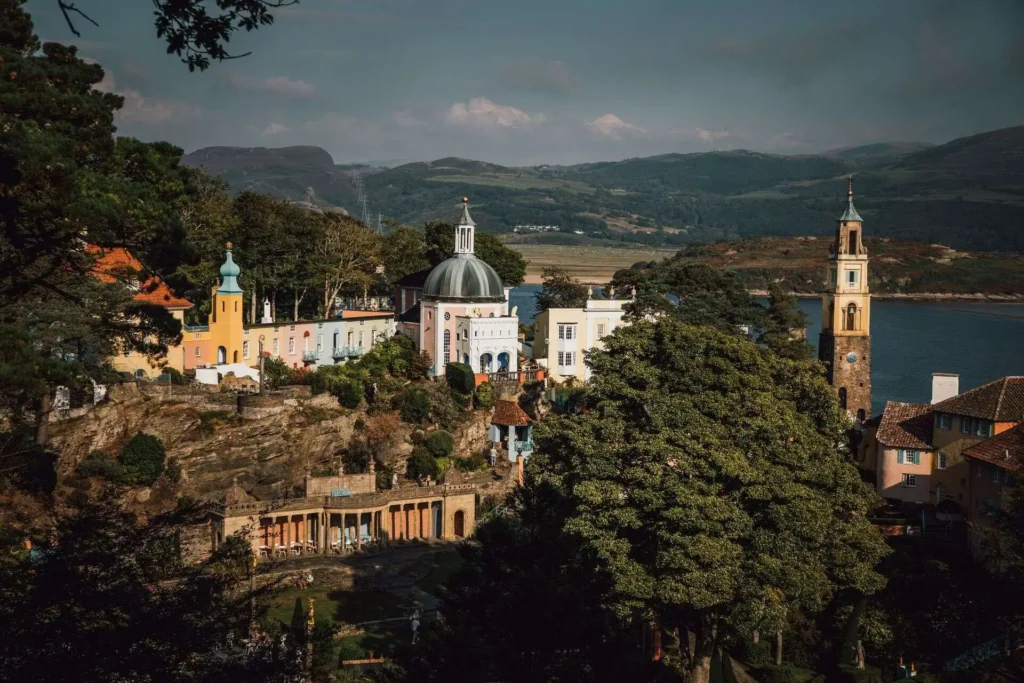
Who Built This, and Why?
Portmeirion calls itself a village, and in one sense it is. But no one lives there, no children go to school there, no letters arrive, and no buses stop. Beyond the label, it is the 50-year project of a single Welsh architect who believed development could enhance a beautiful site rather than destroy it – and who spent most of his adult life building the proof.
Sir Clough Williams-Ellis (1883-1978) acquired the derelict Aber Iâ estate on a wooded peninsula above the Dwyryd Estuary in 1925. He described it as “a neglected wilderness”, renamed it Portmeirion (“Port” for its coastal setting, “Meirion” for the historic county of Merioneth), and began building.
The village emerged in two distinct phases. Between 1925 and 1939, the main buildings appeared in an Arts and Crafts style. After the war, from 1954 to 1976, classical and Palladian influences filled the remaining spaces. Some structures were built entirely from scratch; others were rescued from demolition sites across Britain and painstakingly rebuilt here on the Welsh hillside. Clough called Portmeirion “a home for fallen buildings”. It remains one of the most accurate descriptions of the place.
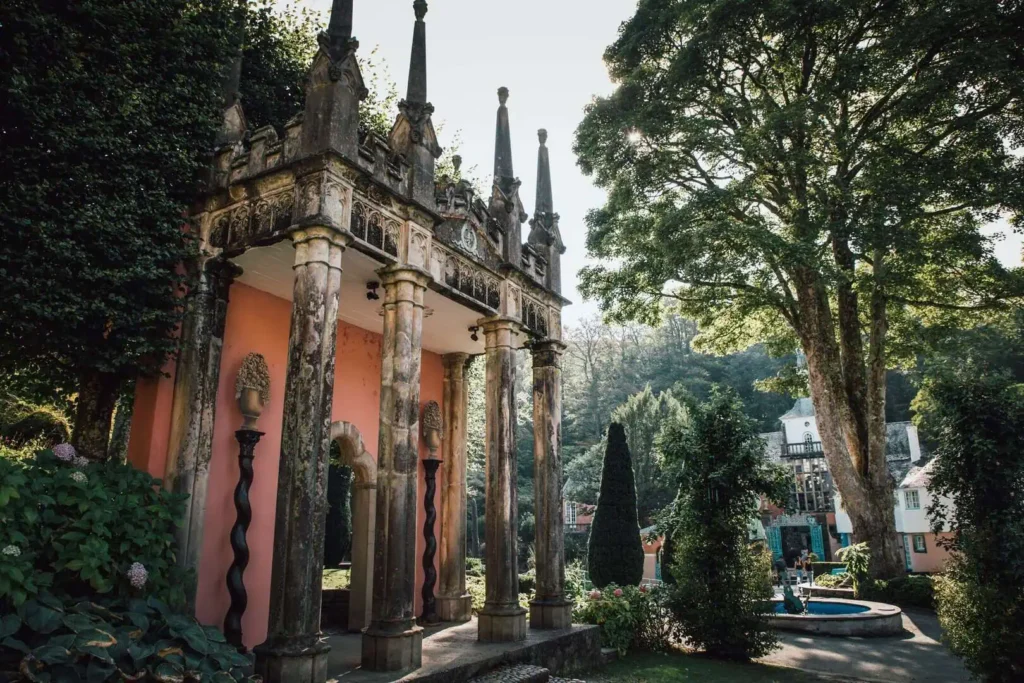
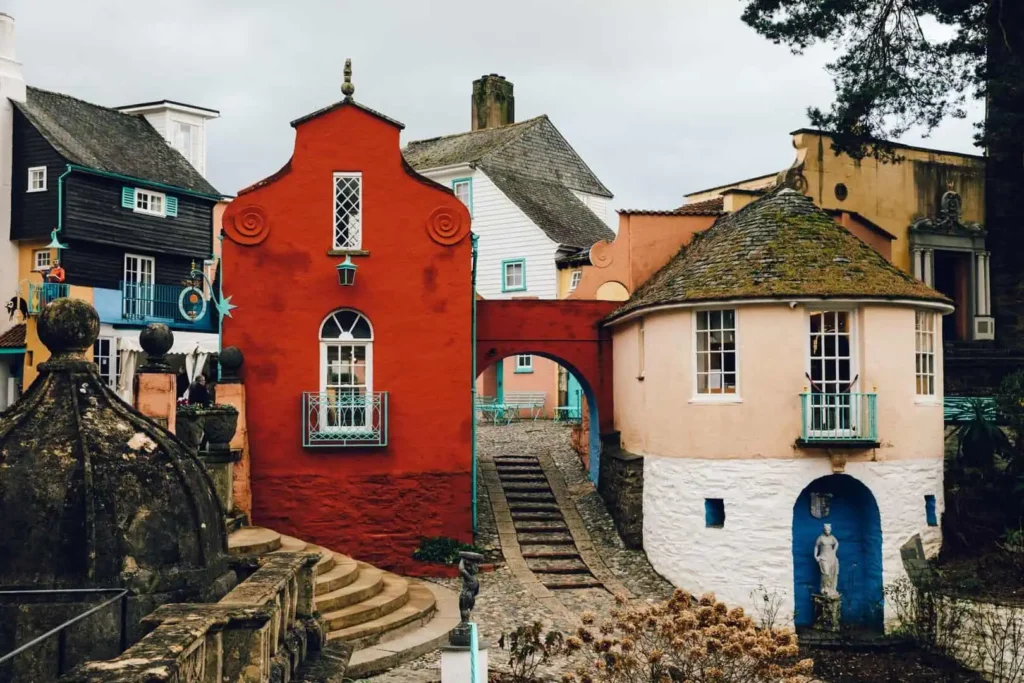
Conservation was central to Clough’s vision. He helped found the Campaign to Protect Rural England and later its Welsh equivalent. In 1951, he personally marked out the boundaries of what would become Eryri National Park and presented the maps to King George VI and Queen Elizabeth The Queen Mother. His conviction that beautiful places needed protecting from careless development shaped his entire career. Portmeirion became the practical expression of that belief: a wooded peninsula transformed through deliberate, careful design into something that complements the landscape rather than competing with it.
The final building he completed was the Tollgate, the entrance arch visitors still pass through today. He was 93 years old. Clough Williams-Ellis died in 1978, aged 94, having never entirely stopped working on the project. A year before his death, he wrote that Portmeirion, “having celebrated its fiftieth birthday in 1976, has in a curious and most gratifying way, taken over from me to stand in my place as I myself recede into the friendly shade of the middle nineties.”
Today, Portmeirion is owned by the Ymddiriedolaeth Clough Williams-Ellis Foundation, a registered charity. It cannot be bought or sold. Every building is listed and the entire site is protected as a Conservation Area.
The cultural pull Portmeirion developed during Clough’s lifetime was considerable. Noël Coward wrote Blithe Spirit at Hotel Portmeirion in 1941. Frank Lloyd Wright visited in 1956, his only trip to Wales, and was deeply affected by the place.
A decade later, in 1966 and 1967, the cult television series The Prisoner was filmed entirely at Portmeirion. Creator and star Patrick McGoohan used the village as “The Village”, the surreal and inescapable setting for a former intelligence agent imprisoned after resigning from a secret government service.
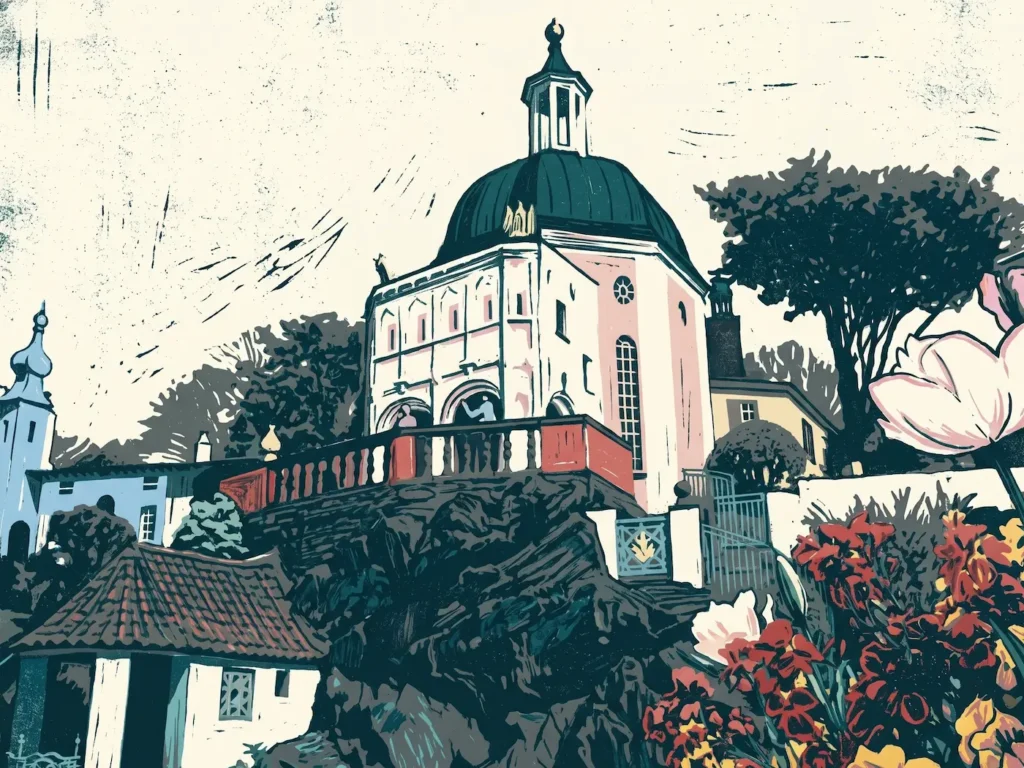
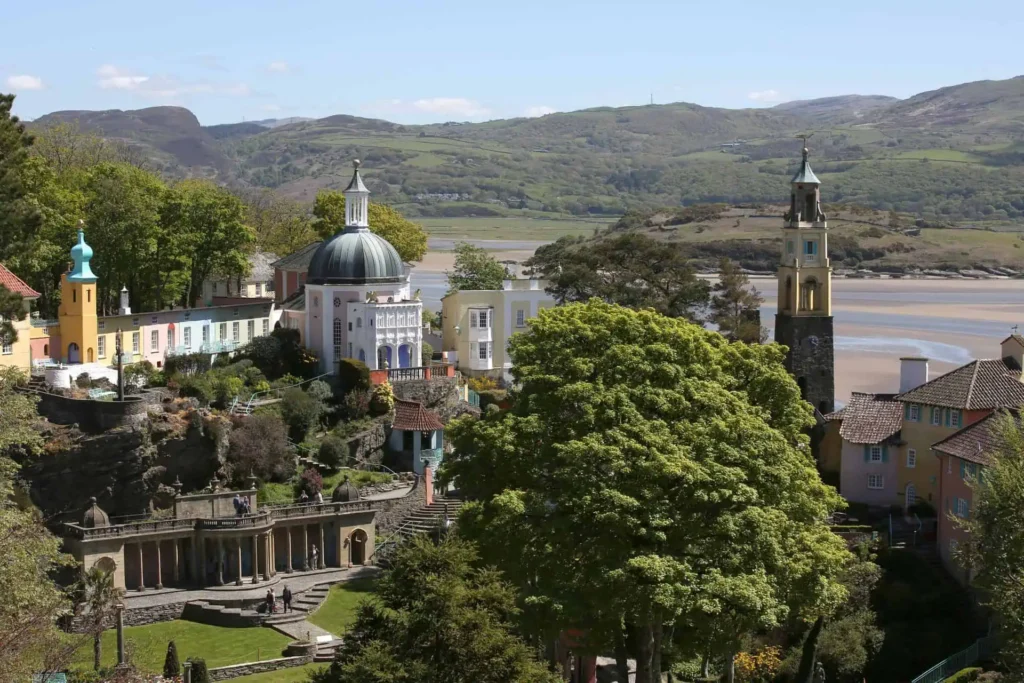
The central piazza appears throughout the series: the Green Dome became Number Two’s headquarters, while the café terraces and colonnades featured repeatedly across the episodes. An annual Prisoner Convention still brings fans back to Portmeirion each year.
If you know the series, the setting lends the entire visit an added layer of resonance. If you do not, the existence of a dedicated Prisoner Shop serves as a useful reminder that the people drawn here were rarely impressed by ordinary places.
2026 Centenary
This year marks Portmeirion’s centenary. Hotel Portmeirion first opened on Good Friday, 2 April 1926 – one hundred years ago this spring. Special exhibitions and events are planned throughout the year.
Visit Portmeirion for the latest programme and event details.
Two cottages worth knowing about.
Fig Tree and Laurel sit high above the Conwy Valley with private hot tubs, a shared heated indoor pool and views stretching to Eryri. Dog-friendly and available year-round.
Check availabilityWhat You’ll Actually Do There
The Village (allow 1-1.5 hours)
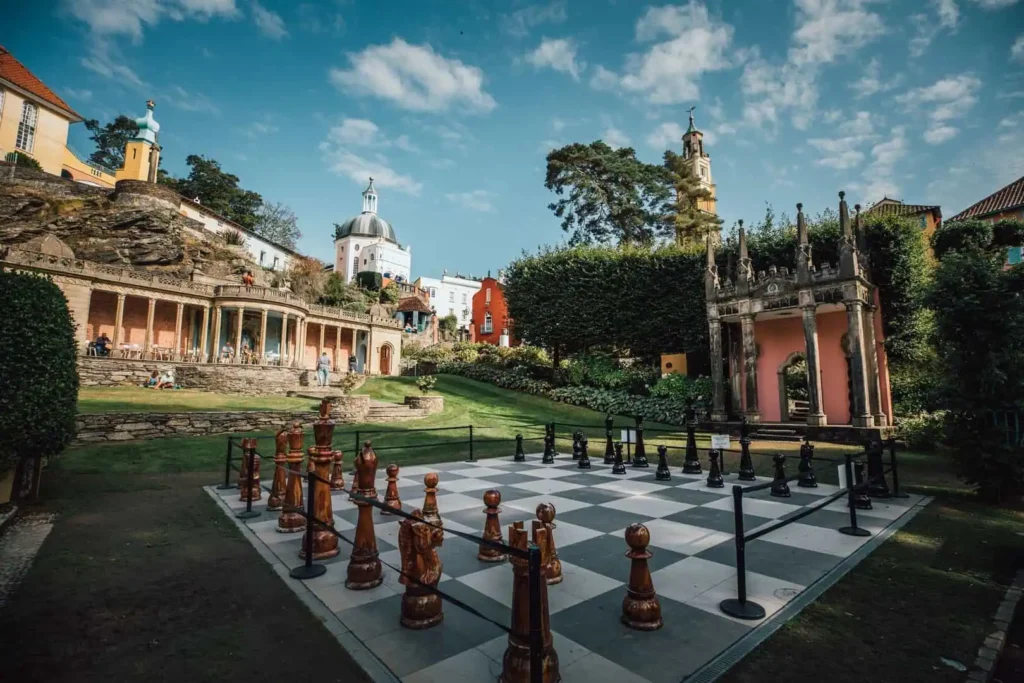
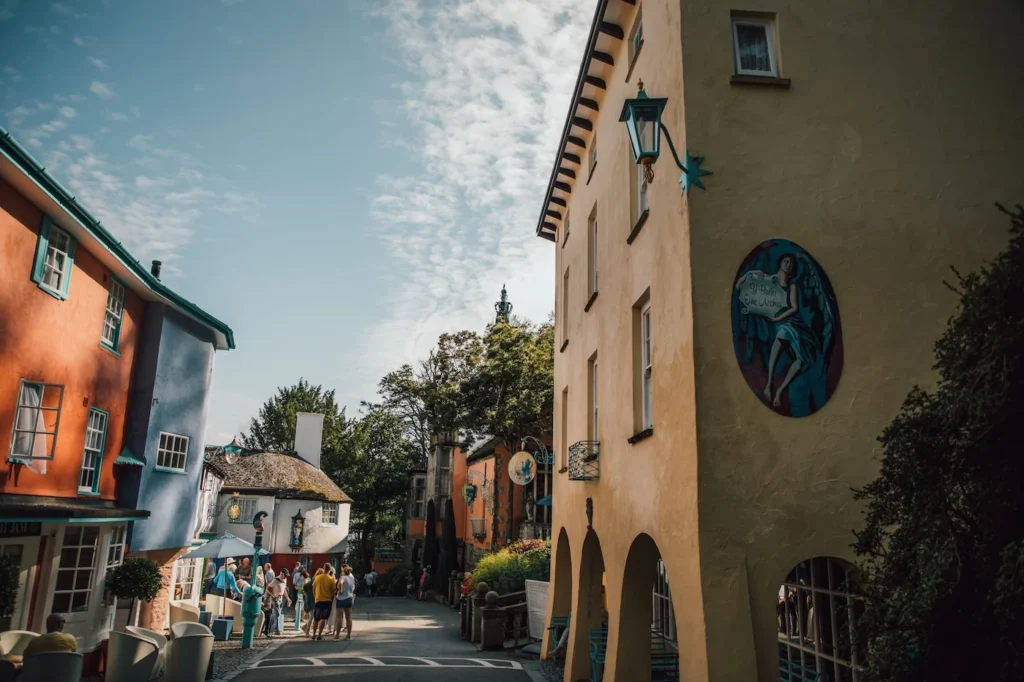
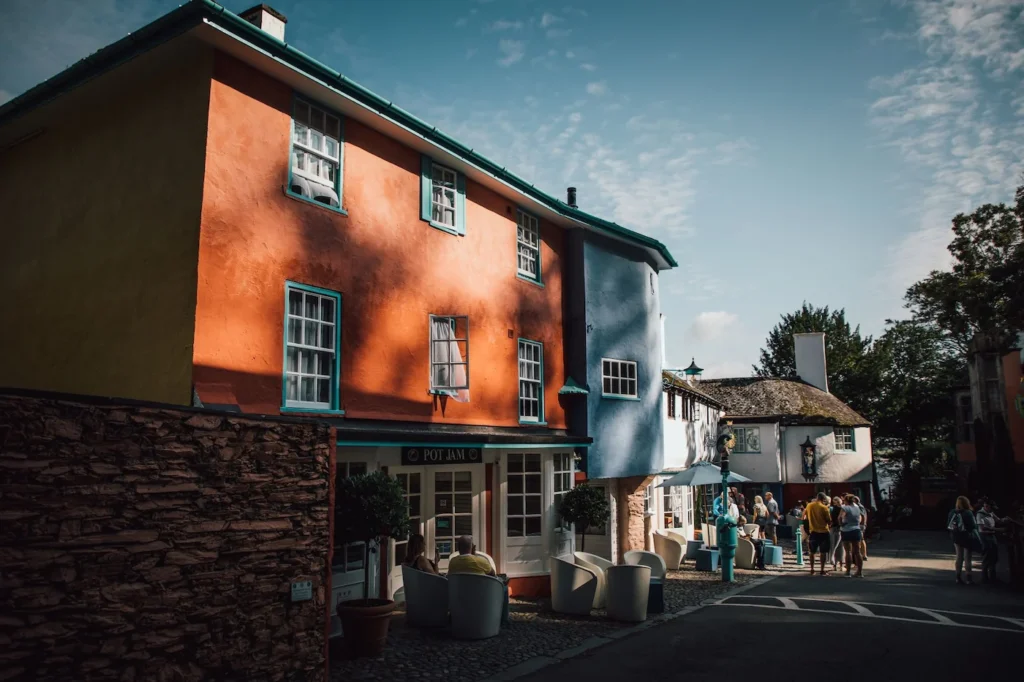
Most visitors spend their time here, and it is entirely worth it. Battery Square is the centrepiece: a close-packed piazza of pastel-coloured buildings, a campanile, domed rooflines and arcaded walkways. It looks like no other place in Britain because it was not designed to. The effect is deliberate and unexpected in equal measure.
Shops occupy several of the ground floors, including The Prisoner Shop, the Rob Piercy Gallery and Siop Fawr Portmeirion. Four cafes within the village handle coffee and light food: Caffi Glas, Caffi No. 6, Caffi’r Angel and Caffi’r Ddraig. Audio displays and small exhibitions explain the architectural stories behind what you are seeing.
The free guided tours that run from the entrance are strongly recommended for first-timers. They reveal what you would simply walk past without knowing: which buildings came from where, what the symbolism in the Gloriette’s Grecian structure actually means, why certain elements sit where they do. The tour transforms the village from a collection of unusual buildings into a coherent argument.
One thing to know before you arrive: the central pool in the piazza is decorative only. It is not open for swimming. If you are expecting a dip, that disappointment is entirely avoidable by knowing this now.
Y Gwyllt Woodland (allow 40-60 minutes minimum)
This is what most visitors miss, and it is included in your entry fee.
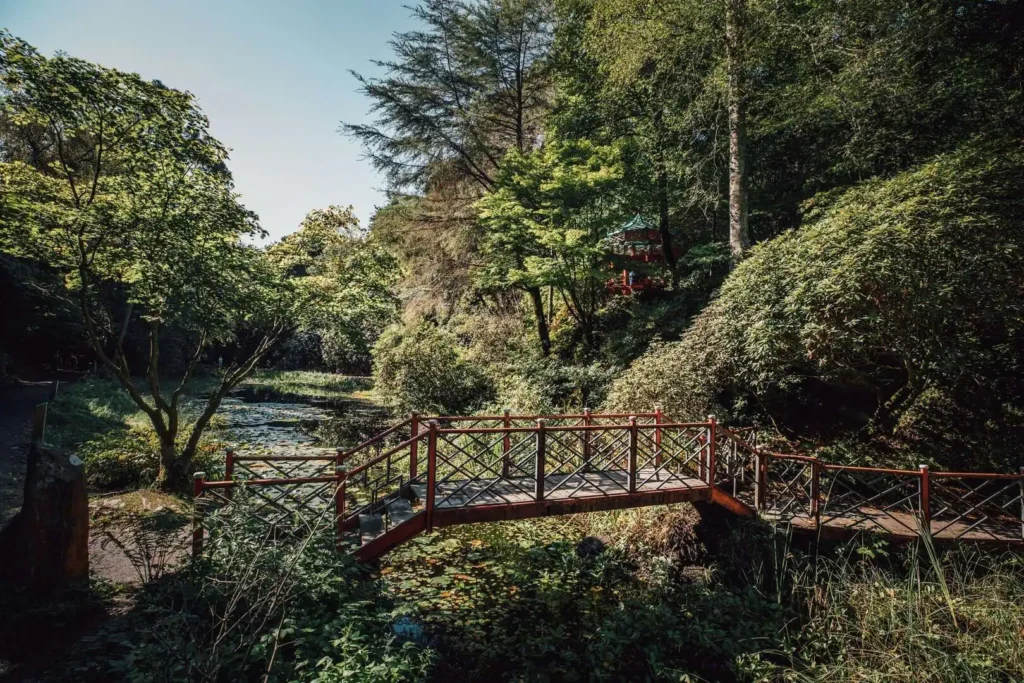
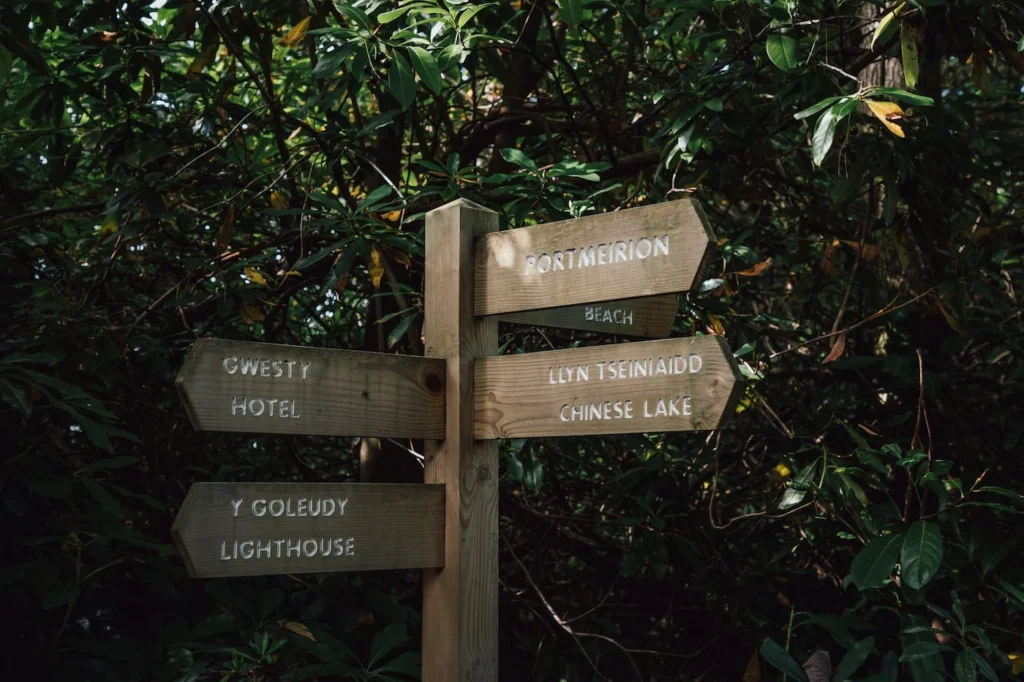
From the Triumphal Arch in Salutation Square, two paths lead into 70 acres of sub-tropical woodland garden, with 19-20 miles of waymarked trails. Key features include the Dog Cemetery, the Ghost Garden, Tangle Wood, a Chinese Lake and a Japanese Garden with a gilded pagoda on a lily-covered lake. The woodland was developed by horticulturalist Caton Haigh, a specialist in Himalayan trees and exotic plants. Some specimens here are among the largest and rarest in Wales.
Timing matters if you can be flexible. In late May, rhododendrons and camellias are at their peak – this is arguably the most visually striking version of the entire site. A free land train runs through the woodland as part of your admission. It is useful for anyone with mobility concerns, but most reviewers note that walking gives you far more control over where you stop and what you see.
The Coastal Path (allow 30-40 minutes)
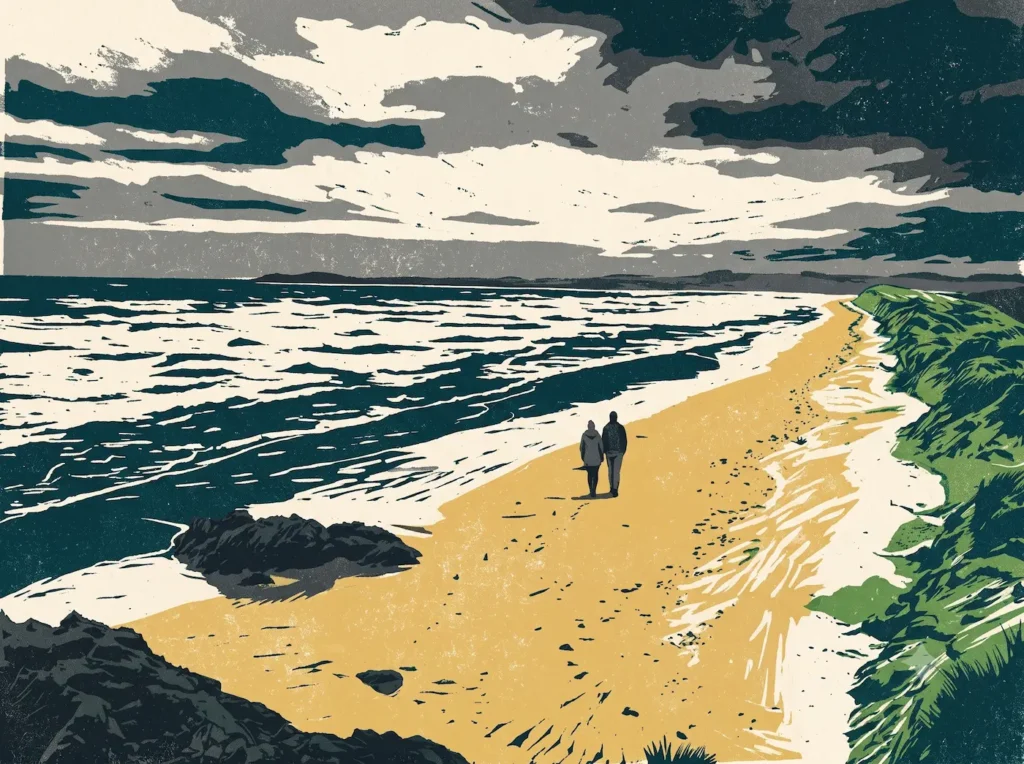
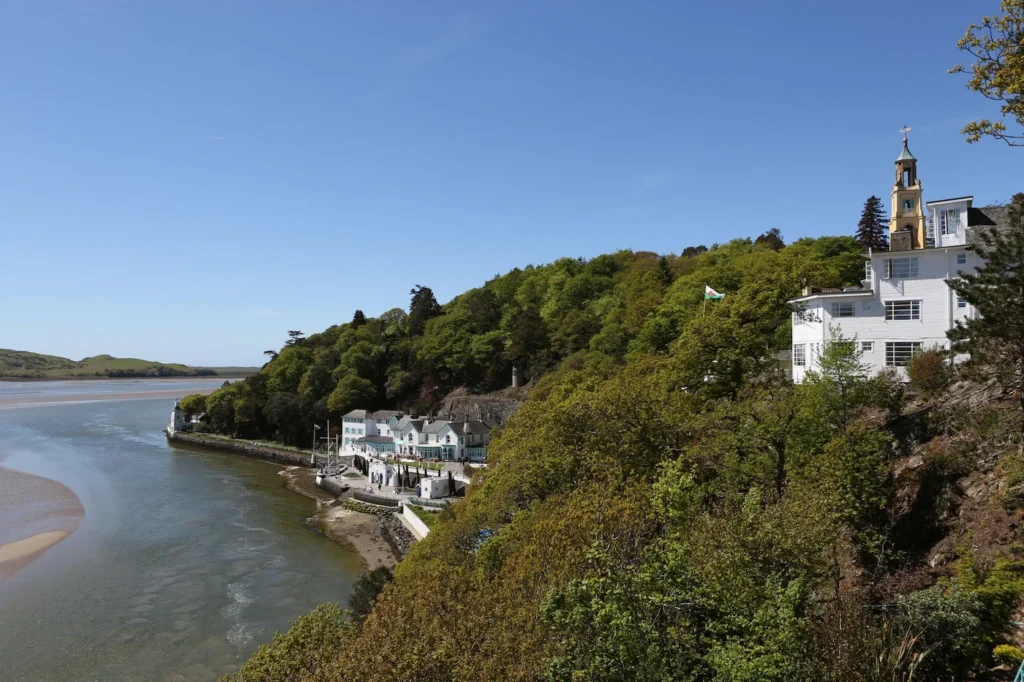
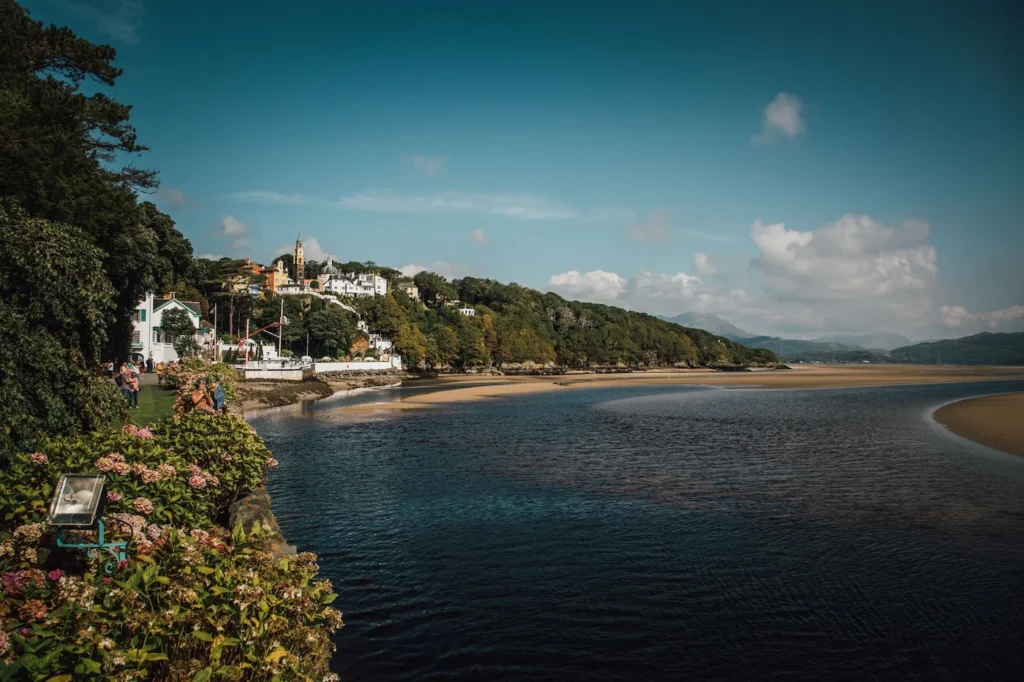
From the southern end of the village, past the Hotel Portmeirion, a path follows the shoreline around to a lighthouse viewpoint and back. The Dwyryd Estuary opens out to the west, with white sandy coves below and, on clear days, Harlech’s cliffs visible in the distance. It is the quietest part of the site and the least visited, which recommends it.
The Honest Verdict: Should You Go?
At £20 per adult in 2026, Portmeirion is not cheap. Here is a straightforward assessment.
Go if:
- You appreciate considered architecture and are willing to spend time understanding what you are looking at
- You want something genuinely unlike anything else in Britain
- You can commit 3-4 hours and intend to use the woodland and coastal walk
- You are not travelling with a dog (see the Practical Information section below)
Go off-season (October-March) if:
- You want the woodland to yourself
- You are a photographer and need quiet, atmospheric conditions
- You want to avoid peak-season crowds – August weekends are genuinely significant, with queues for cafes and coaches in the car park
Think carefully if:
- You have only one full day in North Wales and have not been to Eryri yet; prioritise the mountains first and return to Portmeirion on a future trip
- You are travelling with young children who need constant pace and activity; the village is small and the woodland requires patient exploration
- You are primarily a dog-walking traveller; the no-pets policy is absolute and fully enforced
The most important thing to bring with you is Clough’s story. Portmeirion is not a collection of decorative buildings transplanted from the Italian Riviera for the sake of novelty. It is the life’s work of a man who believed, with complete seriousness, that beauty had practical value in the world – and who built his proof of that argument on a Welsh peninsula, over five decades, in borrowed architectural salvage, finishing the gate at 93. Knowing that when you walk through the Tollgate changes what you see when you look around the piazza.
Practical Information
Address and parking:
Portmeirion, Minffordd, Penrhyndeudraeth, Gwynedd, LL48 6ER. Parking is free and included in your admission. Follow signs from the A487 for Portmeirion, then follow “Portmeirion main car park” signs once on the driveway. From the main car park, walk through the archway to the toll booth. A dedicated disabled car park is available closer to the entrance – bring valid proof of disability for the discounted entry rate. Motorhomes should use the top tier of the main car park. Four EV Type 2 chargers are available in the main car park, operated via the Monta app (download before leaving home and start the charge before plugging in).
Opening times (2026):
- Main season (23 March – 1 November 2026): 9.30am-6.30pm, last entry 5pm.
- Out of season: 9.30am-5.30pm, last entry 4.30pm.
- Open seven days a week, every day except Christmas Day and Boxing Day. Note: some areas will be affected between 23 November and 11 December 2026 during Christmas Fair setup. The Christmas Fair runs 4-6 December 2026, with tickets on the day only.
Admission (2026 main season):
| Ticket | Price |
|---|---|
| Adult | £20.00 |
| Concession (60+ / student with valid ID) | £18.00 |
| Child (5–15 years) | £14.00 |
| Under 5s | Free |
| Family: 1 adult + 2 children | £39.00 |
| Family: 2 adults + 1 child | £47.00 |
| Family: 2 adults + 2 children | £56.00 |
| Family: 2 adults + 3 children | £65.00 |
| Disabled adult (Blue Badge / PIP / DLA) | £10.00 |
| Disabled child | £7.00 |
| Accompanying carer (adult) | £15.50 |
| Accompanying carer (child) | £11.00 |
Out-of-season prices are lower. Check portmeirion.wales for current rates before travelling between November and March.
Free entry – two legitimate routes:
Book a 3-course lunch at Castell Deudraeth Brasserie and you receive free village entry for the afternoon (after lunch, not before). Alternatively, pre-book Sunday lunch or Afternoon Tea at Hotel Portmeirion and entry is complimentary from 11.30am or noon respectively. Pre-booking is essential for both. If you were planning to eat on-site anyway, both options represent genuine value.
Booking tickets:
Tickets are available on arrival at the toll booths or online in advance. During peak season, online booking is strongly recommended. Timed arrival slots are 9.30-11.30am, 11.30am-2pm and 2-5pm. The 9.30am slot offers the best chance of quieter conditions before coach tours arrive. Bookings can be amended once, with 24 hours’ notice, within a 3-month window. No refunds on unused tickets.
Dogs:
No dogs are permitted at Portmeirion. This policy is absolute and strictly enforced – no exceptions for small dogs or dogs carried in bags. Registered guide dogs and assistance animals are the only exception, and they must be clearly identifiable to staff. If you are visiting with a dog, Portmeirion is a trip you will need to plan without them.
If you are based here with your dog and want to visit Portmeirion, plan it as a trip for the humans in your group while someone stays back with the dog, or save it for a day when you have a willing dog-sitter. Our dog-friendly cottages are a comfortable base for exactly that kind of split-day planning.
Accessibility:
The main access road is tarmac but sloped. Around the village you will encounter cobbles, steps, grass and sandy areas. Visitors can bring their own mobility aid. A full access guide is available at portmeirion.wales. Cars are not permitted inside the village.
How long to allow:
Minimum 2 hours for the village only. Three to four hours to include Y Gwyllt and the coastal path properly. A half-day is the realistic sweet spot; a full day is possible if you add lunch at Castell Deudraeth or the Hotel.
Combining Your Visit
Portmeirion sits near the southern edge of Eryri, which makes it an anchor for a full day on that side of North Wales.
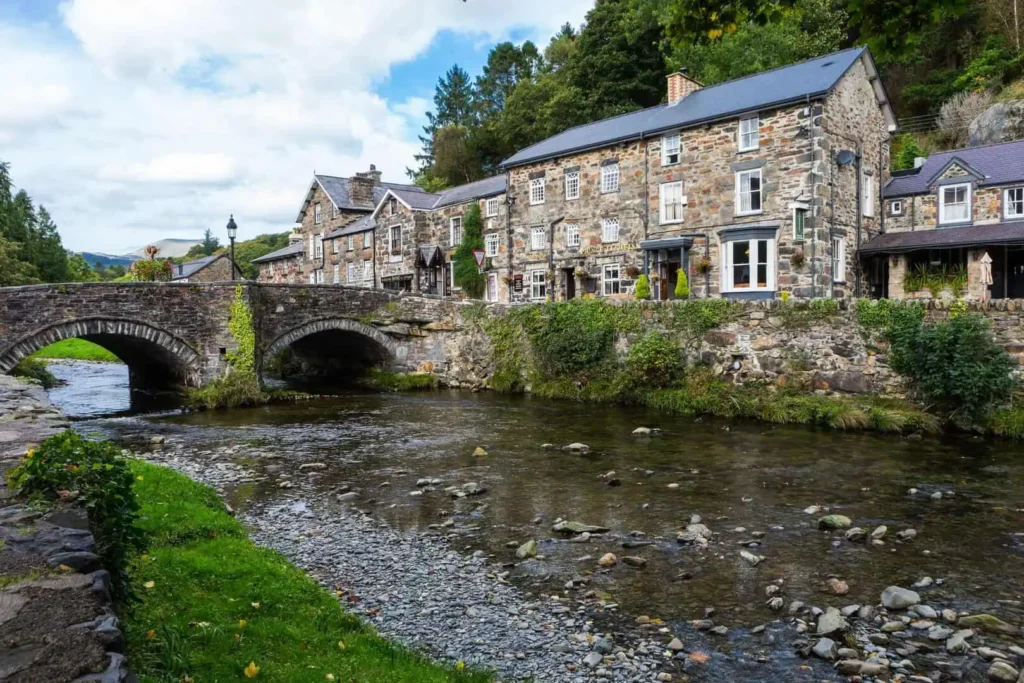
Beddgelert (15 miles north, around 25 minutes)
One of the most attractive villages in Eryri and a natural pairing for a Portmeirion morning. The Gelert’s Grave walk, the Glaslyn river path and Caffi Gwynant for a late lunch make it a straightforward, unhurried afternoon.

Ffestiniog Railway / Welsh Highland Railway (Minffordd station, around 1 mile)
Minffordd station is a short drive from Portmeirion and serves both narrow-gauge railways. The Welsh Highland Railway runs north through Beddgelert to Caernarfon – 25 miles of mountain scenery. The Ffestiniog Railway heads east to Blaenau Ffestiniog through equally dramatic terrain. A morning at Portmeirion followed by an afternoon steam train is a complete day’s itinerary, particularly for families and rail enthusiasts.
Porthmadog (3 miles, around 10 minutes)
A useful fallback for lunch or supplies if you want something away from the on-site prices. A small harbour town with independent cafes, shops and a maritime museum.
Harlech Castle (15 miles south-east, around 25 minutes)
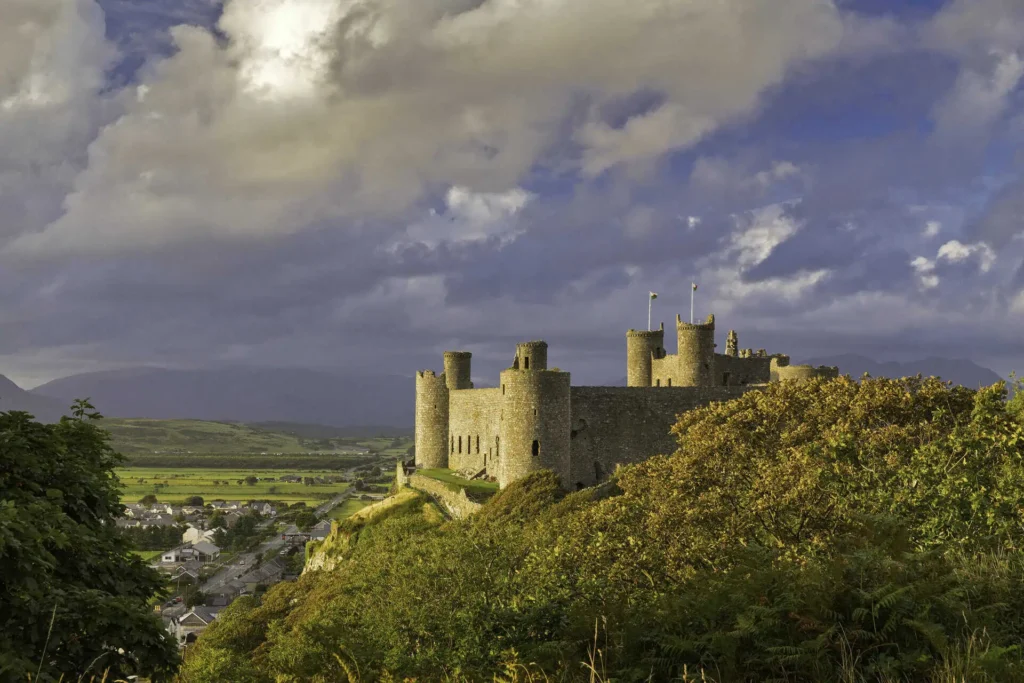
Harlech is an Edward I clifftop fortress with estuary views that look out over the same stretch of coast you can see from Portmeirion’s coastal path. The two sites are less than half an hour apart and make a natural full day on this side of North Wales.
From Our Cottages
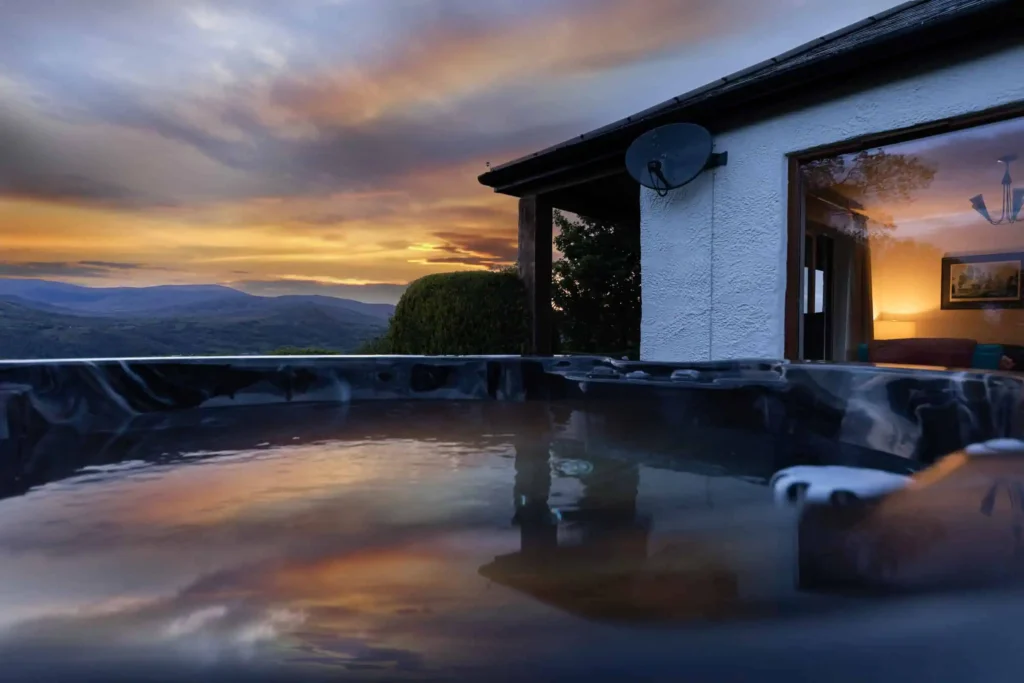
Portmeirion is approximately 1 hour 10 minutes from our cottages in the Conwy Valley – around 55 miles via the A470 and A487. Factor in the recommended 3-4 hours on site and you are looking at a full day. After that amount of walking (Y Gwyllt alone offers close to 20 miles of optional paths), most guests find a private hot tub a more-than-welcome end to the journey home.

FAQs
How long do you need at Portmeirion?
Plan for at least 3 hours. The village itself takes around 1-1.5 hours, but your entry fee also covers Y Gwyllt, 70 acres of woodland with 19-20 miles of waymarked paths, hidden gardens and estuary viewpoints. Many visitors who leave feeling short-changed never found it. Add the coastal walk and a coffee stop and 3-4 hours disappears quickly.
Are dogs allowed at Portmeirion?
No. Portmeirion operates a strict no-pets policy and it is fully enforced. Guide dogs and registered assistance animals are the only exception. There are no concessions for small dogs or dogs carried in bags. If you are travelling with a dog, this is a day trip you will need to plan without them.
Is Portmeirion worth the entrance fee?
It depends entirely on what you do with your time. At £20 per adult (2026), it is not cheap, and if you walk the piazza, browse the shops and leave, you may well feel short-changed. That entry fee covers the woodland walk, the coastal path, the free guided tour and the free land train. Visitors who budget 3-4 hours and use all of it consistently rate it highly. Those who treat it as a 90-minute browse rarely do.
Can you visit Portmeirion for free?
Two legitimate options exist. Book a 3-course lunch at Castell Deudraeth Brasserie and you receive free afternoon entry (after lunch). Pre-book Sunday lunch or Afternoon Tea at Hotel Portmeirion and entry is complimentary from 11.30am or noon respectively. Both represent good value if you were planning to eat on-site regardless.
What is Portmeirion famous for?
Three things: its Italianate architecture on a Welsh peninsula, its role as the filming location for the cult 1960s TV series The Prisoner and as the 50-year life’s work of Welsh architect Sir Clough Williams-Ellis, who built it almost entirely alone between 1925 and 1975. It also gave its name to the Portmeirion pottery brand, though the pottery is no longer made on-site.
When is the best time to visit Portmeirion?
Late May is when the rhododendrons and camellias in Y Gwyllt woodland are at their peak – this is arguably the most visually striking version of the whole site. Spring generally offers good light without August’s crowds. Off-season visits (October–March) are quieter and more atmospheric, though some cafes and facilities reduce their hours. If your trip falls in August, book the 9.30am opening slot and arrive promptly to get ahead of the coach tours.
Some photos: © Crown Copyright