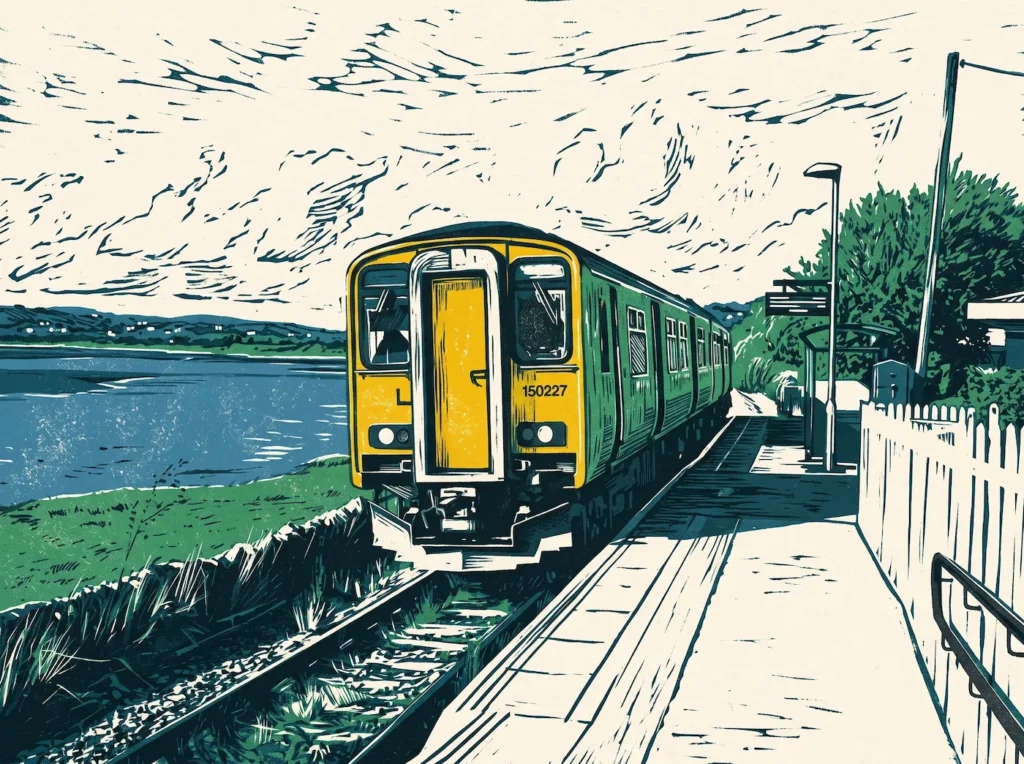
The Conwy Valley Railway is one of those North Wales journeys where the getting there is part of the day.
It runs from Llandudno to Blaenau Ffestiniog: coast and estuary first, then inland along the River Conwy through Llanrwst and Betws-y-Coed, before climbing into the narrower Lledr Valley and finishing among the slate workings of Blaenau Ffestiniog. The full journey takes around 1 hour 20 minutes, short enough to ride purely for the scenery. For most visitors, though, the railway works best when you build the day around one destination rather than simply riding end to end.
Here’s the catch: this isn’t a hop-on, hop-off tourist railway. Services are fairly infrequent, and cramming three or four stops into one day means most of it goes on waiting for the next train, not seeing anything at your stops.
Choose one destination, or one carefully planned walk, and check your outward and return trains before setting off. Transport for Wales advises checking again on the day, since published timetables can change.

The Conwy Valley Railway at a Glance
- Stations: 13 – Llandudno, Deganwy, Llandudno Junction, Glan Conwy, Tal-y-Cafn, Dolgarrog, North Llanrwst, Llanrwst, Betws-y-Coed, Pont-y-Pant, Dolwyddelan, Roman Bridge, Blaenau Ffestiniog
- Journey time, end to end: around 1 hour 20 minutes
- Best seat heading south: right-hand side, for the view across the estuary to Conwy Castle after Deganwy (recommended by the Conwy Valley Community Rail Partnership)
- Request stops: 7 of the 13 stations – full list and how they work below

How the Request Stops Work
Several of the smaller stations are request stops, meaning the train only calls there if a passenger asks it to. Worth knowing before you’re waiting at one expecting it to stop regardless.
In the current timetable these are:
- Glan Conwy
- Tal-y-Cafn
- Dolgarrog
- North Llanrwst
- Pont-y-Pant
- Dolwyddelan
- Roman Bridge
Request stops are marked with an x in the Transport for Wales timetable.
If you’re getting off, tell the conductor in good time. If you’re getting on, make yourself clearly visible on the platform and signal to the approaching train.
Because timetables and stopping patterns can change, check that the train you intend to use is scheduled to serve your station before relying on it.
Where We’d Start the Journey
The geographically closest station isn’t necessarily the most useful one.
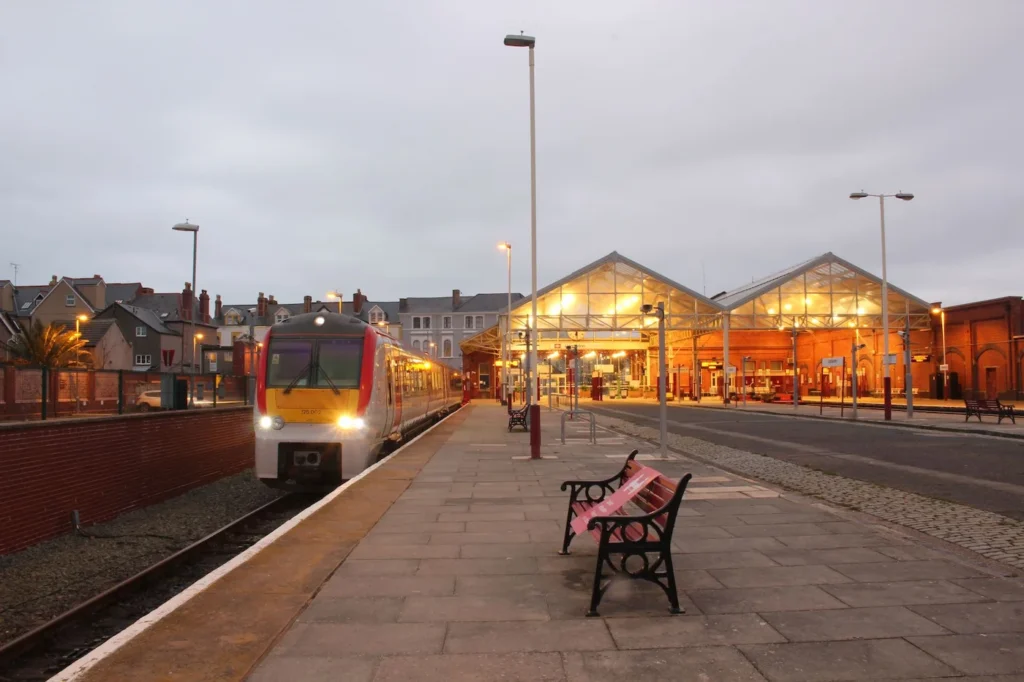
Llandudno Junction: best for riding most of the line
If the railway journey itself is the point, Llandudno Junction is probably the most practical starting place.
You miss only the short section through Llandudno and Deganwy, but still get the estuary, Conwy Valley, Betws-y-Coed, Lledr Valley and Blaenau Ffestiniog. It’s also a main-line station rather than a tiny rural halt, which makes starting and finishing the day considerably simpler.
Betws-y-Coed: best for the mountain section
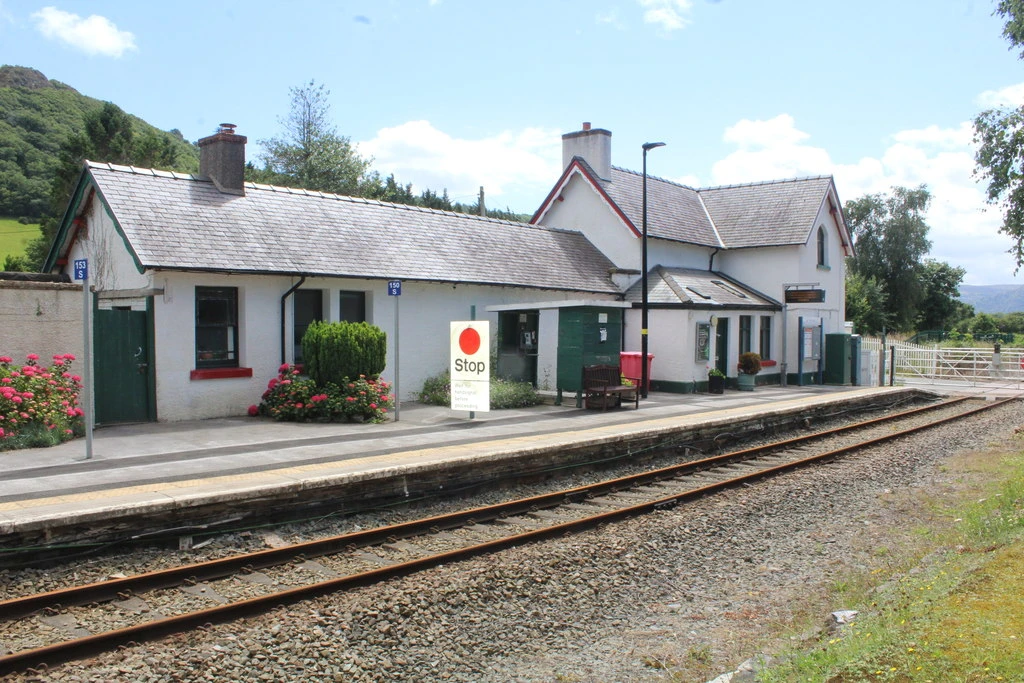
For a shorter railway outing, start at Betws-y-Coed and travel south to Blaenau Ffestiniog. This concentrates the journey into its more mountainous section through the Lledr Valley and works well if you don’t particularly want an eighty minute journey in each direction.
Tal-y-Cafn: close, but not automatically the best choice
Tal-y-Cafn is one of the closest stations to Conwy Valley Getaway, but it’s a small request stop rather than an obvious park-and-ride starting point.
It can be useful if someone is dropping you off, or as part of a carefully planned walking day, but we wouldn’t choose it simply because it’s nearest.
For guests staying with us, Llanrwst is around 15 minutes away by car and Betws-y-Coed around 20 minutes, so it’s often worth choosing your station according to what you want from the day rather than distance alone.
The Best Stops on the Conwy Valley Line
You can find something to do from almost every station, but these are the stops we’d concentrate on as a visitor.
Llandudno
Llandudno gives the line a very different starting point from the mountains at the other end. The station is in the centre of town, making it easy to combine the railway with the pier, promenade, Great Orme or simply a few hours around Llandudno itself.
If you’re planning a longer visit rather than merely starting the train journey here, our guide to doing a Llandudno day trip properly covers how we’d structure the day.
Best for: coast, Great Orme, shops and a full day out.
Llandudno Junction
Llandudno Junction is much more useful as a transport hub than as a sightseeing stop. It’s where the Conwy Valley Line meets the North Wales Coast Line, so it’s the most practical place to join the route if you’re arriving by rail from elsewhere.
Conwy is nearby, but if Conwy town is your actual destination, there are easier ways to visit than treating Llandudno Junction as an attraction in its own right.
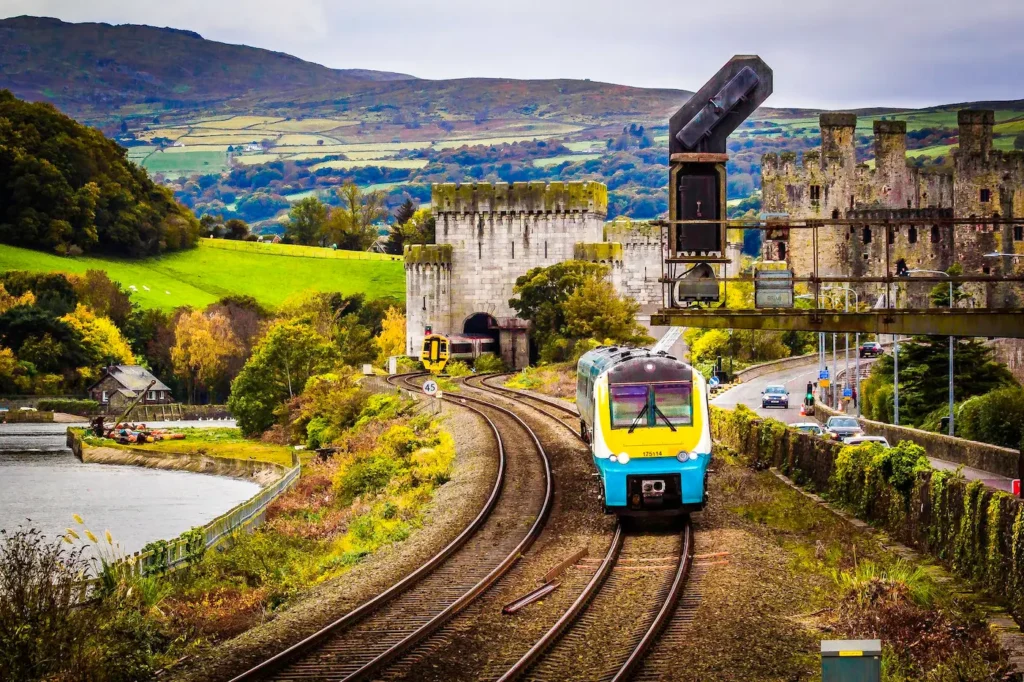
What is worth watching for is the view from the train. Heading south, look across the estuary after Deganwy for Conwy Castle and the walled town on the opposite bank.
Best for: starting the full scenic journey and main-line rail connections.
Tal-y-Cafn
Tal-y-Cafn is often suggested as the railway stop for Bodnant Garden.
It’s possible – the station is roughly 1.5 miles from the garden, so this works for visitors deliberately combining rail travel with a walk. But there’s an important distinction between possible and sensible. If you’re staying at Conwy Valley Getaway, Bodnant Garden is only around 8 to 10 minutes away by car. We wouldn’t drive to a railway station, catch a train and then walk uphill to reach somewhere almost on our doorstep.
Use Tal-y-Cafn for Bodnant if travelling car-free is part of the experience, not because the train is necessarily the easiest way to get there. For the garden itself, see our visitor’s guide to Bodnant Garden.
Best for: car-free visitors heading to Bodnant and walkers planning around the railway.
Dolgarrog
Dolgarrog is a small request stop, easy to miss on the timetable and easy to miss from the train window too. It’s worth stopping for the story alone.
In 1925, failure in the reservoir system above Dolgarrog sent water and debris down through the village, killing 16 people. The disaster later helped prompt new reservoir safety legislation in Britain.
The huge pipelines running down the hillside are still part of Dolgarrog’s hydro-electric system, originally developed to supply the aluminium works that dominated the village for much of the 20th century. You can explore them on a short but steep walk above the village.
We’ve covered the full story, and the walk itself, in our guide to the Dolgarrog pipes and the 1925 dam disaster.
Best for: local history, a short walk, and a stop most visitors skip entirely.
Llanrwst and North Llanrwst
These two stations serve quite different purposes.
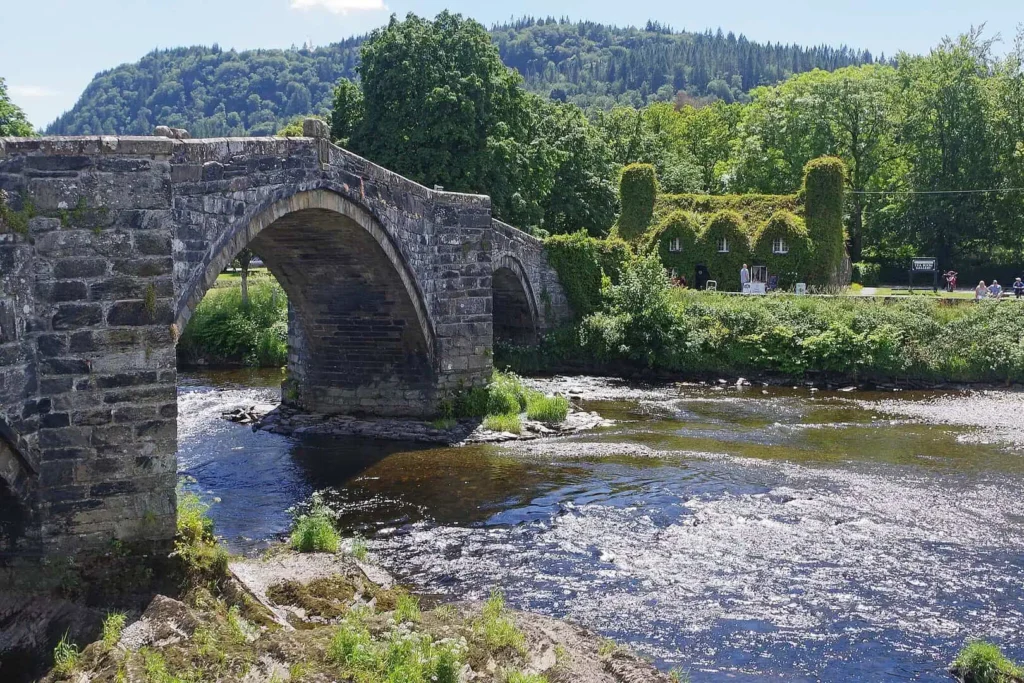
Llanrwst is the better stop for the town centre. From here you can explore Pont Fawr, the riverside, independent shops and the historic centre without needing to build a complicated itinerary around the railway. Our visitor’s guide to Llanrwst goes into much more detail about what is worth seeing and where we’d spend our time.
North Llanrwst, meanwhile, is more interesting for walkers. Transport for Wales promotes a roughly 5.1km Llanrwst and Trefriw rail-to-trail route, taking in the river, countryside around Trefriw and the woollen mill.
That’s exactly the sort of outing where using the railway starts to make sense. Instead of merely replacing a car journey with a train journey, the railway becomes part of the walk.
Best for: Llanrwst itself, riverside walks and Trefriw.
Betws-y-Coed
If you want the easiest day out on the route, this is it.
Betws-y-Coed station puts you straight into the village. No transfer, no long roadside walk and, crucially on busy summer weekends, no hunting for a parking space.
You can explore the riverside, Pont-y-Pair, shops and cafés on foot from the station, or use Betws-y-Coed as a starting point for a longer walk. It also has onward bus connections deeper into Eryri (Snowdonia), although those are another reason to check current timetables rather than build a day around old information.
For what we’d actually do once you arrive, see our Betws-y-Coed guide, including what to do and where to park.
For guests staying with us, driving to Betws-y-Coed is quicker. The train makes sense when you specifically want the railway journey, want to avoid busy-day parking, or are planning a walk that works better by public transport.
Best for: the simplest car-free day out on the line.
Pont-y-Pant and Roman Bridge
These are not sightseeing stops in the conventional sense. That’s precisely why they’re interesting.
Both are small request stations in the Lledr Valley, principally useful for walkers. The Community Rail Partnership recommends a moderate station-to-station walk from Roman Bridge to Pont-y-Pant taking roughly an hour.
Using two stations turns the railway into something a car can’t easily replicate: a linear walk without having to retrace your steps.
The downside is obvious. Miss your intended train and the next one may not be along for quite some time. Check the timetable first, leave plenty of margin and don’t treat the scheduled departure as the time you should be wandering onto the platform.
Best for: walkers looking for a short linear route.
Dolwyddelan
Dolwyddelan is another request stop, sitting in the Lledr Valley between Betws-y-Coed and Blaenau Ffestiniog.
The village makes a quieter contrast to Betws-y-Coed, while the surrounding area opens up several walking possibilities.
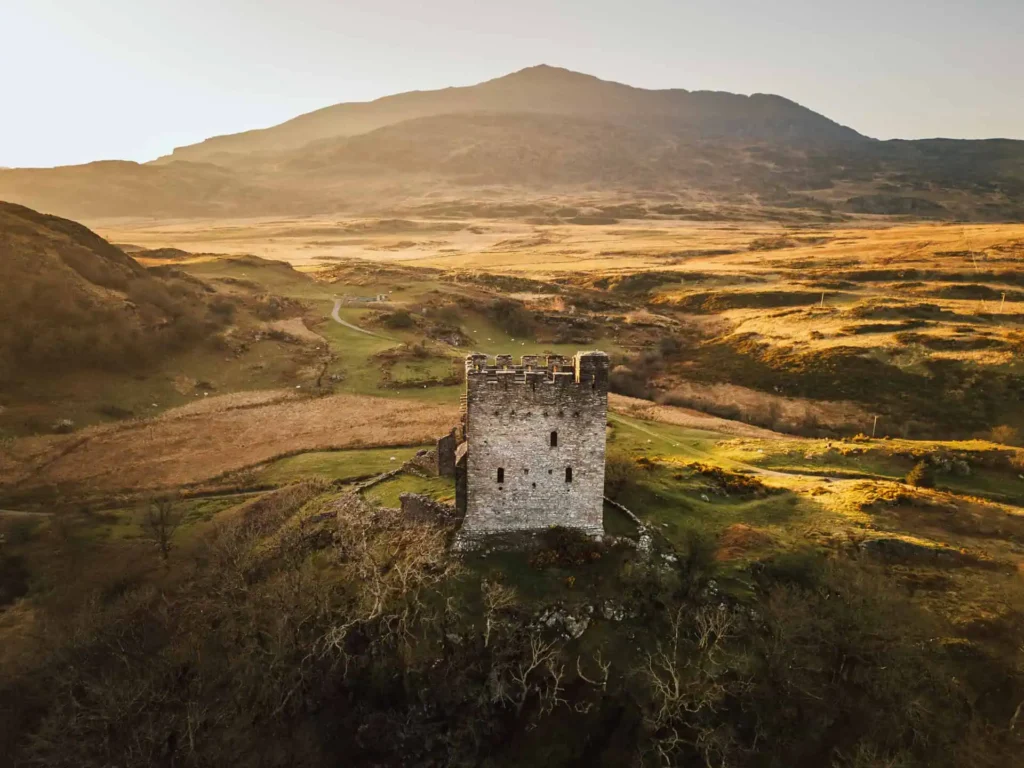
Nearby Castell Dolwyddelan is particularly interesting because this is a Welsh-built castle associated with Llywelyn ap Iorwerth, rather than one of Edward I’s great conquest castles.
At present, Cadw lists entry as free. The interior is open from April to September on Fridays, Saturdays, Sundays and bank holidays, with external viewing at other times. Access arrangements are worth checking carefully because the official public route is from an A470 lay-by rather than through the nearby farm.
We’ve covered the history and practical details separately in our guide to Castell Dolwyddelan.
Best for: walking, Welsh history and a quieter stop in the Lledr Valley.
Blaenau Ffestiniog
Blaenau Ffestiniog couldn’t look much less like Llandudno.
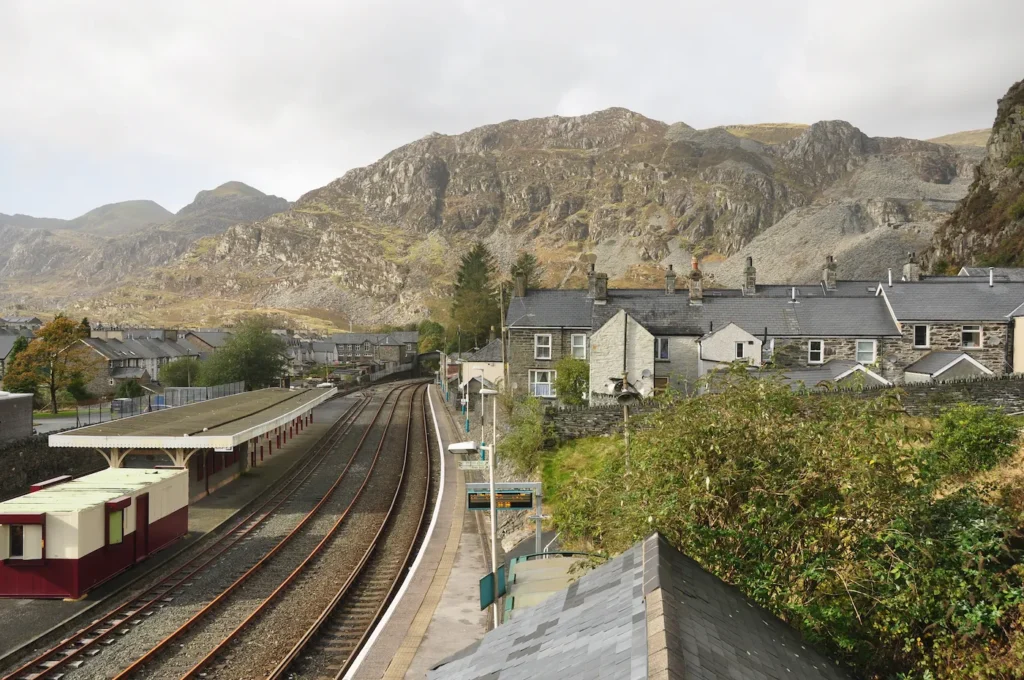
By the time the train reaches the end of the line, the green Conwy and Lledr valleys have given way to steep slate workings, quarry tips and an industrial landscape shaped by generations of mining.
That contrast is one of the strongest reasons to ride the whole route. Blaenau sits within the UNESCO Welsh Slate Landscape, and our guide to the Welsh Slate Landscape explains how the quarrying communities here helped shape North Wales far beyond the mountains themselves.
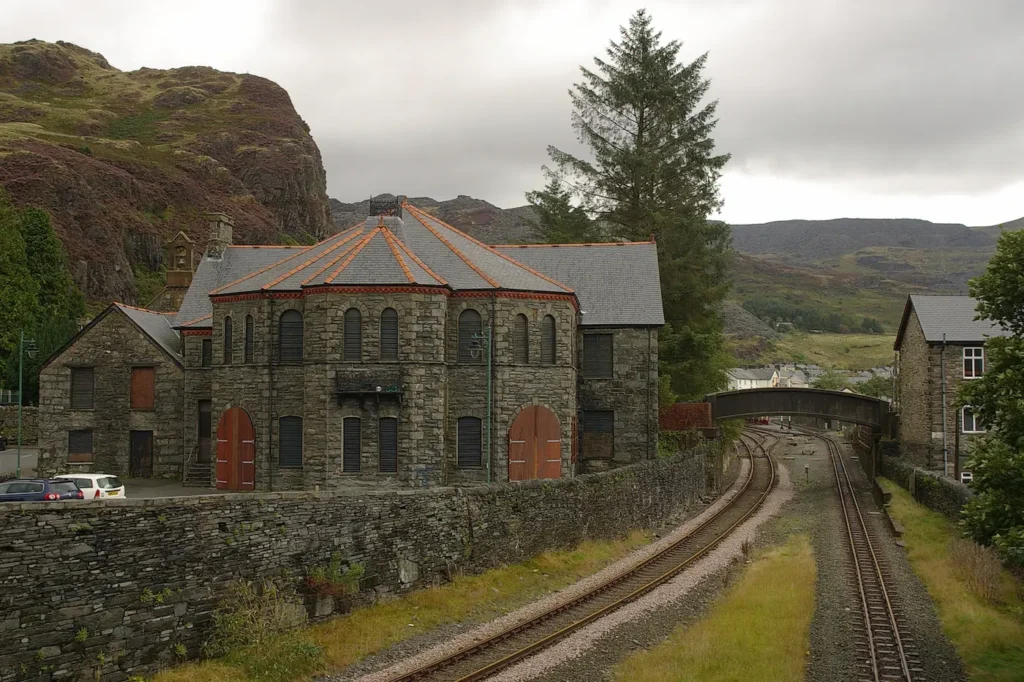
It’s also where the main-line railway meets the Ffestiniog Railway, opening up the possibility of continuing towards Porthmadog by heritage railway. That can make an excellent railway day, but don’t assume the two timetables will neatly connect. Check both services for your date before buying tickets or planning the rest of the day.
Best for: the full railway journey, slate history and connecting with the Ffestiniog Railway.
Three Conwy Valley Railway Days We Recommend
The old temptation with this railway is to produce an elaborate itinerary involving several villages, a garden and a waterfall in one day. With a relatively infrequent service, keep it simpler than that.
1. Ride the Full Line to Blaenau Ffestiniog
Best for: experiencing the railway itself.
Start at Llandudno or Llandudno Junction and travel all the way to Blaenau Ffestiniog. Allow time there for lunch, a wander around the town or a slate-related attraction, then return on a later train. This gives you the full geographical change from coast and estuary through the Conwy Valley and into the mountains. If you’ve only ever driven the A470, seeing the same area from the railway is surprisingly different.
2. Betws-y-Coed and Blaenau Ffestiniog
Best for: a shorter scenic outing from the cottages.
Drive to Betws-y-Coed, then take the train through the Lledr Valley to Blaenau Ffestiniog. You get much of the strongest mountain scenery without committing to the entire line from Llandudno. Depending on train times, you can either spend a few hours in Blaenau or simply use the return journey as the outing.
3. Use the Train for a Linear Walk
Best for: walkers.
This is where the railway can beat the car outright. Routes between smaller stations, including Roman Bridge and Pont-y-Pant, let you walk in one direction and return by train rather than designing every route around a parked car. Just plan the transport before the walking route: on a frequent urban railway, missing a train is mildly annoying, but here it can substantially rearrange your afternoon.
Can You Take Dogs on the Conwy Valley Railway?
Yes. Transport for Wales currently allows up to two dogs per passenger free of charge. Dogs need to remain on a lead unless they’re in a carrier, and they aren’t allowed on the seats.
The train itself is therefore straightforward for dog owners. The more important question is what you plan to do after getting off – check livestock, access and dog restrictions for any walk or attraction rather than assuming that because the train accepts dogs, the whole day will.
Can You Take Bikes?
Yes, and bikes travel free, but space is limited. Transport for Wales recommends reserving a cycle space in advance where possible. If you haven’t reserved and the available spaces are already occupied, you may not be able to take the bike on that service.
For cyclists, the railway has obvious potential for one-way journeys through the Conwy or Lledr valleys, but this is another occasion where checking the return service before setting off matters.
Accessibility and On-board Facilities
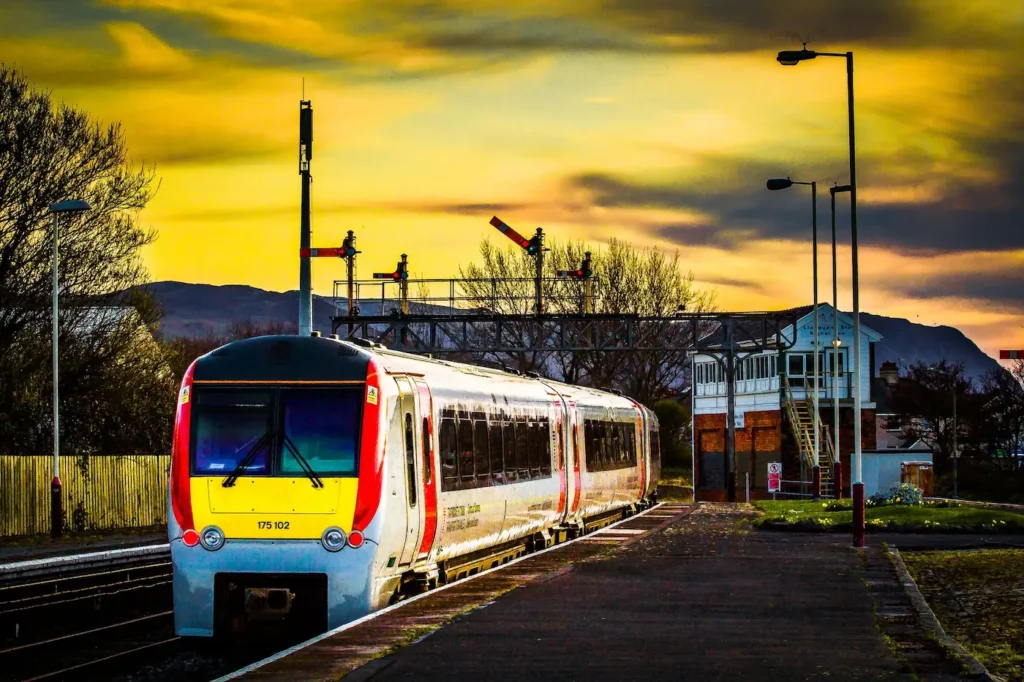
Modern Transport for Wales Class 197 trains commonly operate the Llandudno to Blaenau Ffestiniog route. They have accessible toilets, wheelchair spaces and accessible boarding facilities, so the old advice sometimes found online that there are no toilets on these trains is no longer correct.
The bigger issue is the stations themselves. Accessibility varies considerably along the route, particularly at the small rural stops. Transport for Wales also states that wheelchair or scooter spaces cannot be reserved specifically on Conwy Valley Line services, although Passenger Assist is available.
If step-free access matters, check both your departure and destination station on the Transport for Wales website before travelling rather than relying on a general statement about the line.
Tickets: Keep It Simple
For most visitors, an ordinary return ticket is all you’ll need. Tickets can be bought through Transport for Wales, and railcard discounts apply where appropriate.
If your day involves several trains or a combination of rail and bus travel, the North Wales Rover is worth checking. It is a one-day zonal ticket covering participating rail and bus services, although whether it saves money depends entirely on the journey you’re planning.
Work out the day you actually want first, then compare the fares against it.
A Short History of the Conwy Valley Line
The railway grew in stages rather than appearing as one complete route.
Parliamentary approval for the early line was granted in 1860, with the railway reaching North Llanrwst in 1863. Passenger services were extended to Betws-y-Coed in 1868, before construction continued through the Lledr Valley towards Blaenau Ffestiniog. The route was completed in stages by 1879.
Its development was closely linked to the slate industry. Rail provided a route from the quarries around Blaenau Ffestiniog towards the coast and the wider railway network.
More than a century later, that’s still visible from the train. The final approach to Blaenau doesn’t merely take you through attractive mountain scenery. It takes you into a place physically reshaped by industry.
Is the Conwy Valley Railway Better Than Driving?
Sometimes. And sometimes the car wins easily.
If you’re staying at Conwy Valley Getaway and heading to Bodnant Garden, driving makes much more sense. The same is generally true if you need to fit several unrelated attractions into one day. But the train wins when the journey is part of the reason for going, when you’re avoiding parking somewhere such as Betws-y-Coed or when you’re using the railway to make a linear walk possible.
Don’t treat the Conwy Valley Railway as a slower replacement for every car journey. Choose the days when travelling by rail gives you something the road doesn’t.
Staying in the Conwy Valley
Conwy Valley Getaway sits between many of the places served by the railway, with Llanrwst around 15 minutes away by car and Betws-y-Coed around 20 minutes.
That means you don’t need to commit to a car-free holiday to make use of the line. Drive when that’s the practical choice, then use the railway for a scenic journey, a busy-day trip to Betws-y-Coed or a walk where travelling between two stations makes the day work better.
If you’re planning a stay in the area, you can compare Fig Tree, Laurel and the Entire Getaway and choose the setup that suits your group.
FAQs
How long does the Conwy Valley Railway take?
Allow around 1 hour 20 minutes for the full journey between Llandudno and Blaenau Ffestiniog, although journey times vary slightly by service. Always check the current timetable before travelling.
Is the Conwy Valley Railway scenic?
Yes. The route changes considerably from the coast and Conwy Estuary through the Conwy Valley, Betws-y-Coed and the Lledr Valley before reaching the slate landscape around Blaenau Ffestiniog. For some of the best views travelling south, sit on the right-hand side of the train.
Can you get to Betws-y-Coed by train?
Yes. Betws-y-Coed is one of the main stations on the Conwy Valley Line, with the station in the village itself. It can be a useful alternative to driving on busy days.
Which Conwy Valley Railway stations are request stops?
In the current timetable, Glan Conwy, Tal-y-Cafn, Dolgarrog, North Llanrwst, Pont-y-Pant, Dolwyddelan and Roman Bridge are request stops. Check the current Transport for Wales timetable because stopping patterns can change.
Can dogs travel on the Conwy Valley Railway?
Yes. Transport for Wales currently allows up to two dogs per passenger without an additional charge. They must be kept on a lead or in a carrier and cannot sit on passenger seats.
Can you combine the Conwy Valley Railway with the Ffestiniog Railway?
Yes. Both railways meet at Blaenau Ffestiniog, making it possible to continue towards Porthmadog on the heritage Ffestiniog Railway. Check both timetables carefully before planning the day, as the connections aren’t always convenient.