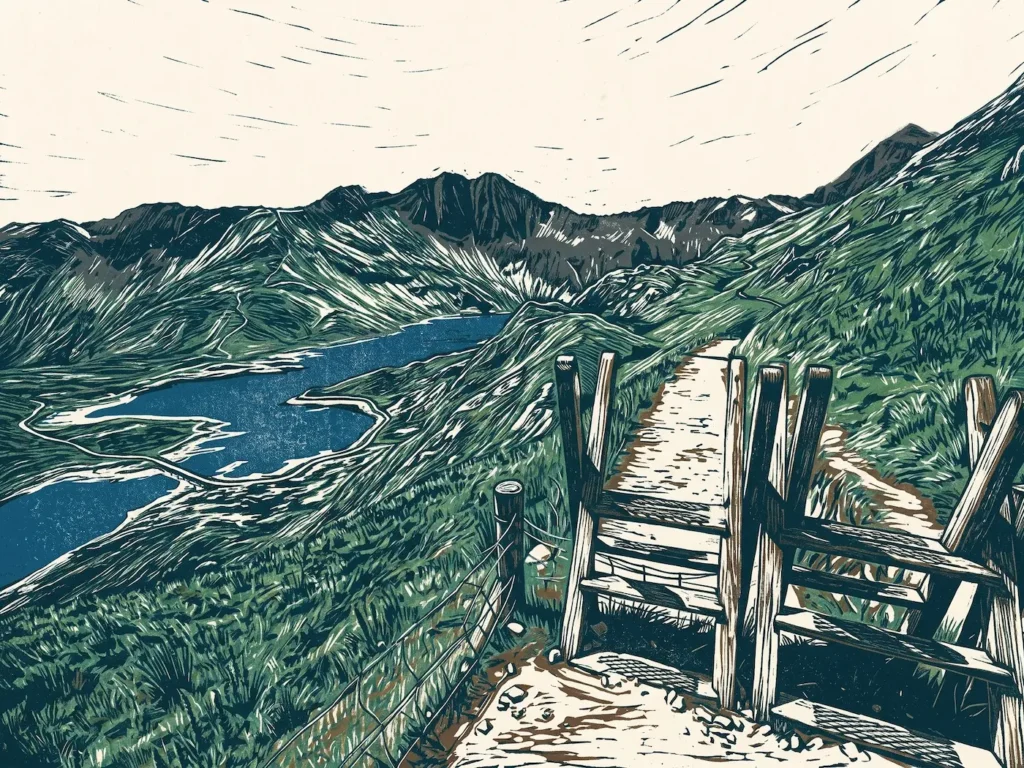
The legends of King Arthur in North Wales are older and wilder than the familiar tales of Camelot. His story is woven into the land, from mountain summits to the names of lakes and ruined forts. These tales have been told here for over a thousand years, long before the polished romances of medieval England.
In this post, we explore the landscapes, historic sites and attractions linked to the Arthurian legends – from the mountains and lakes that shaped the earliest stories to the places keeping the myths alive today. For history lovers, walkers and anyone curious about the folklore woven through North Wales, this is your guide to Arthur’s original kingdom.
Arthur Before Camelot: The Welsh Origins in North Wales
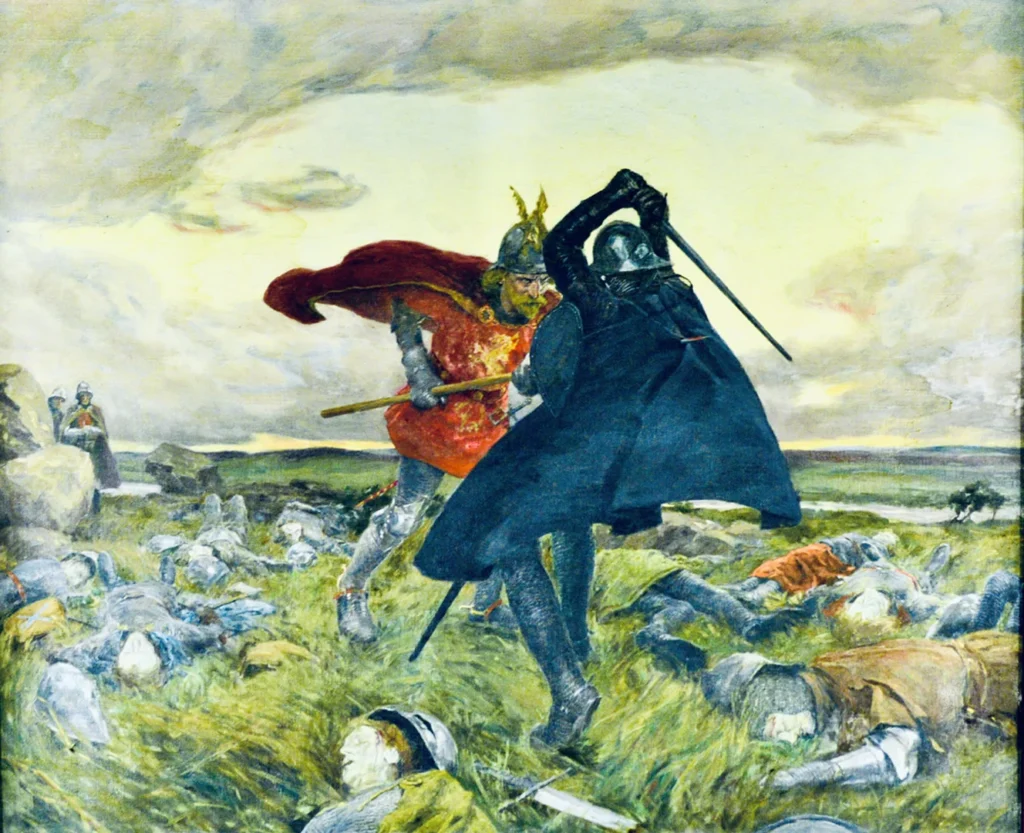
Before Arthur became the medieval king of Camelot, he appears in early Welsh literature as something quite different: a warrior-hero leading a band of followers through a landscape of giants, magic and impossible challenges. The earliest mentions come from Welsh poetry and tales written down between the 9th and 12th centuries, but they draw on much older oral traditions.
In these early Welsh stories, Arthur isn’t a courtly king sitting on a throne. He’s active, often fierce, battling supernatural creatures across a recognisably Welsh landscape. The places named in these tales aren’t vague fantasy settings: they’re real mountains, lakes and valleys in North Wales that you can visit today.
Two cottages worth knowing about.
Fig Tree and Laurel sit high above the Conwy Valley with private hot tubs, a shared heated indoor pool and views stretching to Eryri. Dog-friendly and available year-round.
Check availabilityDinas Emrys: Dragons, Merlin, and Arthurian Legend
Near the village of Beddgelert lies Dinas Emrys, a rocky hillfort where legend and archaeology meet. According to the 9th-century Historia Brittonum, King Vortigern tried to build a fortress here, but it kept collapsing. His advisors told him he needed to sacrifice a fatherless boy. They found a boy named Myrddin (Merlin), but instead of dying, he revealed the real problem: two dragons, one red, one white, were fighting beneath the foundations.
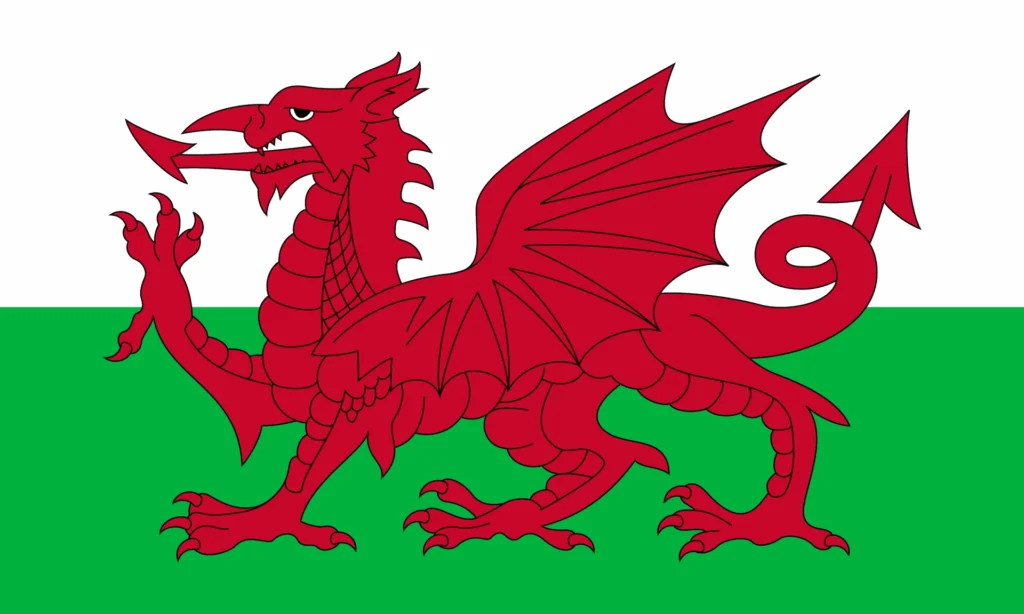
The red dragon (representing Wales) eventually defeated the white dragon (representing the Saxons), becoming the symbol on the Welsh flag today. Myrddin grew up to become Merlin, Arthur’s advisor and magician.
Today, you can climb the wooded hill to the remains of the ancient fort. There’s a small pool near the summit, supposedly where the dragons were discovered. Archaeological excavations have confirmed this was a high-status fortified site occupied in the 5th-6th centuries, exactly when a historical Arthur would have lived.

Visiting Dinas Emrys
- Start: Beddgelert village car park (pay and display)
- Distance: 3-mile circular walk
- Time: Allow 2-3 hours
- Terrain: Steep woodland path with rocky sections. Wear proper walking boots.
- After your walk: Beddgelert has several good cafés and pubs for lunch
- Dogs: Welcome, but keep on leads near livestock
The path can be muddy after rain and is steep in sections, but the views from the top are worth it: across to Yr Wyddfa (Snowdon), down the valley toward the sea and over Beddgelert village below.
Yr Wyddfa: Arthurian Legends on Wales’s Highest Mountain
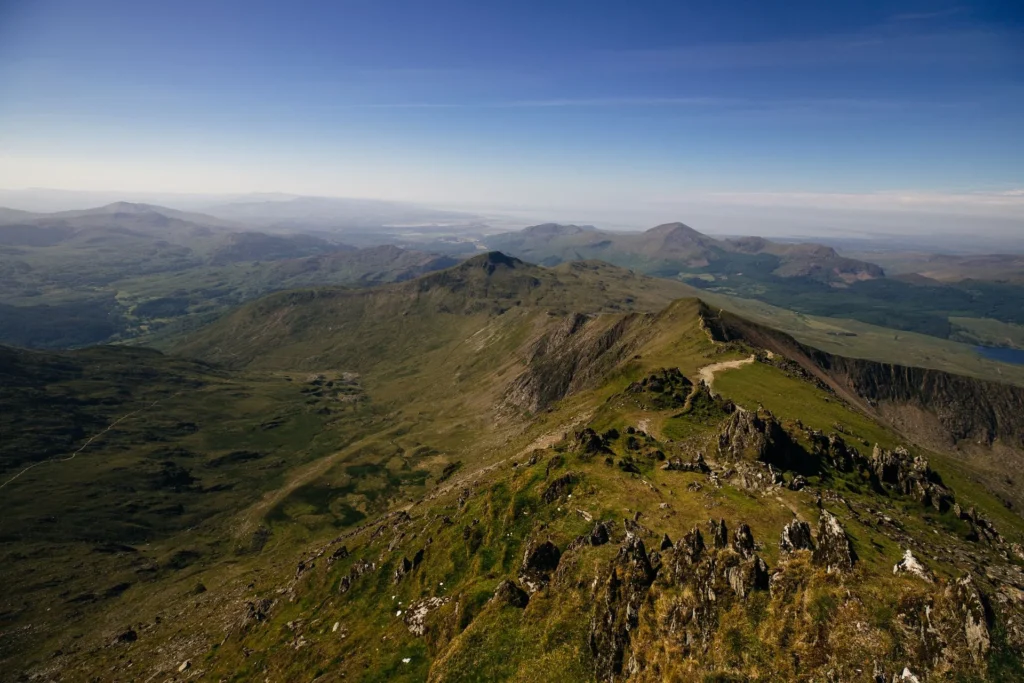
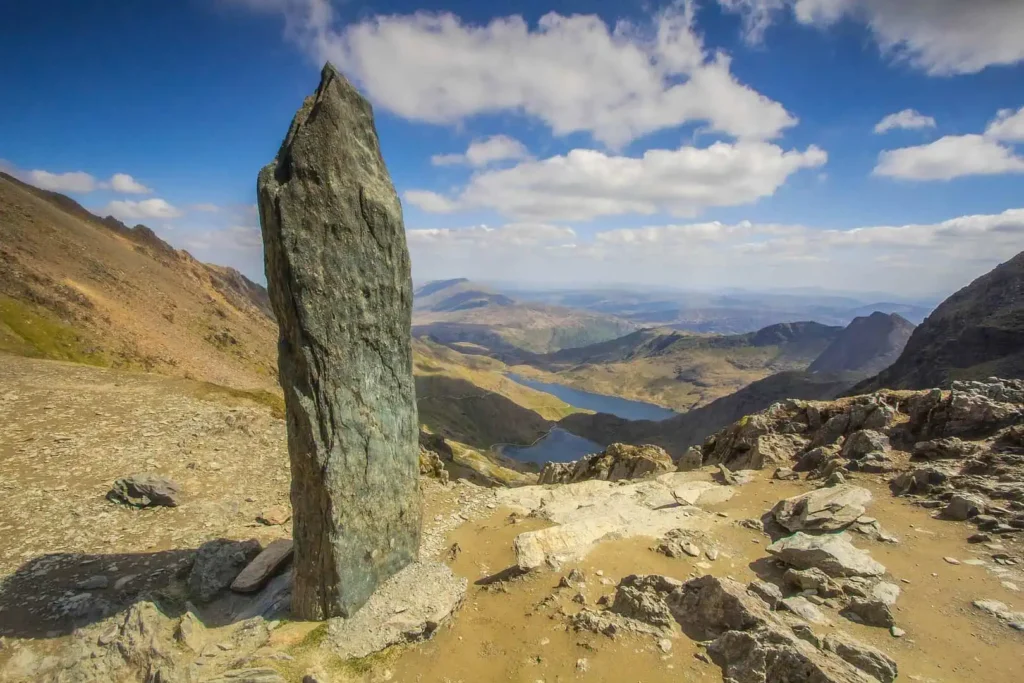
Wales’s highest mountain carries more Arthurian connections than anywhere else in Britain. The name Yr Wyddfa itself means “tomb” or “burial mound.” Whose tomb? According to legend, a giant named Rhitta Gawr had an unpleasant hobby: collecting the beards of defeated kings to make himself a cloak. Arthur killed Rhitta and buried him at the summit.
Other tales say Arthur himself was buried here, not at Glastonbury as English tradition claims. Welsh legend maintains Arthur sleeps beneath these mountains, waiting to return when Wales needs him most.
Several stories place Arthur fighting across these slopes. It’s a landscape that looks like it should hold legends: dramatic, dangerous and built for myth.
Climbing Yr Wyddfa
Six main walking routes lead to the summit, ranging from moderate to challenging.
- Easiest: Llanberis Path. 5 miles each way, 5-7 hours return. Longest but gradual.
- Most Popular: Pyg Track. 3.5 miles each way from Pen-y-Pass. Good views throughout, with some scrambling near the top.
- Also Popular: Miners’ Track. Similar start to the Pyg Track but gentler initially, though steep at the final section.
- Alternative: Snowdon Mountain Railway from Llanberis (March-October, weather permitting). Book in advance at www.snowdonrailway.co.uk
Essential Safety Information
These are serious mountains and weather changes rapidly. Summit conditions are colder and windier than at the base.
- What to bring: Walking boots, waterproof jacket and trousers, warm layers, water, food, charged phone, map and compass or GPS, basic first aid kit
- Time needed: 6-8 hours return for most walking routes
- Best time: June-September. Avoid winter unless experienced.
- Parking: Pen-y-Pass fills early and must be booked in advance during peak times. Consider the park-and-ride from Nant Peris or choose an alternative starting point.
At the summit (1,085m), on clear days you can see Ireland, the Llŷn Peninsula and across the sweep of Eryri: standing on the roof of Wales in the landscape of legend.

Llyn Llydaw & Llyn Ogwen: Arthurian Lake Legends
When it comes to Welsh folklore, you will often find a bit of friendly rivalry between locations claiming the same myth. The most famous Arthurian tale is Excalibur being cast into the water and caught by the Lady of the Lake’s hand, and here in North Wales, two different lakes claim that exact honour – giving you a great excuse to visit both and decide which one feels right.
Llyn Llydaw
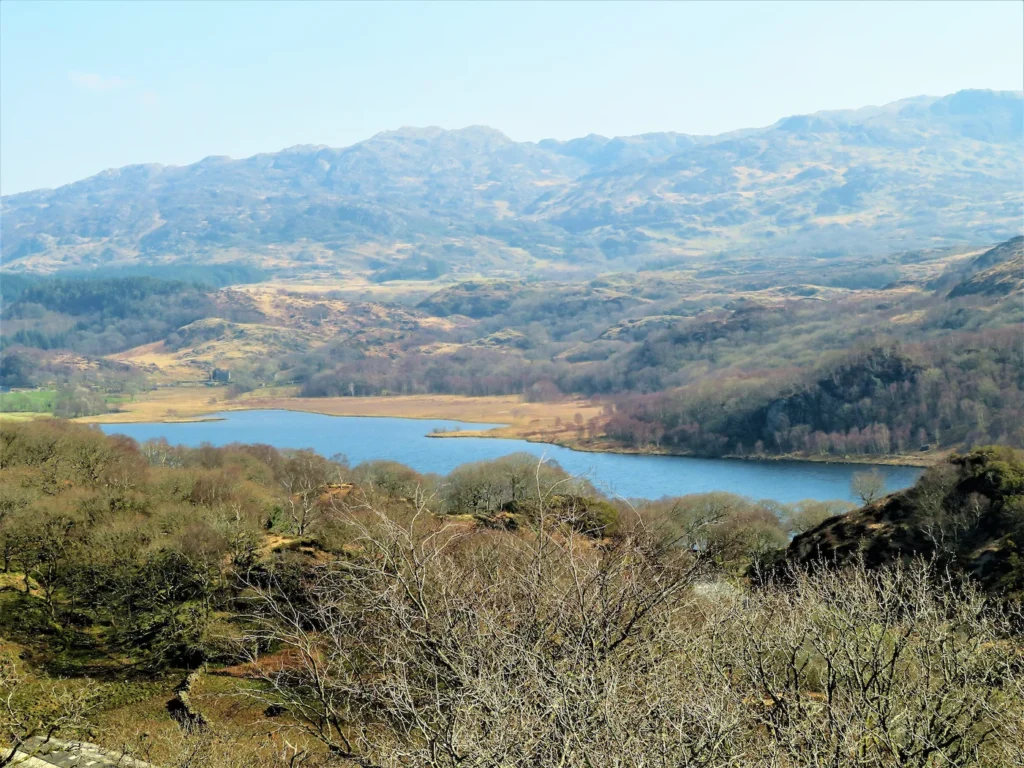
Llyn Llydaw sits below Yr Wyddfa on the Miners’ Track. Welsh tradition says this is where Arthur received Excalibur from the Lady of the Lake.
Visiting: 1.5 miles from Pen-y-Pass car park, taking approximately 2 hours return. The well-maintained path is easier than continuing to the summit, making it a good option for families and casual walkers who want to experience the atmosphere without a full mountain day.
Llyn Ogwen
Beneath the peaks of the Carneddau and Glyderau mountains lies Llyn Ogwen. While historians debate the exact location of the Battle of Camlann – King Arthur’s final, fatal clash with Mordred – local tradition places the showdown right here in the Ogwen Valley. Llyn Ogwen is the other strong contender for the resting place of Excalibur (known in Welsh as Caledfwlch). As the story goes, this is the water where the loyal knight Sir Bedivere finally threw the sword, only for it to be caught by a hand rising from the surface.
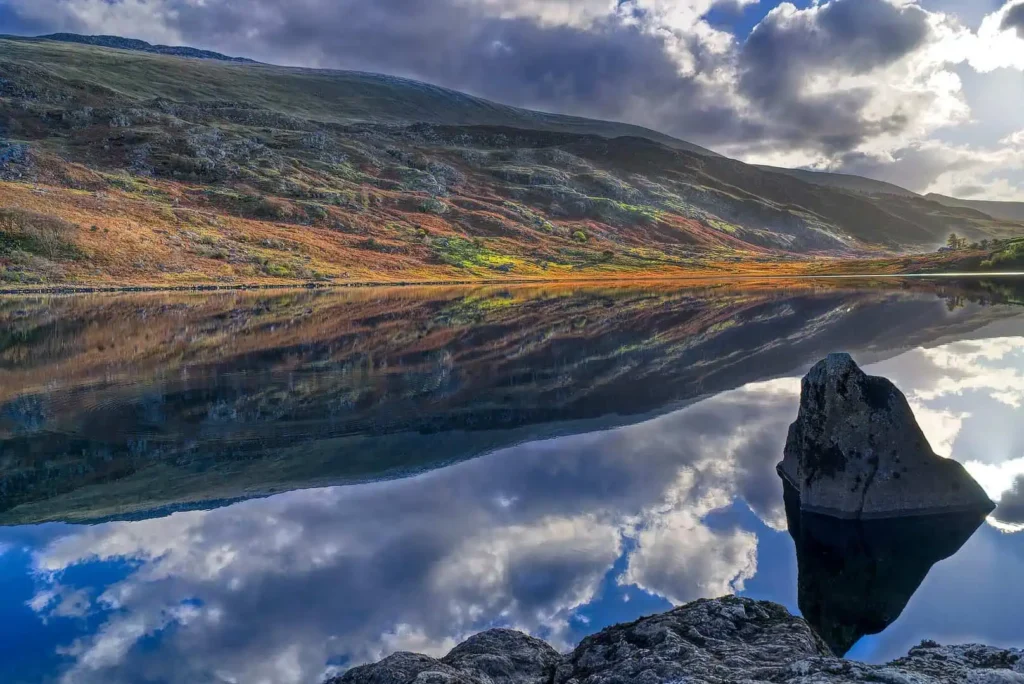
Llyn Ogwen is easily accessible right off the A5. The circular walk around the lake itself is roughly 3 miles and mostly flat, giving you clear views of Tryfan without a steep climb. It is a fantastic spot for a dog-friendly day out, though dogs should be kept on a lead due to the rugged terrain and grazing sheep.
Alternatively, the trail up to the adjacent Cwm Idwal Nature Reserve offers a dramatic 3-mile loop. It is a moderate, rugged walk involving steep stone steps and uneven boulder paths, rewarding you with huge mountain scenery without having to tackle a summit.
Parking at the Ogwen Centre fills up quickly, so aim to arrive early in the morning or use the TrawsCymru T10 bus service that links Bangor, Bethesda and Betws y Coed.
Both lakes are worth visiting in moody weather, when the reflections and mist make the legends feel entirely plausible.
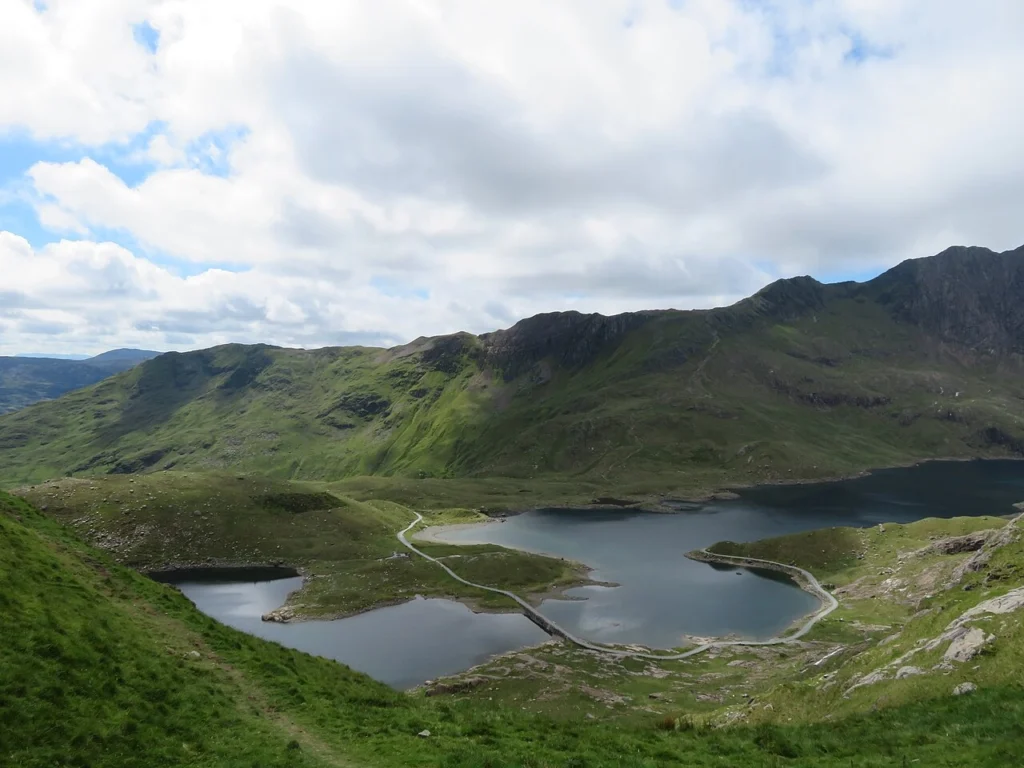
Bwlch y Saethau: The Legendary Pass Where Arthur Fought
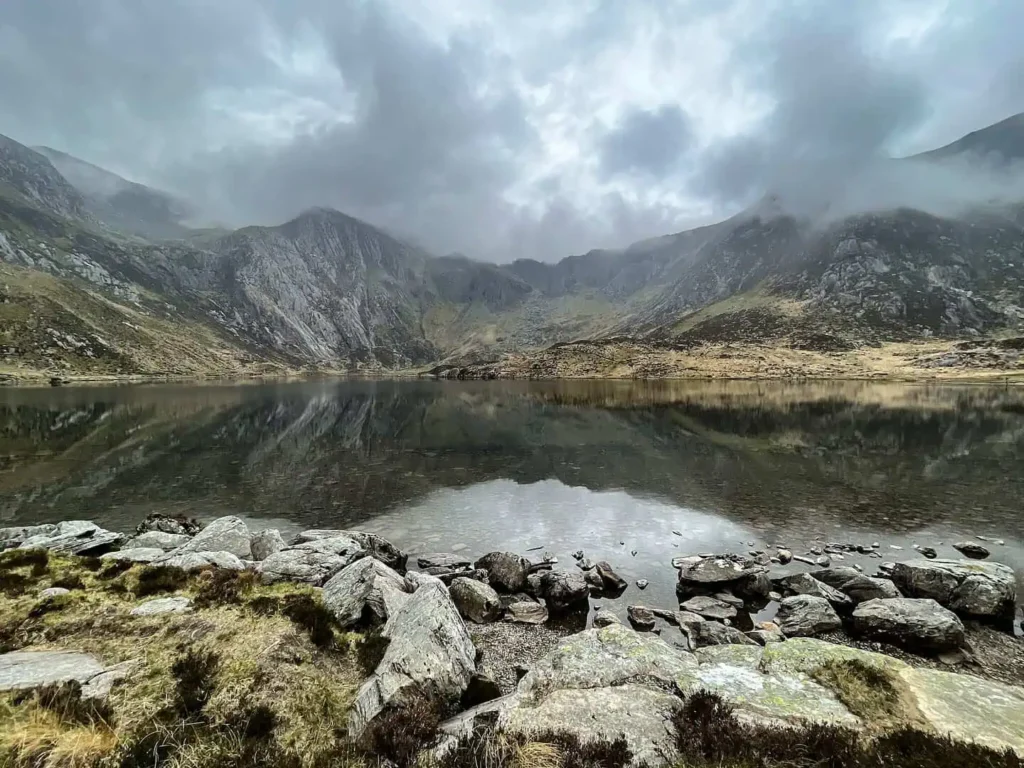
High on the shoulder of Yr Wyddfa, between the summit and Y Lliwedd, lies Bwlch y Saethau: the Pass of Arrows. According to Welsh tradition, Arthur fought Medrawd (Mordred) here and was mortally wounded by an arrow. Surviving knights carried him to Llyn Llydaw, where he was placed in a boat and taken to Avalon.
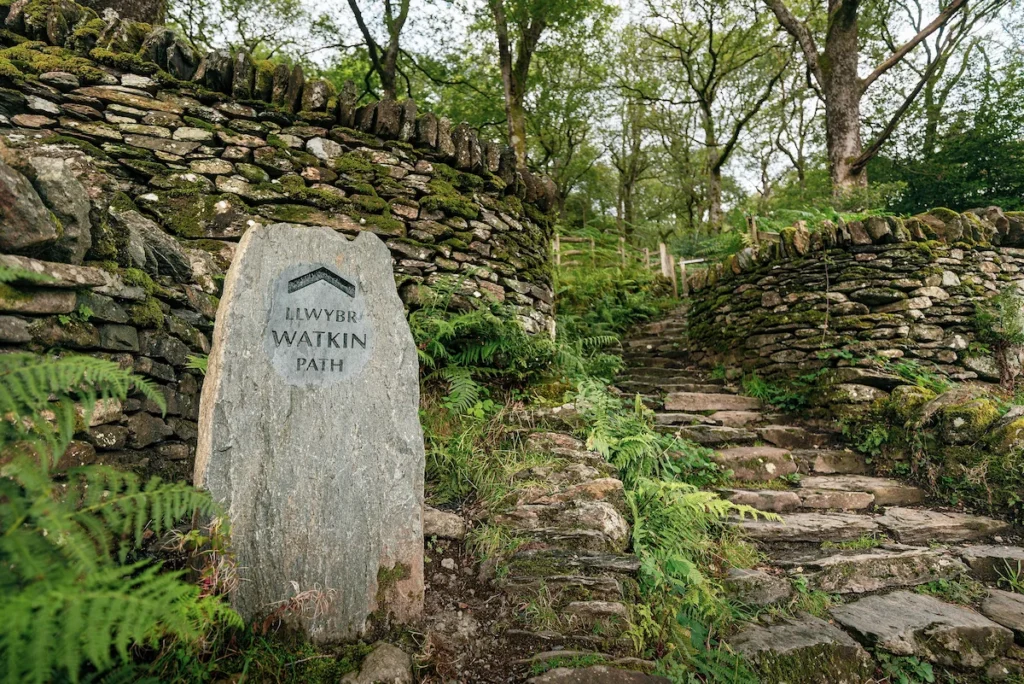
Get there via the Watkin Path or the Snowdon Horseshoe – these are serious mountain routes for experienced walkers. Wild, exposed, and dramatic.
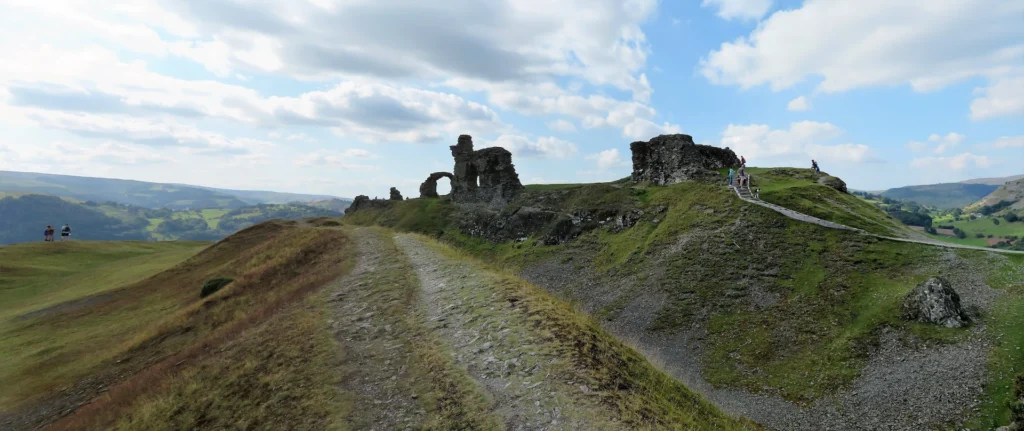
Castell Dinas Brân: Arthurian Grail Castle Ruins
Above Llangollen, the ruins of Castell Dinas Brân (“Crow Castle”) overlook the Dee Valley. Some traditions link this fortress to the Grail legends and Arthur’s later mythology.
Visiting Castell Dinas Brân
- Start: Llangollen town (parking available)
- Time: 1.5 hours return
- Terrain: Steep hill path; can be slippery when wet
- Combine with: Lunch in Llangollen or a visit to the nearby Pontcysyllte Aqueduct
Why Arthurian Legends Thrive in North Wales
The “Arthur will return” prophecy wasn’t just comforting folklore. It was politically dangerous. Edward I, who conquered Wales in 1283, understood this well enough to stage a public reburial of “Arthur’s bones” at Glastonbury in 1278, before the conquest was even complete, attempting to close the legend down before it could fuel rebellion.
It didn’t work. Over a century later, Owain Glyndŵr launched his 1400 uprising partly on the back of Welsh prophecy. Some of his supporters believed he was the promised returning king. Arthur had become a form of resistance that no castle could defeat.
Walking these mountains, you’re in the landscape that kept that belief alive. The remoteness wasn’t incidental. It was the point.
For Families: King Arthur’s Labyrinth, Corris
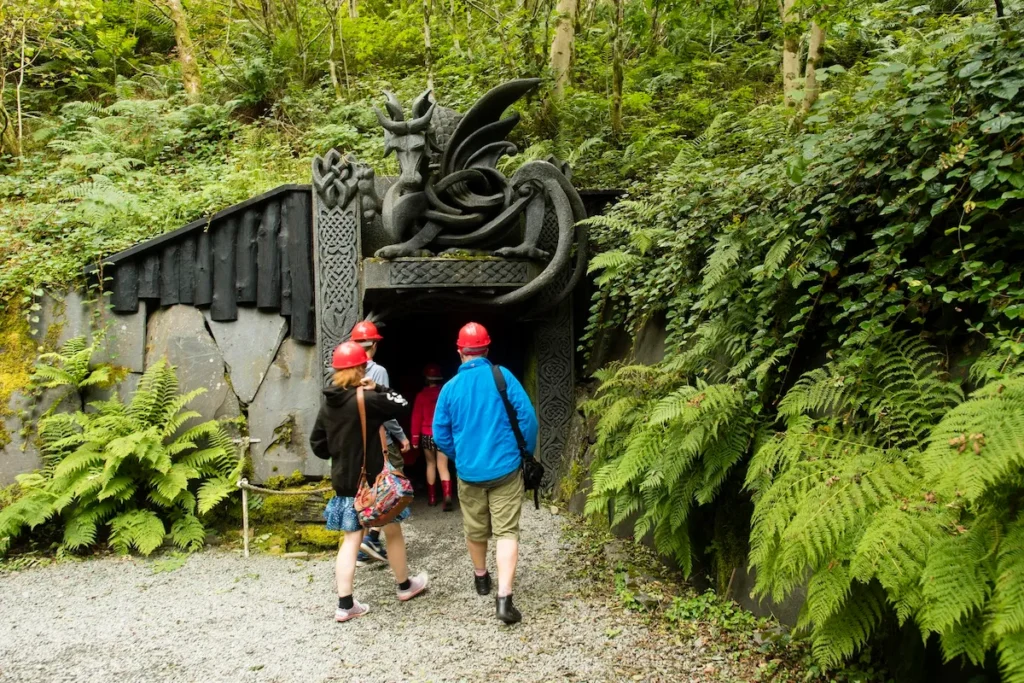
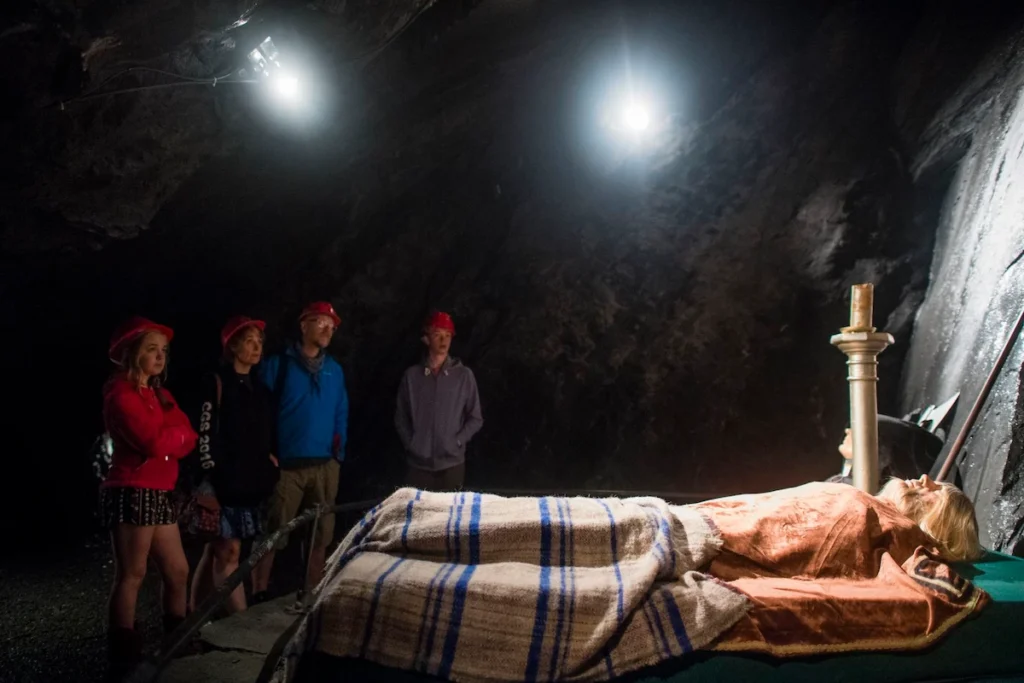
King Arthur’s Labyrinth is where the myth stops being backdrop and becomes the main event. You board a boat, pass through an underground waterfall and a hooded Dark Age Boatman leads you on foot through genuine 19th-century slate tunnels: vast, cold caverns carved from the mountain, not plywood and plaster dressed up to look the part. The stories told here, the Battle of Camlann, the red and white dragons fighting beneath Gwrtheyrn’s crumbling castle, the legend of Bran the Blessed, are the same ones this post has been tracing through the landscape above ground. Here, they’re performed in the dark, with light, sound and serious atmosphere.
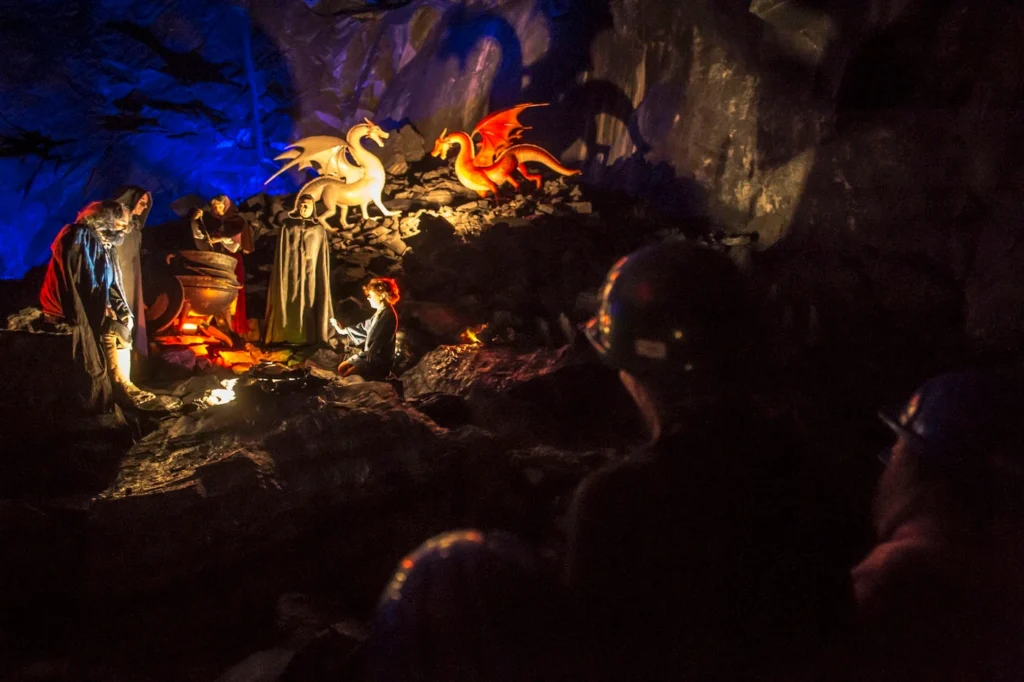
At 90 minutes from our cottages, this is a committed full day rather than a morning out, but the site rewards the drive. The Corris Craft Centre has nine working craft workshops, a good café serving Welsh ingredients with bread baked in-house, a Welsh Deli stocked with local produce, and the Welsh Legends Maze and Mabinogion Quest for younger visitors between sessions. Corris Mine Explorers runs a separate underground experience through parts of the original Braich Goch slate mine if one tunnel adventure isn’t enough. Being underground also makes this one of the better wet-weather options in the guide: cool when it’s hot outside, completely dry when it’s raining.
Tours are guided, group sizes are capped at 18, and the attraction runs from Easter to early November. Book in advance, particularly in summer, as the limited group sizes mean it fills faster than you’d expect.
- Location: Corris Craft Centre, A487 between Machynlleth and Dolgellau
- Distance from our cottages: Approximately 90 minutes
- Duration: Allow 1 hour 15 minutes for the Labyrinth
- Booking: Recommended. Online booking secures the best prices.
- Season: Easter to early November
- Parking: Free, all day on site
- By train: Machynlleth station, approximately 5-6 miles away
For visitor information and tickets, visit the official King Arthur’s Labyrinth website.
Following Arthur’s Trail: A 7-Day North Wales Itinerary
| Day | Destination | Highlights | Time Needed |
| 1–2 | Yr Wyddfa (Snowdon) | Summit walk or mountain railway, plus Llyn Llydaw | Full day |
| 3 | Dinas Emrys & Beddgelert | Hillfort walk, village exploration, lunch | Half day |
| 4 | Llyn Ogwen & Cwm Idwal | Lakeside and valley walks, dramatic scenery | Half day |
| 5 | Conwy Castle | Medieval fortress and walled town | Half day |
| 6 | Rest & Local | Use pool & hot tubs, walk from the doorstep | Flexible |
| 7 | Castell Dinas Brân, King Arthur’s Labyrinth or coast | Llangollen ruins, underground storytelling at Corris or the Llŷn Peninsula | Half-full day |
The Arthurian sites in this guide are at their most atmospheric in moody weather, but if the mountains are properly closed in, our rainy day guide has a full list of indoor alternatives within easy reach.
Your Base for Exploring Arthur’s North Wales
Our Conwy Valley holiday cottages, Fig Tree and Laurel, sit high in the hills with sweeping views of the Carneddau mountains – part of the same landscape Arthur’s legend inhabits. You’re perfectly positioned for all the sites in this guide:
- Yr Wyddfa/Pen y Pass – 45 minutes
- Dinas Emrys (Beddgelert) – 50 minutes
- Llyn Ogwen – 40 minutes
- Conwy Castle – 20 minutes
After a day walking in Arthur’s footsteps, you can relax: indoor pool, private hot tubs with mountain views, well-equipped kitchens and space to spread out. Both cottages sleep families or groups comfortably and are dog-friendly.

Explore our cottages and plan your Arthurian adventure →
Where Arthurian Legend Lives On in North Wales
Whether or not Arthur was a real 6th-century leader, the power of the legend remains. Mist on Llyn Llydaw. Standing on Yr Wyddfa’s summit. Climbing to Dinas Emrys. The legends feel possible.
The stories belong to this place, and to anyone who walks it with curiosity and imagination.
FAQs
Where is King Arthur said to be buried in Wales?
According to Welsh legend, Arthur’s final resting place is beneath Yr Wyddfa (Snowdon). Some traditions say he sleeps under the mountain, waiting to return when Wales needs him most.
What is Dinas Emrys and why is it linked to King Arthur?
Dinas Emrys is a rocky hillfort near Beddgelert where the young wizard Merlin revealed the secret of the red and white dragons. It’s one of the oldest sites connected with Arthurian legend and the birthplace of the red dragon symbol of Wales.
Which Welsh lake is said to hold Excalibur?
Two lakes claim that honour: Llyn Llydaw, high on Yr Wyddfa’s slopes, and Llyn Ogwen in the Ogwen Valley. Both are atmospheric and easy to visit.
Can you walk to the places mentioned in the Arthurian stories?
Yes. Most key sites are accessible on foot, with walks ranging from easy to challenging. Dinas Emrys is moderate; Yr Wyddfa has several well-marked trails. Always check weather conditions and wear proper walking gear.
Some photos: © Crown Copyright