The ‘Iron Ring’ wasn’t an architectural vanity project; it was a masterclass in strategy. After defeating Llywelyn ap Gruffudd (the last Prince of Wales), Edward I needed to ensure his rule was permanent.
Unlike isolated ruins you might find elsewhere in the UK, the UNESCO Castles North Wales are a calculated, connected set.
This is the “Iron Ring.” King Edward I didn’t just build castles; he built a chain of domination designed to contain and control the Welsh heartlands. Today, this network is considered one of the finest examples of late 13th-century military architecture in Europe. And If you are staying at Conwy Valley Getaway, you’re right in the middle of it.
Here is how to tackle the World Heritage “Big Four.”
At a Glance: The Iron Ring
| Feature | Data |
| The Big 4 | Conwy, Caernarfon, Beaumaris, Harlech |
| Built | Late 13th Century (1283–1330) |
| Builder | King Edward I & Master James of St George |
| Status | UNESCO World Heritage Site |
| Notable For | Military innovation and sheer scale |
| Time Needed | 2 Days (Do not attempt all in one day) |
A Walk Through History: The Master Plan
The “Iron Ring” wasn’t an architectural vanity project; it was a weapon. After defeating Llywelyn ap Gruffudd (the last Prince of Wales), Edward I needed to ensure the Welsh stayed subdued.
He hired the greatest military architect of his age, Master James of St George. Together, they poured an astronomical sum into a chain of castles – so much that it almost bankrupted the English treasury. Each stronghold was positioned to be supplied by sea, ensuring they could hold out even if the Welsh cut off land routes.
When you visit these sites, look past the crumbling walls. Look at the placement. These castles were machines of war, built to intimidate, dominate and endure. And they have.
The Tour: Tackling the Big 4 UNESCO Castles North Wales
Here’s what makes each of these four giants special and why they deserve a spot on your North Wales itinerary.
1. Conwy Castle: The Grit
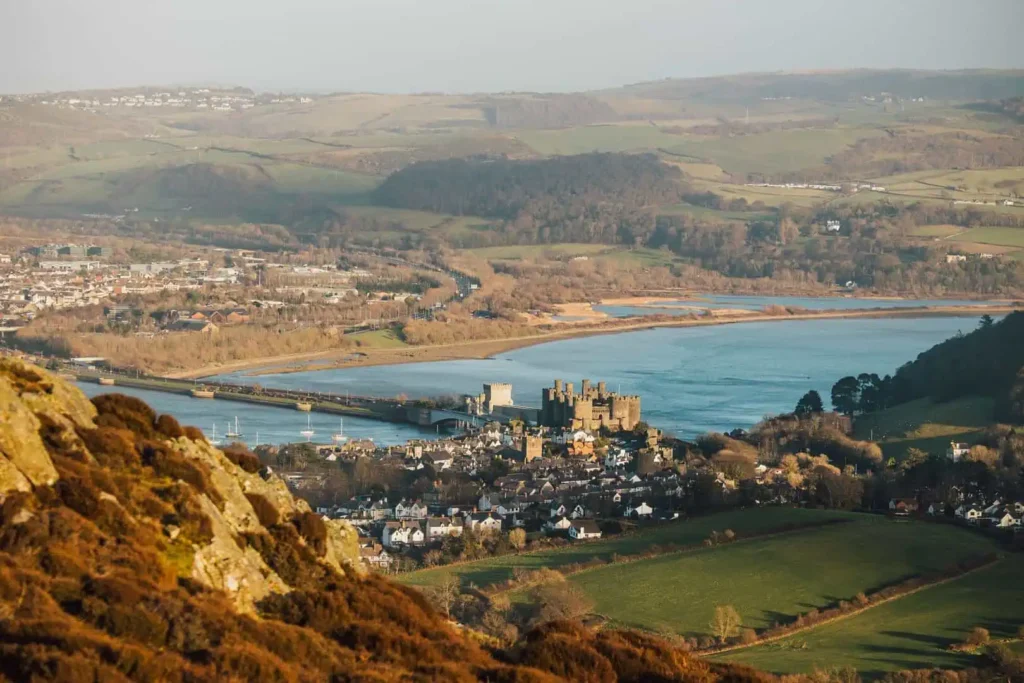
Distance from Cottages: 20 minutes.
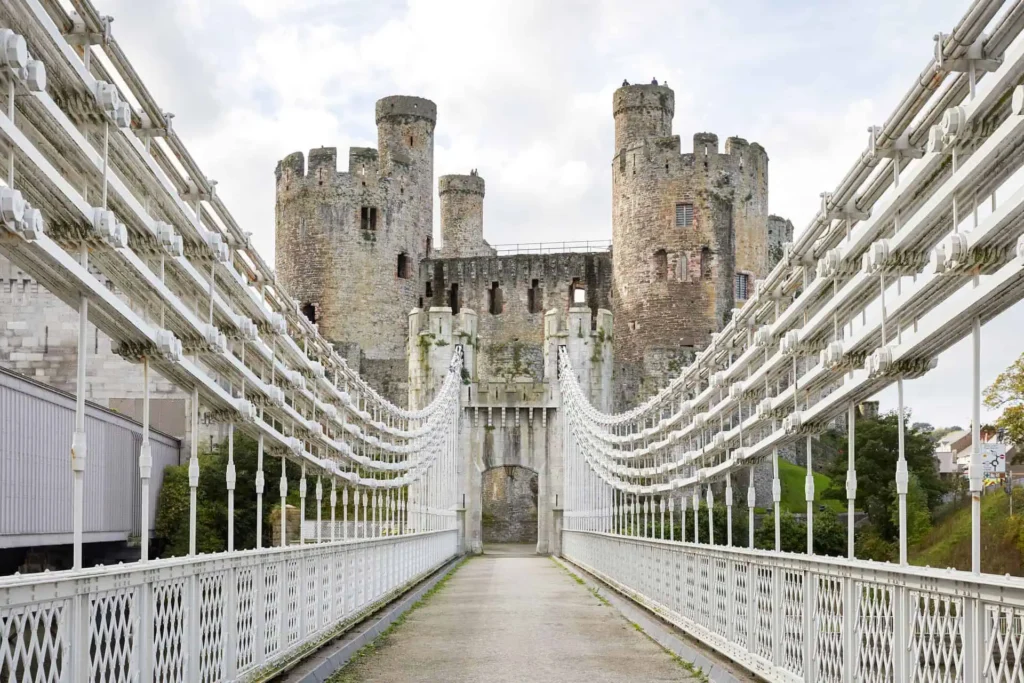
The most complete of Edward I’s castles, Conwy is pure military muscle. Its eight massive towers and sweeping curtain walls still encircle the medieval town today. It feels functional, dark and imposing – an unmissable introduction to the Iron Ring and the closest to our cottages.
- Read our full Visitor Guide to Conwy Castle.

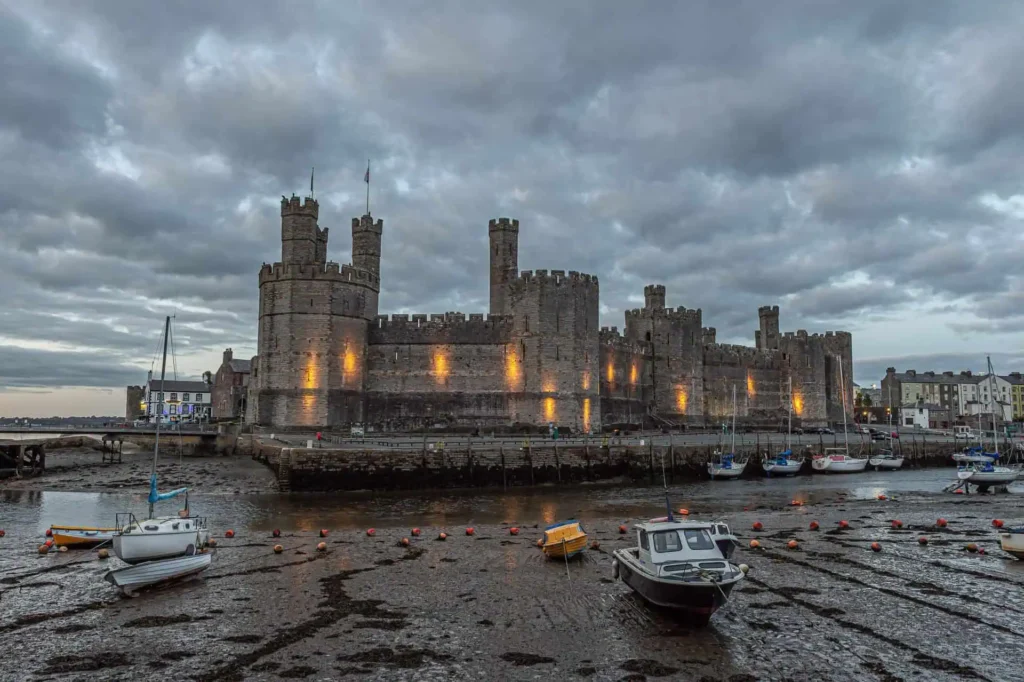
2. Caernarfon Castle: The Palace
Distance from Cottages: 45 minutes.
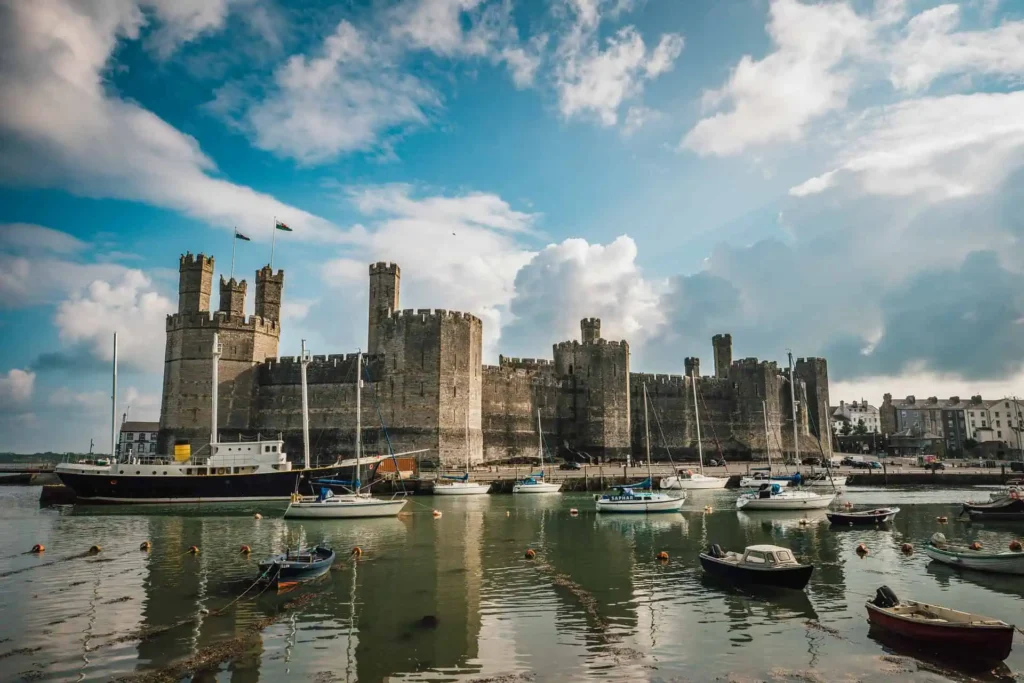
If Conwy is the bunker, Caernarfon is the showpiece. With its polygonal towers and striking colour-banded stone (inspired by the Walls of Constantinople), this was Edward’s statement of royal power. Grand, maze-like and famous as the site of the Prince of Wales’s Investiture, it offers a full day of exploring.
- Read our full Visitor Guide to Caernarfon Castle.
3. Harlech Castle: The Sentinel
Distance from Cottages: 65 minutes.
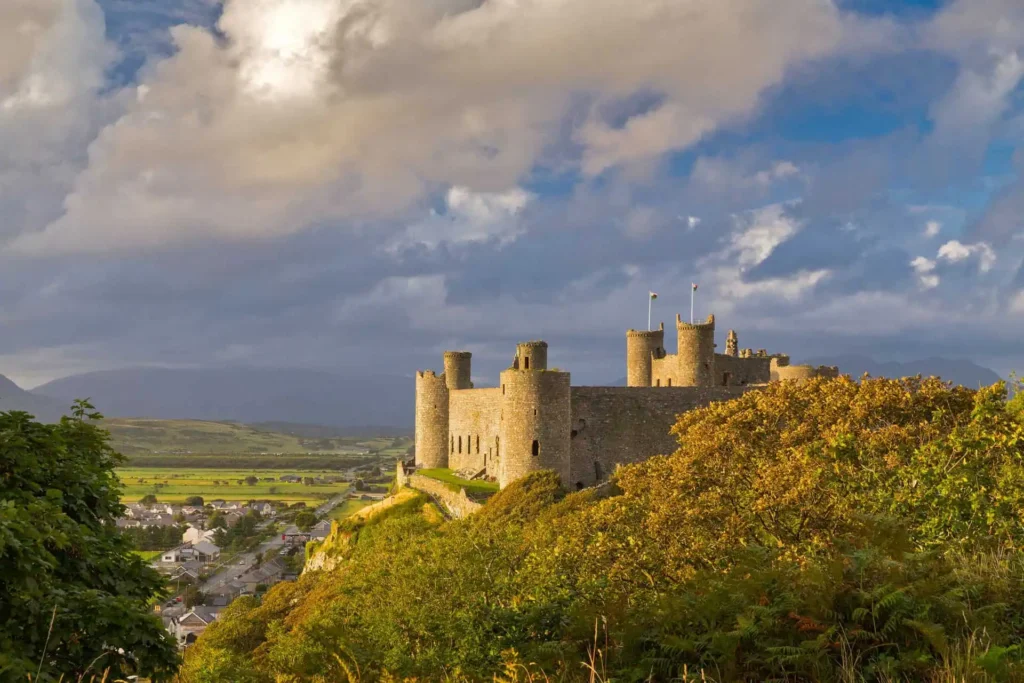
Harlech is all about drama. Perched on a sheer rocky outcrop, it once rose directly above the sea (now long receded). It’s known for the legendary siege that inspired the song Men of Harlech, and it still feels isolated, windswept and unbreakably proud.
- Read our full Visitor Guide to Harlech Castle.
4. Beaumaris Castle: The Unfinished Masterpiece
Distance from Cottages: 50 minutes.
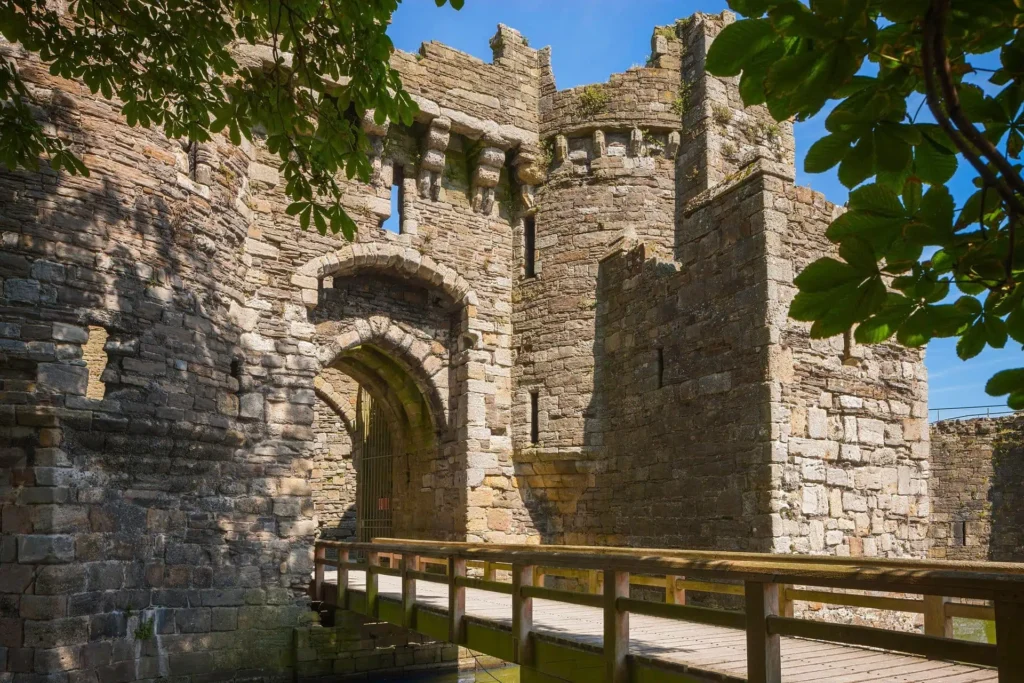
On the island of Anglesey sits Beaumaris: the “perfect” castle that was never completed. Its concentric layout -walls within walls in perfect symmetry – makes it one of the easiest places to understand medieval military design. Unlike Edward I’s mountain fortresses, Beaumaris’s lower walls on flat terrain create clearer sightlines, making the defensive strategy immediately visible (and brilliant for photos).
- Read our full Visitor Guide to Beaumaris Castle.
The Smart Itinerary (Don’t Burn Out)
A common mistake is trying to “blitz” the Iron Ring in 24 hours. Don’t. You’ll spend all day driving and end up “castle blind,” where every fortress starts looking the same.
The “Conwy Valley Base Camp” Strategy
Since our cottages are central, split your trips geographically.
Day 1: The Northern Front:
- Morning: Conwy Castle (arrive at 9.30am). Walk the town walls.
- Lunch: Grab fish and chips on Conwy Quay.
- Afternoon: Drive to Beaumaris (Anglesey). It’s a scenic drive. Explore the concentric walls.
- Evening: Back to the cottage for a swim in the indoor pool.

Day 2: The Western Front:
- Morning: Caernarfon Castle. This takes time to explore properly.
- Lunch: In the walled town of Caernarfon.
- Afternoon: Drive south to Harlech. The drive through Eryri (Snowdonia) is spectacular.
- Sunset: Watch the sun go down over the dunes at Harlech before heading back.

Insider’s Guide: The Best Time to Visit
The guidebooks will tell you “summer is busy.” We can be more specific than that.
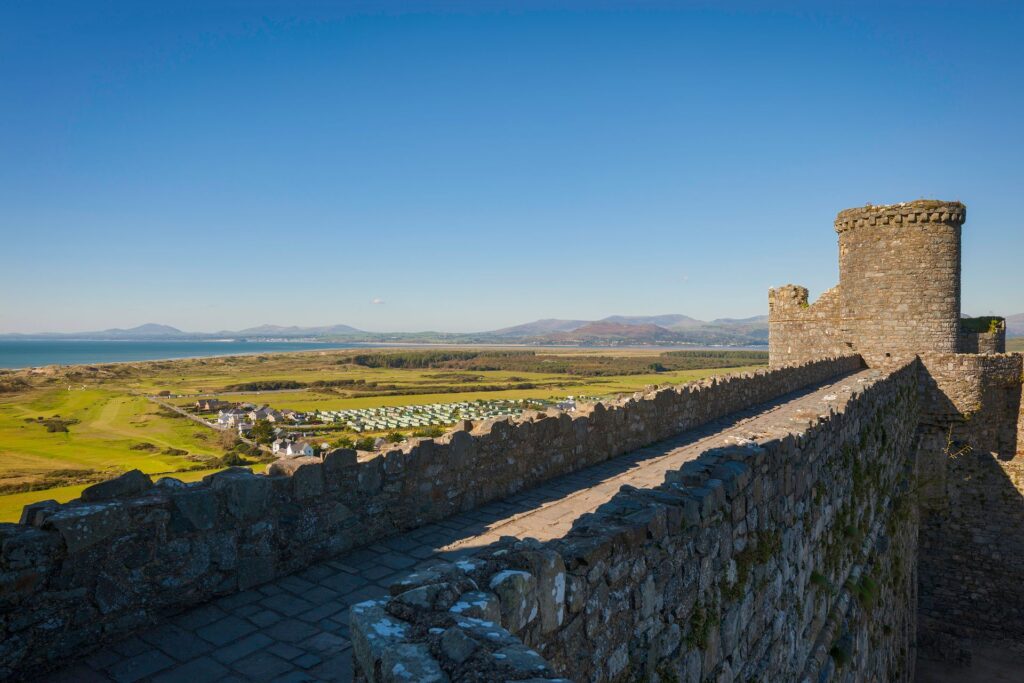
- The Winter Secret: Don’t rule out the “off-season.” From November 1st to February 28th, the castles operate on shorter hours (typically 10am-4pm). The trade-off? You’ll often have the towers entirely to yourself. There’s nothing quite like standing on Conwy’s high wall on a crisp December morning with snow on the peaks of Eryri – it’s a moody, atmospheric experience you simply can’t get in summer.
- The “Golden Hour” Strategy: If you are planning ahead for next summer, note that between 10am and 2pm, the castles are packed. The insider move? Visit Conwy or Caernarfon after 3pm in July or August. By then, the large coach tours have often moved on, leaving you with quieter battlements and the golden hour light for photography.
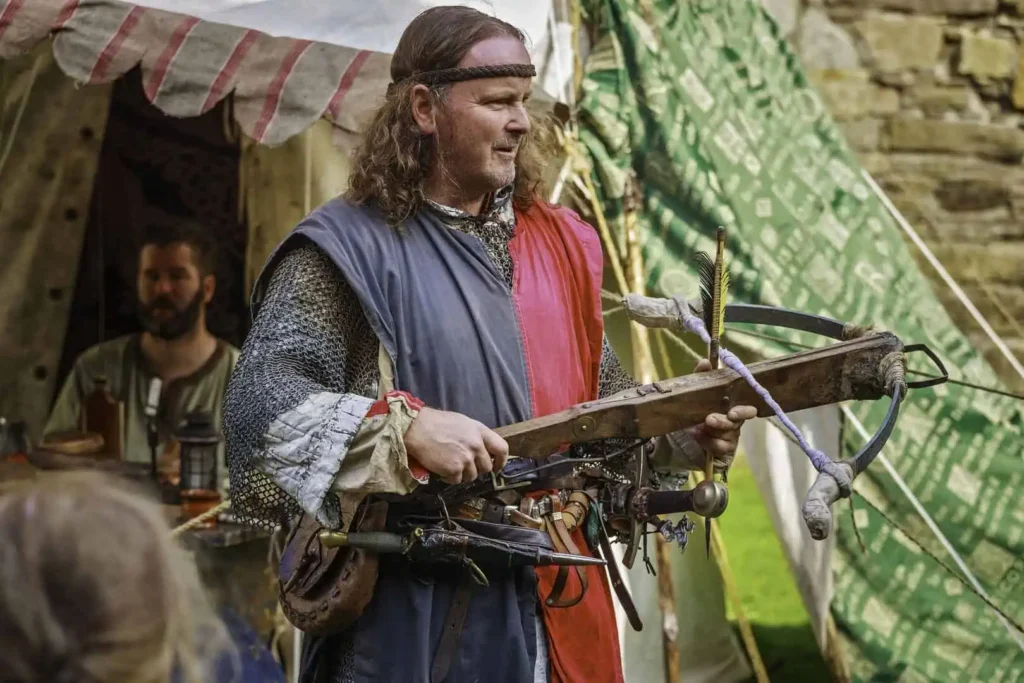
- Festival Alert (August 2026): Looking way ahead, the Beaumaris Medieval Festival is a staple of the August Bank Holiday weekend. For 2026, this will likely fall around August 29-31. It’s a spectacular event with knights and reenactments, but if you want a quiet, contemplative visit, avoid this specific weekend.
Secrets of the Iron Ring
Here are a few things the guidebooks often miss:
The Project Nearly Bankrupted a Kingdom: Edward I spent a staggering £80,000 on his Welsh castles – over £100 million today and more than three times his entire annual income!
The Genius Architect Was a Diplomatic Prize: Master James of St George was from Savoy (modern France/Switzerland). Edward I “borrowed” him from a cousin and he never returned home, spending 30 years creating his masterpieces in Wales.
Edward’s Fortresses Weren’t Invincible: During a major Welsh rebellion in 1294, Welsh forces under Madog ap Llywelyn actually captured Caernarfon Castle, forcing Edward to return and retake his own fortresses.
The Hidden Signature: Look for distinctive “Savoyard spurs” – angular projections at the base of main towers, like at Harlech. This was a trademark from Master James’s earlier work in his Alpine homeland.
Beyond the Big 4: Completing the Ring
The UNESCO sites are the crown jewels, but the Iron Ring was much larger. To dive deeper, consider visiting these supporting castles:
- Flint Castle: The starting point of the entire campaign. Begun in 1277, this was the very first castle Edward built in Wales.
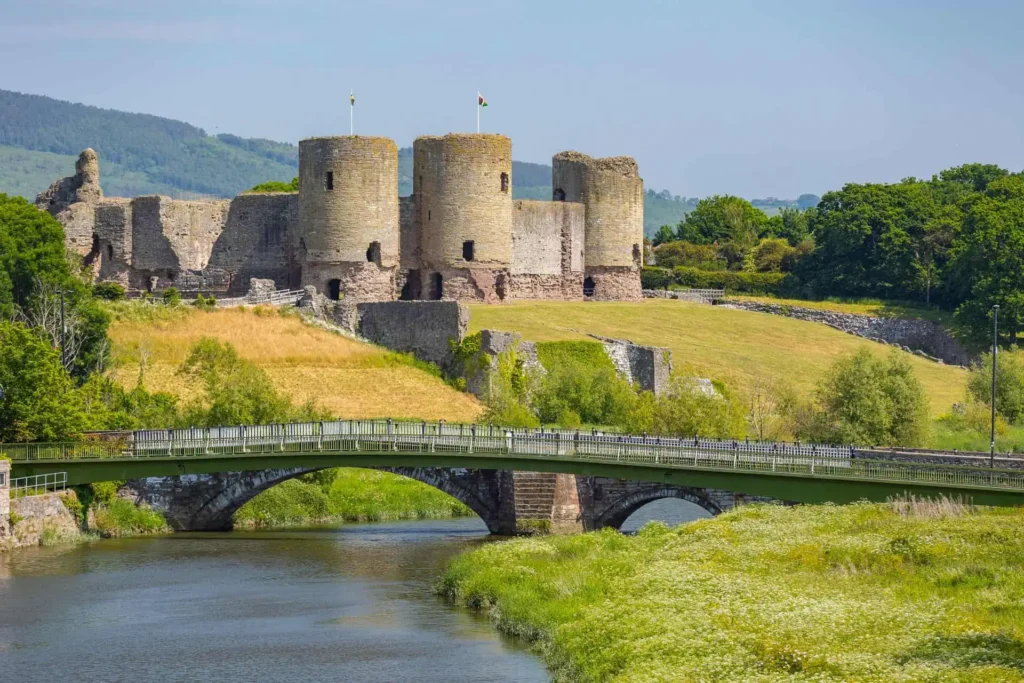
- Rhuddlan Castle: Begun just after Flint, this was Edward’s first revolutionary fortress and the blueprint for what was to come. It introduced the concentric ‘walls within walls’ design.
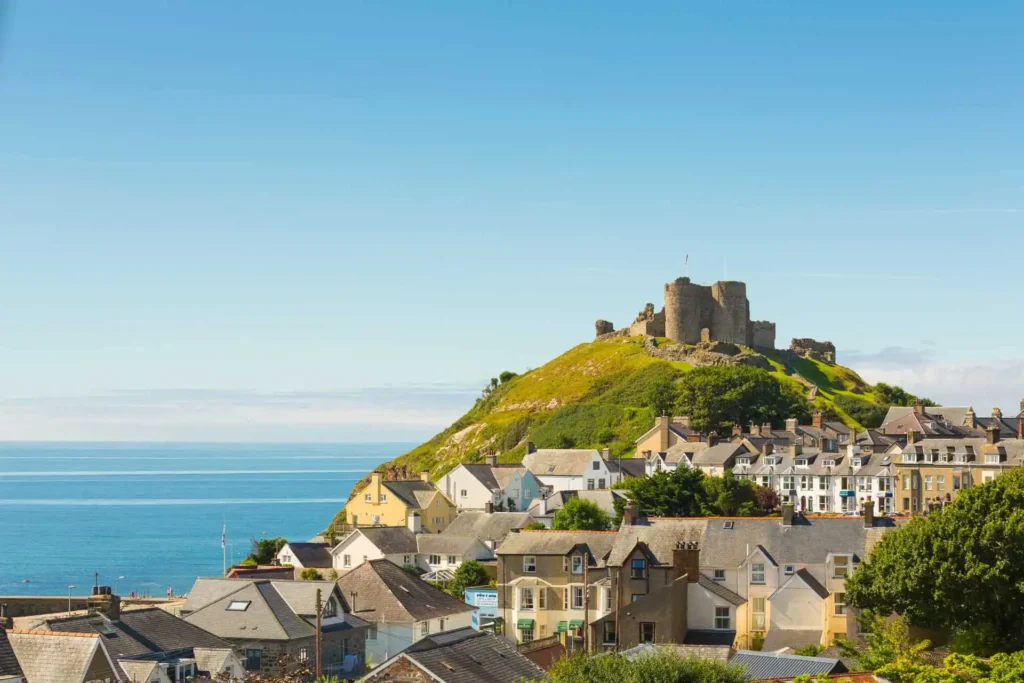
- Criccieth Castle: The twist – this was a Welsh castle built by Llywelyn the Great. Edward captured and strengthened it, making it the only castle in the group with both Welsh and English heritage.
Visitor Essentials
The Golden Ticket: Cadw Explorer Pass
If you plan to visit more than two castles, buy the Cadw Explorer Pass.
The Math: Individual entry for a family to all four castles will cost a fortune. The pass offers significant savings and often allows you to skip the queue. You can buy these at the first castle you visit.
Accessibility
- Conwy & Caernarfon: Have some accessible areas, but the towers involve steep, uneven spiral staircases.
- Beaumaris: Mostly flat and grassy, making it the most accessible for those with limited mobility (though walls require climbing).
- Harlech: Very steep approach, though a modern bridge has improved access significantly.
Food & Drink
- Conwy: The best foodie spot. High density of cafes and pubs.
- Caernarfon: Plenty of choices. The Black Boy Inn (within the walls) is iconic for a hearty traditional meal or grab a coffee on the Maes (the square right in front of the castle).
- Beaumaris: Excellent bakery (Red Boat Ice Cream Parlour is a must).
- Harlech: Fewer options, plan to eat before you go up to the castle or bring a picnic.
Photography & Views
The “Ring” Collection:
- Conwy: From the Gyffin side looking up at the walls for a sense of scale.
- Caernarfon: Cross the footbridge over the River Seiont for the classic “reflection in the water” shot.
- Beaumaris: Climb to the inner wall walk to shoot the perfect symmetry of the ‘walls within walls’.
- Harlech: The view from the castle looking out toward the Llyn Peninsula is one of the best landscapes in Wales.
FAQs
Which is the best castle if I can only visit one?
If you want “military power,” choose Conwy. If you want “grandeur and history,” choose Caernarfon. If you want “scenery,” choose Harlech.
Are they dog friendly?
Generally, dogs are allowed on leads in the ground-level outdoor areas, but not inside the towers or upper wall walks (assistance dogs excepted). Check specific Cadw rules before arrival.
Why was the Iron Ring never finished?
Money and distraction. Edward I turned his attention (and funds) toward fighting Scotland. Beaumaris was simply abandoned mid-build.
Can I get to them by public transport?
Conwy, Harlech and Caernarfon are accessible by train or bus networks. Beaumaris requires a bus connection from Bangor. However, a car is highly recommended for efficiency.
Ready to conquer the Iron Ring?
You need a strategic base. Conwy Valley Getaway places you just 20 minutes from the first castle and within easy reach of the rest. After a day of climbing medieval towers, retreat to your private hot tub or our heated indoor pool.
Some images: © Crown Copyright