Updated: November 08, 2026
On the eastern side of the Little Orme, near Llandudno, a small rocky cove has become one of North Wales’ best-known places for watching grey seals. Angel Bay, also called Porth Dyniewaid, is where seals come ashore to rest, moult and give birth to their pups.
The attraction is simple: you can watch wild seals going about their lives from a viewpoint high above the beach. In autumn, there may be mothers with white-coated pups resting among the rocks. At other times, you might see adults hauled out on the shore or swimming in the water below.
Getting there involves a short walk from Penrhyn Bay, but finding the right starting point isn’t always obvious. This guide covers when to visit, where to park, how to reach the viewpoint and what to know before you go, including how to watch the seals without disturbing them.

When is the best time to see seals at Angel Bay?
Autumn is generally the best time to visit Angel Bay if you’re hoping to see grey seal pups. The breeding season brings more seals ashore, and you may be able to spot the distinctive white coats of newborn pups among the adults.
Along the North Wales coast, grey seals typically give birth between August and December, although the timing varies. At Angel Bay, September through December is usually considered the main period for watching breeding activity.
Seals can also be seen outside the pupping season. They come ashore to rest and moult, and adults may be spotted swimming offshore throughout the year. The number present can change considerably, however, so a visit at any time of year is never a guarantee of sightings.
Does the tide make a difference?
At low tide, more of the rocky shore is exposed, giving seals additional space to rest. This may make it easier to spot animals hauled out on the beach, although their numbers and behaviour vary.
You don’t need to plan your entire visit around low tide, and it’s worth watching the water as well as the shore. A seal swimming offshore can be surprisingly easy to miss until its head appears above the surface.
What weather is best for visiting Angel Bay?
The viewpoint is exposed to coastal weather, so a calm, clear day generally makes for more comfortable wildlife watching. Strong winds can make it unpleasant to stand and observe for long, while rain can leave the paths slippery. Sturdy footwear is sensible, particularly after wet weather.
In autumn and winter, remember that daylight is limited. Allow enough time for the walk back, particularly if you intend to explore beyond the main viewpoint.
Where is Angel Bay and how do you get there?
Angel Bay lies on the eastern side of the Little Orme, the limestone headland between Llandudno and Penrhyn Bay. The seals are watched from a clifftop viewpoint overlooking the cove, reached on foot from Penrhyn Bay.
You don’t need to complete the longer walk around the Little Orme to see them. The shorter approach takes approximately 5-10 minutes from the footpath entrance near the residential streets.

Where to park for Angel Bay
There is no dedicated car park at Angel Bay itself. The usual approach is to park in Penrhyn Bay and walk up to the headland.
Penrhyn Beach East (LL30 3RW) is a convenient starting point for the short walk. From here, head towards the end of the road, where a public footpath climbs a flight of steps onto the Little Orme.
North Wales Wildlife Trust also recommends parking on the Penrhyn Bay promenade and walking to the public footpath entrance. Check parking signs and restrictions when you arrive, particularly during busier periods.
The streets around the footpath entrances are residential, so please park considerately and avoid obstructing driveways or access. Penrhyn Close is a small cul-de-sac used for the step-free entrance, rather than a designated visitor car park.
Walking to the seal-viewing point
From the end of Penrhyn Beach East, follow the public footpath up the steps and onto the headland.
The route joins a broader path through an area of former limestone quarrying. Continue towards Angel Bay, following the main path rather than taking the steeper routes climbing towards the summit of the Little Orme.
The viewing area is beside an information board overlooking the cove. From here, you can look down towards the rocks and beach where seals sometimes gather.
Allow around 5-10 minutes from the footpath entrance, plus however long you want to spend watching the seals. Return along the same route.
Accessibility and walking conditions
For a step-free approach, use the entrance at Penrhyn Close (LL30 3AH), a residential cul-de-sac off Penrhyn Beach West.
There is no designated visitor parking at this entrance. Parking is available along parts of the Penrhyn Bay promenade and surrounding streets, subject to local restrictions. If you need the step-free route because of limited mobility, bear in mind that you may have some distance to cover between your parked car and the entrance.
From the entrance gate, a broad tarmac path leads through the lower part of the former limestone quarry towards Angel Bay. This avoids the flight of concrete steps at the Penrhyn Beach East entrance.
As you approach the bay, the tarmac gives way to gravel. The route continues towards the information board overlooking the seals, although the final surface may be less suitable for some wheelchairs or mobility aids.
This is a useful alternative for wheelchair users, people with limited mobility and families with pushchairs. However, suitability will depend on individual mobility needs, particularly on the final approach to the viewpoint.
Beyond the main route, paths across the Little Orme can be steep, uneven and slippery after rain. There are also unprotected cliff edges, so children need close supervision.
For current route information, see the official Wales Coast Path guide to the Little Orme.
What to expect when you reach Angel Bay
The first thing you’ll notice is how far below you the beach lies. Angel Bay is a small, sheltered cove beneath the limestone cliffs of the Little Orme, with a rocky shore where grey seals come out of the water to rest.
There’s an information board near the viewing area, and this is a good place to stop and look down into the bay. You can’t walk down to the beach to see the seals up close, but the elevated viewpoint gives you a good view of the cove without disturbing the animals.
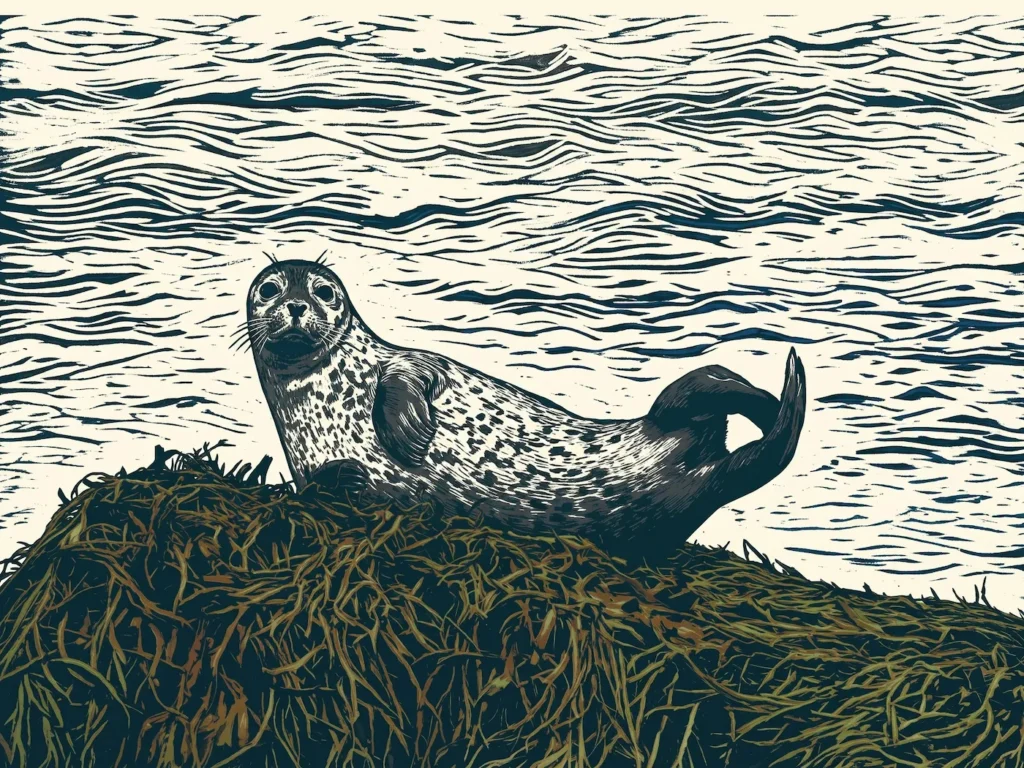
Depending on the season, you might see several seals stretched out among the rocks, mothers resting beside their pups, or just an occasional head appearing above the water. Their grey and mottled coats can blend remarkably well with the shore, so take your time looking before deciding there’s nothing there.


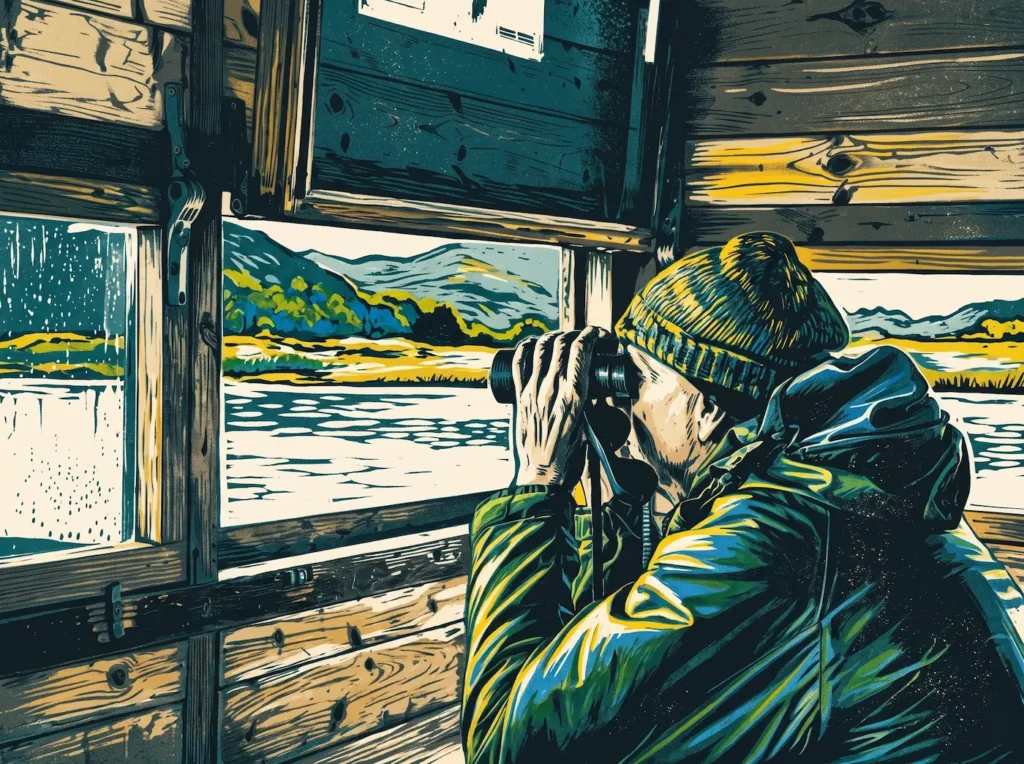
Binoculars are well worth bringing. They’ll help you pick out seals that are difficult to see with the naked eye, and you’ll be able to watch their behaviour without moving any closer.
There’s no need to rush away once you’ve spotted one. Seals may rest quietly for long periods, while others come and go with the tide. And if there are no seals to be seen, the headland is still an interesting place to visit, with views along the coast and opportunities to spot seabirds around the cliffs.
Understanding the grey seals at Angel Bay
Angel Bay is an important breeding and resting site for grey seals. They spend much of their time at sea hunting for fish, but regularly come ashore to rest, moult and, during the breeding season, give birth.
Grey seals are the larger of the two seal species found around the British coast. Adults have a distinctive long, sloping muzzle, sometimes described as a Roman nose, and mottled coats ranging from pale grey to almost black. Their markings vary between individuals, making it possible to recognise particular animals.

What happens during pupping season?
Female grey seals give birth to a single pup, usually on a beach or rocky shore. Newborn pups have thick, white fur and depend on their mother’s rich milk, which helps them gain weight quickly.
After around three weeks, the pups are weaned and begin shedding their white coats, revealing the shorter, mottled fur underneath. They must then learn to feed for themselves.
You may notice a pup lying alone on the shore, apparently without its mother. This isn’t necessarily a cause for concern. Mothers sometimes leave their pups while remaining nearby, and newly weaned pups may spend time resting on land before heading out to sea.
A mother may be reluctant to return to her pup while people or dogs are nearby. Repeated disturbance can therefore have serious consequences, particularly during the breeding season.
Who looks after the seals at Angel Bay?
The seals are wild animals, but their welfare is closely watched by local volunteers.
Morloi Conwy monitors the seals at Angel Bay and helps raise awareness of the importance of leaving them undisturbed.
The information board overlooking the cove provides details about the seals and the work involved in protecting them. It’s worth taking a moment to read it when you visit. Understanding what’s happening on the beach makes watching the seals more interesting.
How to watch the seals without disturbing them
Watching from the clifftop means you can see the seals without getting in their way. A few simple precautions help keep it that way.

Stay at the viewpoint and keep your distance
Don’t attempt to reach the beach or move closer to the seals.
Wildlife organisations recommend keeping at least 100 metres from seals. At Angel Bay, the simplest approach is to remain at the established viewing area and use binoculars or a camera zoom rather than trying to get closer.
Keep noise and sudden movements to a minimum. Seals that become alert to your presence, start moving around or retreat towards the water may be responding to disturbance. Give them more space.
Keep dogs on leads
Dogs are welcome on the paths through Rhiwledyn Nature Reserve, but North Wales Wildlife Trust requires them to be kept on a lead.
This matters for more than the seals. Sheep graze parts of the reserve in autumn and winter, and the headland supports other wildlife throughout the year.
Keep your dog close, stay on the paths and don’t allow it to approach the cliff edge. Even a friendly dog can frighten wildlife, and the steep terrain presents obvious risks.
For more ideas for exploring North Wales with a dog, see our guide to visiting the Conwy Valley with your dog.
Take photographs without disturbing the wildlife
- You can photograph seals from the viewpoint. A zoom lens will give you a better look without having to approach them.
- Avoid flash photography, loud noises or trying to attract a seal’s attention for a photograph.
- Drones are best left at home. Flying one near resting seals or their pups risks disturbing them, even when the operator remains some distance away.
What if a seal looks injured or abandoned?
A seal lying alone on the beach isn’t necessarily in trouble. Seals regularly rest ashore, and pups may be left alone for periods while their mothers are nearby.
However, visible injuries, entanglement in fishing gear or signs of serious distress may indicate that an animal needs help.
Don’t approach, touch, feed or attempt to move a seal back into the sea. Instead, contact British Divers Marine Life Rescue (BDMLR) on 01825 765546 for advice. Give them the animal’s location and describe what you’ve observed. Their trained volunteers can assess whether assistance is needed.
Exploring more of the Little Orme
If you have time after watching the seals, there’s more to explore on the Little Orme. The headland is home to Rhiwledyn Nature Reserve, managed by North Wales Wildlife Trust, with limestone grassland, coastal cliffs and paths offering views towards Llandudno, the Great Orme and across the coast.

Spring and summer are particularly good for wildflowers, including wild thyme, rock-rose and several species of orchid. The cliffs attract seabirds, while peregrines, kestrels and other birds of prey can sometimes be seen overhead.
For a longer outing, the Wales Coast Path has a 4 km circular route around the Little Orme, passing old limestone quarries and offering an optional climb towards the summit. This is a more demanding walk than the short approach to Angel Bay. There are steep climbs and descents, uneven surfaces and exposed sections near cliffs and old quarry workings.
You can find directions and a route map in the official Wales Coast Path Little Orme walking guide.
If you’d rather combine seal watching with a visit to the town, our Llandudno day-trip guide has ideas for exploring the promenade, beaches and other attractions.
FAQs
What is the best month to see seals at Angel Bay?
Autumn is generally the best time to visit, particularly from September to December when grey seals gather for the breeding season. October and November are good months to consider if you’re hoping to see pups, although the timing and number of seals vary from year to year. Sightings are never guaranteed.
Can you see seals at Angel Bay all year round?
Yes, grey seals can be seen at Angel Bay outside the autumn breeding season. They use the cove for resting and moulting as well as giving birth. However, numbers vary throughout the year, and there may be occasions when no seals are visible from the viewpoint.
Where is the best place to park for Angel Bay?
Penrhyn Bay is the usual starting point. Penrhyn Beach East (LL30 3RW) is convenient for the short walking route, while North Wales Wildlife Trust recommends parking along the promenade. There is no dedicated Angel Bay car park, so check local parking restrictions and be considerate of residents.
Is the walk to Angel Bay suitable for children or wheelchair users?
The short walk to the viewpoint is manageable for many families, although children need close supervision because of the steep cliffs. The Penrhyn Beach East entrance has steps, while the Penrhyn Close entrance avoids them, using a tarmac path that turns to gravel on the final approach. The wider headland includes steep and uneven ground, so wheelchair users should check current route conditions before visiting.
Can you take dogs to Angel Bay?
Yes, dogs are allowed on the paths through Rhiwledyn Nature Reserve, but they must be kept on leads. This protects wildlife and grazing sheep, particularly during autumn and winter. Keep dogs away from cliff edges and never allow them to approach or disturb the seals below.