Last updated: 11 November 2026
Bringing your dog on holiday to North Wales opens up a wonderful variety of places to explore together. There are sandy beaches where you can walk for miles, wooded valleys with rivers and lakes, and hills where the views stretch across the coast and into Eryri (Snowdonia).
The Conwy Valley is a particularly good base for enjoying that variety. With the North Wales coast to the north, Gwydir Forest and Betws-y-Coed to the south, and the mountains of Eryri to the west, you can choose a different kind of outing each day without spending hours travelling.
Of course, a good holiday with a dog isn’t necessarily about finding the longest or most challenging walks. Sometimes a gentle wander beside a river is just what’s needed, especially after a busy day exploring. And with seasonal beach restrictions, livestock and occasionally difficult mountain terrain to consider, it helps to know which places will suit your dog before setting off.
Here are some of the places we’d recommend exploring from the Conwy Valley, along with practical advice to help you plan your days.
Why the Conwy Valley makes a good base for dog owners
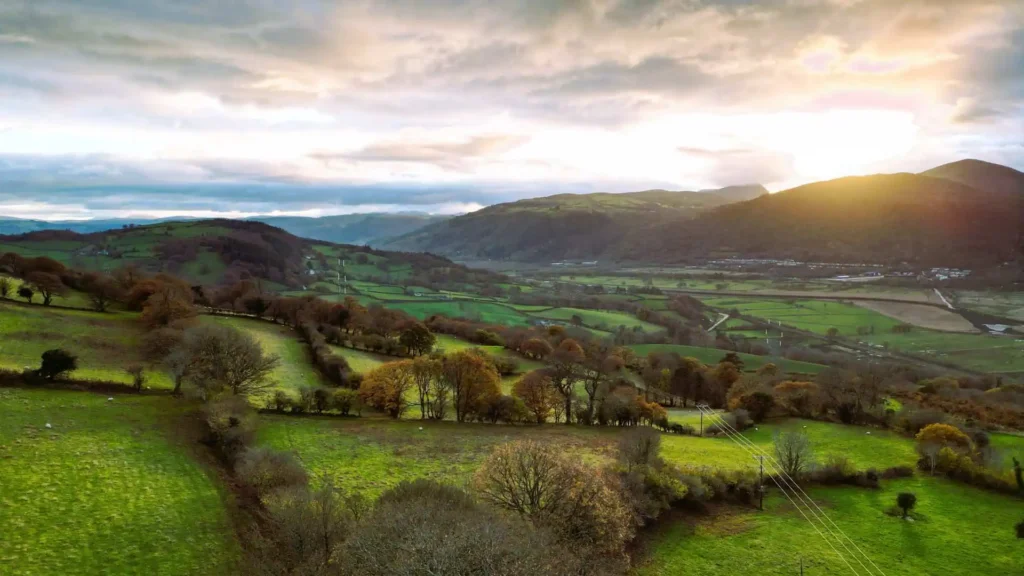
One of the advantages of staying in the Conwy Valley is how quickly the landscape changes as you travel through it. Head north towards Conwy and you’ll reach sandy beaches, coastal paths and historic towns. Turn west towards Trefriw and the scenery becomes more wooded, with quiet lakes tucked beneath the hills. Further south, Betws-y-Coed provides access to forests, waterfalls and the higher mountains of Eryri.
That flexibility is particularly useful when travelling with a dog. A long mountain walk might sound appealing when you’re planning your holiday, but after a tiring journey or a particularly energetic day, a shorter woodland stroll may be much more welcome. Some dogs are happiest exploring forest paths, others love the space of a sandy beach, while older dogs may be perfectly content with a gentle riverside walk.
The weather also plays a part. Conditions can be quite different on the coast and in the mountains, so having several types of outing within reach gives you more options when the forecast changes.
Dog-friendly beaches near the Conwy Valley
The beaches along this part of the North Wales coast are wonderfully varied, from wide stretches of sand to sheltered shores backed by promenades. Several welcome dogs throughout the year, although seasonal restrictions apply to designated sections of some beaches between 1 May and 30 September.
It’s worth checking the current Conwy Council dog restrictions before visiting, particularly during the summer months. Restrictions don’t necessarily cover an entire beach, and local signs will help you identify where dogs are permitted.
Conwy Morfa: wide sands and estuary views
If your dog loves a beach walk, Conwy Morfa is one of the first places we’d suggest. Lying on the western side of the Conwy estuary, it has a broad expanse of sand at low tide, with views towards the Great Orme, the surrounding hills and the estuary itself.
It’s a very different experience from the more developed beaches around Llandudno. The dunes and open shoreline give it a wilder character, and when the tide is out there’s plenty of space for a long walk. Conwy Morfa is also outside the council’s established seasonal beach exclusion areas, making it especially useful when access is restricted elsewhere along the coast.

There are a couple of practical considerations. The beach changes considerably with the tide, and the estuary channel and exposed sandbanks need treating with care. It’s not somewhere we’d encourage a dog to swim without understanding the local conditions. Keep an eye on the tide times, and remember that wildlife and other beach users may make a lead appropriate even where dogs are allowed.
There are two car parks serving the Morfa Conwy area, with access to the beach and dunes. Both have height restrictions, and facilities are limited, so it’s worth bringing water for your dog and anything else you might need.
For dogs that enjoy exploring open spaces, particularly outside the busiest summer weekends, it’s a lovely place to spend a couple of hours.
Penmaenmawr: a quieter coastal alternative
A little further west, Penmaenmawr offers a different sort of beach outing. The town has a long promenade overlooking the sea, with sandy stretches at low tide and views along the coast towards Ynys Môn (Anglesey).
It’s often a good choice when you fancy a straightforward walk beside the sea rather than a longer excursion. You can spend time on the sand where dogs are permitted, then continue along the promenade, making the outing as short or as long as you wish.


During the summer, dogs are excluded from the central section between the café area and the sailing club slipway. Other sections remain available, with signs marking the boundaries. Outside the restricted period, there’s more freedom to explore the beach, although the usual considerations around tides and other visitors still apply.
Penmaenmawr is quite exposed to the prevailing weather, so even on an otherwise pleasant day it can be breezy beside the sea. On the other hand, that open coastal setting is part of its appeal, particularly if you’re looking for somewhere less busy than Llandudno.
Llandudno West Shore: a more relaxed seaside outing
Llandudno’s West Shore has a gentler feel than the busy promenade and pier at North Shore. Looking across the Conwy estuary towards Ynys Môn and the mountains beyond, it’s a pleasant place for a walk with your dog, especially if you’d like to combine some time on the beach with a visit to the town.
The broad sands are particularly attractive at low tide, while the promenade provides an alternative when there’s less beach exposed or you prefer a firmer walking surface. It’s an easy place to enjoy the coastal scenery without necessarily committing to a long walk.

As at Penmaenmawr, part of the beach is subject to seasonal restrictions. Between 1st May and 30th September, dogs are excluded from the designated area between the two stone groynes, although other sections remain accessible.
West Shore can be a good option for older dogs or for days when you want something less demanding. You can enjoy the sea air, stop for refreshments and still have time to explore elsewhere.
Woodland walks and quieter days around Gwydir Forest
For many dogs, woodland walks are every bit as enjoyable as a day at the beach. The forests around Trefriw, Llanrwst and Betws-y-Coed offer a mixture of broad tracks, riverside paths and more rugged trails, often with plenty of shade during warmer weather.
Gwydir Forest extends across a large area of wooded hillsides, lakes and former mining country. It isn’t one single walking destination, and the different starting points offer quite different experiences. Some trails are suitable for a gentle outing, while others involve steep climbs, narrow paths or rough ground.
Llyn Crafnant: lakeside scenery and a choice of walks
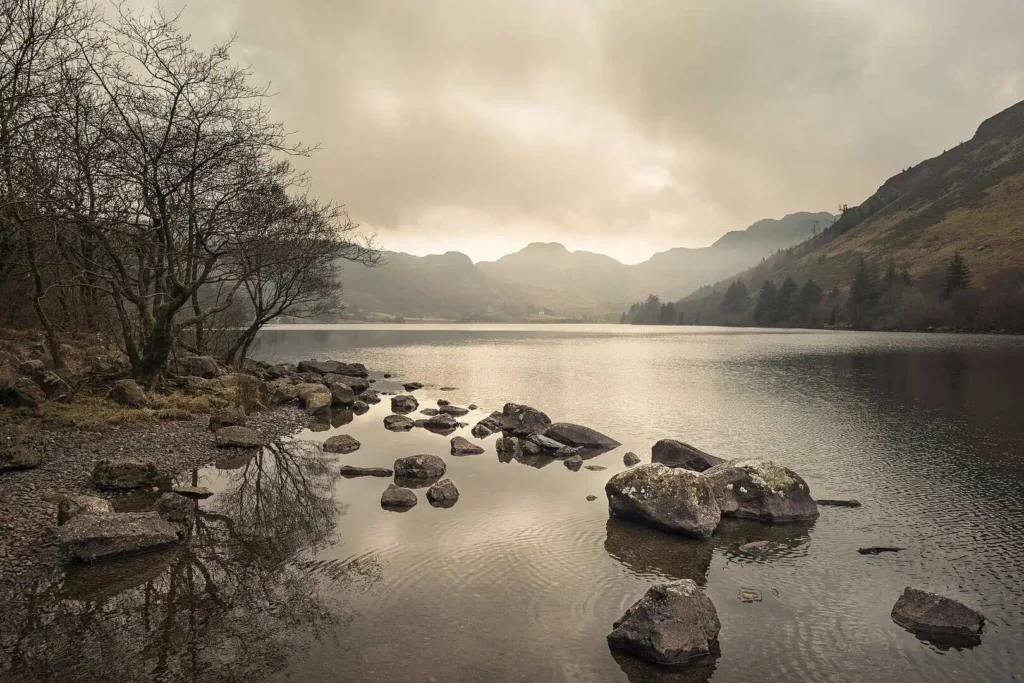
The narrow road from Trefriw climbs through the trees before reaching Llyn Crafnant, a long, sheltered lake beneath the steep wooded slopes and rocky crags of the surrounding mountains.
It’s one of the loveliest places in this part of the valley for a walk that feels properly immersed in the landscape without requiring a strenuous mountain ascent. The lake is beautiful in all seasons, although the woodland colours in autumn are particularly appealing.
One of the reasons we recommend Llyn Crafnant is the choice of routes available from the Natural Resources Wales car park. The Llyn Crafnant Circuit is a waymarked 5 km walk, graded easy by NRW, which takes you along a mixture of forest roads, tracks and lakeside paths. Some sections are rougher underfoot, and the return follows a quiet tarmac road, but it’s a manageable outing for many reasonably active dogs and their owners.
If you fancy something much shorter, the Afon Crafnant Amble follows a well-surfaced, relatively flat 0.6 km route beside the river. There are picnic benches along the way, making it a pleasant option for an older dog, a family with young children or anyone who simply wants a gentle walk in beautiful surroundings.
For more experienced walkers, there are also routes climbing into the surrounding woodland, including the more demanding Crafnant View Walk. These are quite different from the lakeside circuit, with steeper paths and uneven terrain.
If you’re visiting in autumn, our guide to six autumn walks in North Wales includes the Llyn Crafnant Circuit, along with several other walks suited to the season.
The road up from Trefriw is narrow, with passing places, so it’s worth taking your time on the approach. There’s a privately operated café beside the lake, but opening arrangements vary and you shouldn’t rely on it being available.
Natural Resources Wales provides maps, route descriptions and visitor information on its Llyn Crafnant page. It’s worth looking at these before choosing your walk, particularly if you’re visiting with an older dog or anyone with limited mobility.
Exploring the wider Gwydir Forest
The wider forest is also worth exploring, particularly if you enjoy discovering some of the area’s less obvious history. Lead and zinc mining once played an important role here, and old mine workings, reservoirs and industrial remains can still be found among the trees.
The Hafna Miners’ Trail is one example, a 5 km moderate route through former mining country. It follows a combination of forest roads and narrower paths, with muddy, rocky and uneven sections that make it a more demanding walk than the distance alone might suggest.
If you’re interested in the forest’s industrial past, our guide to the old lead mines of Gwydir Forest explores the workings around Hafna, Cyffty and Llyn Parc, including a longer walk through the mining landscape.

There is an important qualification, however. Gwydir is a working forest, and forestry operations can result in temporary closures or diversions. Hazardous tree-felling operations are currently affecting the Hafna area, while the marked walking trails at Sawbench are closed.
This doesn’t mean avoiding Gwydir Forest altogether, but it does mean checking the latest Natural Resources Wales visitor information before setting out. It’s also worth remembering that some forest roads and trails are shared with cyclists, so keeping your dog close is sensible even where a lead isn’t specifically required.

Hill walks and mountain days with your dog
The wooded valleys and lakes provide plenty of walking opportunities, but for energetic dogs and owners who enjoy gaining some height, there are also excellent hill walks within reach.
The important thing is to choose a route that suits both of you. A dog that happily walks for several hours on forest tracks may find steep, rocky terrain much harder, particularly on the descent.
Mynydd y Dref (Conwy Mountain)
Immediately west of Conwy town, Mynydd y Dref rises above the estuary and offers some wonderful views for a relatively modest climb. From the higher ground, you can look across Conwy Castle and the town towards the Great Orme, with the Carneddau mountains forming an impressive backdrop inland.
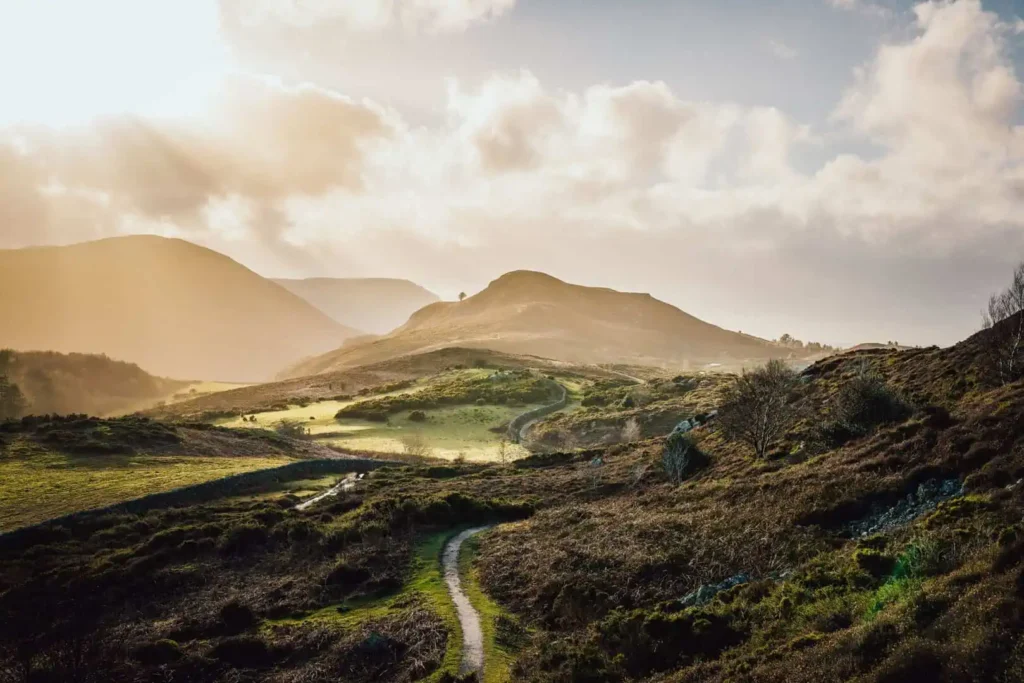
Although it isn’t especially high, the walking can be surprisingly rugged. There are rocky paths, uneven surfaces and exposed sections, particularly along the ridge. Livestock may be grazing on the hillside, so dogs need to be kept under close control and on short leads around animals.
For a reasonably fit dog accustomed to hillwalking, Mynydd y Dref makes a rewarding outing without the commitment of one of Eryri’s major summits. There are several possible approaches and circular routes, however, so it’s worth choosing one that matches your walking experience rather than simply following the first path uphill.
Rhaeadr Fawr (Aber Falls)
Another worthwhile option is Rhaeadr Fawr, near Abergwyngregyn, where a broad valley leads towards one of North Wales’s most impressive waterfalls.
The main approach follows a generally well-surfaced path, climbing gradually through the valley before reaching the falls. The surrounding slopes and the sound of the water give the walk a dramatic setting, particularly after a period of rain.
It’s popular with families and walkers, so you shouldn’t expect solitude on a sunny weekend. Livestock may also be present, and dogs need to be controlled around other visitors and grazing animals.
After heavy rain, the waterfall can be spectacular, but the rocks and ground near the water can also be slippery. There’s no need to leave the established paths to enjoy the view, and keeping dogs away from steep or slippery edges is sensible.

Taking your dog into the higher mountains of Eryri
For some visitors, walking in the mountains is a major part of a North Wales holiday, and experienced walking dogs can make wonderful companions. But taking a dog onto Yr Wyddfa (Snowdon) or another high summit deserves more consideration than an ordinary countryside walk.
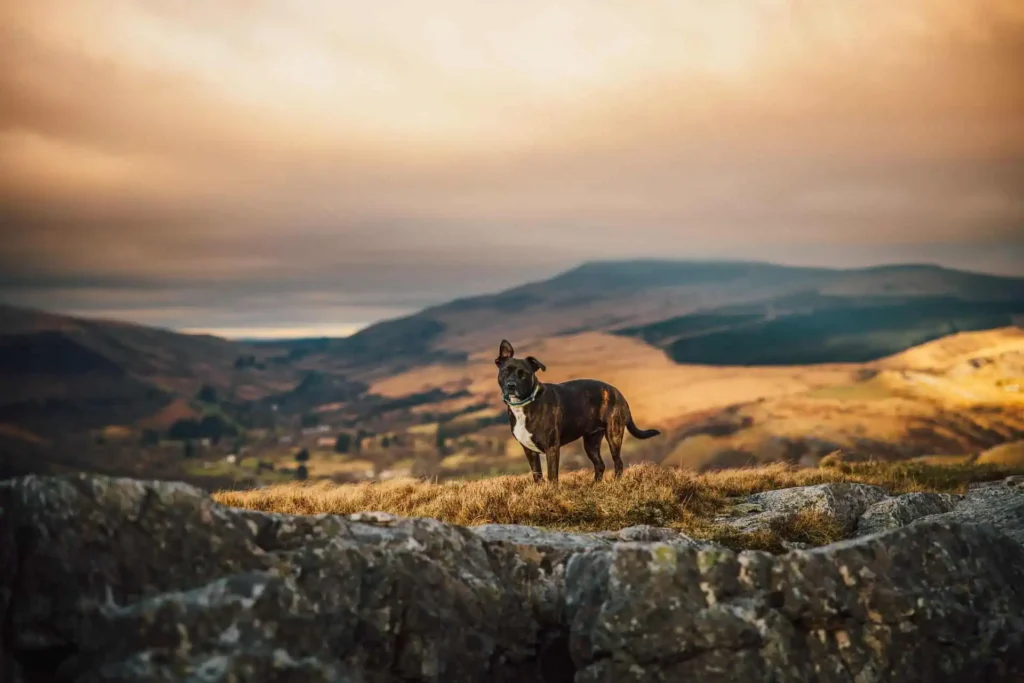
Long ascents and descents over rocky ground can be hard on paws and joints, while exposed terrain, strong winds and rapidly changing weather add further challenges. Even a route regarded as straightforward by experienced walkers may be too demanding for a dog that hasn’t gradually built up the necessary fitness.
It’s worth considering how your dog copes with rough surfaces, steep descents and long periods without reliable water sources. Carry enough water for both of you, and avoid routes involving scrambling, exposed drops or places where you might need to use your hands.
There are also access rules to understand. Dogs can accompany walkers on public footpaths and open access land in Eryri, but on open access land they must be on a lead no longer than two metres between 1st March and 31st July. Public rights of way have different requirements, with dogs needing to remain under close control and short leads advised around livestock and wildlife.
The Eryri National Park Authority’s guidance on visiting with dogs explains these distinctions.
For a closer look at the higher ground overlooking the Conwy Valley, see our guide to walking in the Carneddau, including route choices, terrain and mountain safety considerations.
If you’re uncertain about your dog’s ability to manage a particular route, there are plenty of lower-level alternatives with wonderful mountain scenery. A walk doesn’t need to reach a summit to be memorable.

Gardens, towns and other dog-friendly days out
Not every day needs to revolve around a countryside walk. The Conwy Valley and surrounding area also offer gardens, historic towns and places to stop for a meal or refreshments, although dog policies can vary considerably between attractions.
Bodnant Garden: woodland walks and changing seasons
Bodnant Garden is particularly convenient if you’re staying in or around Eglwysbach, and it’s somewhere we’d certainly recommend considering during a dog-friendly holiday.
The National Trust garden covers 80 acres, with formal terraces overlooking the valley, sweeping lawns, mature trees and woodland paths descending into The Dell. It’s a very different experience from walking in open countryside, with plenty of interest as the seasons change.

Autumn is especially attractive, when the mature trees begin to turn, while winter brings a quieter atmosphere and the chance to appreciate the structure of the garden without the summer crowds. The woodland areas can be steep in places, so it’s worth bearing that in mind if you’re visiting with a dog that struggles on slopes.
Bodnant has a specific dog access policy. From October to March, dogs are welcome every day. Between April and September, they are welcome Thursday to Sunday, excluding Bank Holiday Mondays. Dogs must remain on short, non-extendable leads throughout the garden, including the woodland.
These arrangements make Bodnant particularly appealing for autumn and winter visitors, but it’s always worth checking the National Trust’s current dog policy before travelling.
Our Bodnant Garden visitor guide covers the different areas of the garden, seasonal highlights and practical information for planning your visit.
Exploring Conwy with your dog
Conwy is a lovely town to explore on foot, with its medieval streets, historic buildings, busy quay and views across the estuary. It’s compact enough for a leisurely wander, and there are pubs and cafés where well-behaved dogs are welcome.

The castle dominates the town, although dog access is more limited than you might expect. Between 1st November and 28th February, dogs on short leads are permitted on the ground-floor levels of Castell Conwy. During the rest of the year, only assistance dogs are admitted.
Dogs aren’t permitted on Conwy’s town wall walks at any time because of the narrow sections and safety railings. You can still appreciate the walls from the streets below, and there’s plenty to explore without climbing them.
A visit to Conwy also combines well with an outing to Conwy Morfa, giving you the chance to enjoy both the historic town and the open coastline in the same day.
You can check current admission arrangements on Cadw’s Castell Conwy page.
If you’re planning to visit the castle, our Conwy Castle guide covers its history, what you’ll see and practical visitor information.
Betws-y-Coed and Llanrwst
Heading south through the valley, Betws-y-Coed offers another enjoyable place to spend a few hours. The village is surrounded by woodland, with rivers flowing through and plenty of opportunities for short walks as well as longer forest outings.
It’s popular with visitors, particularly during school holidays, but its cafés, shops and riverside setting make it a useful alternative when you don’t want a full day on the hills. Hangin’ Pizzeria is one established eating option that welcomes well-behaved dogs.
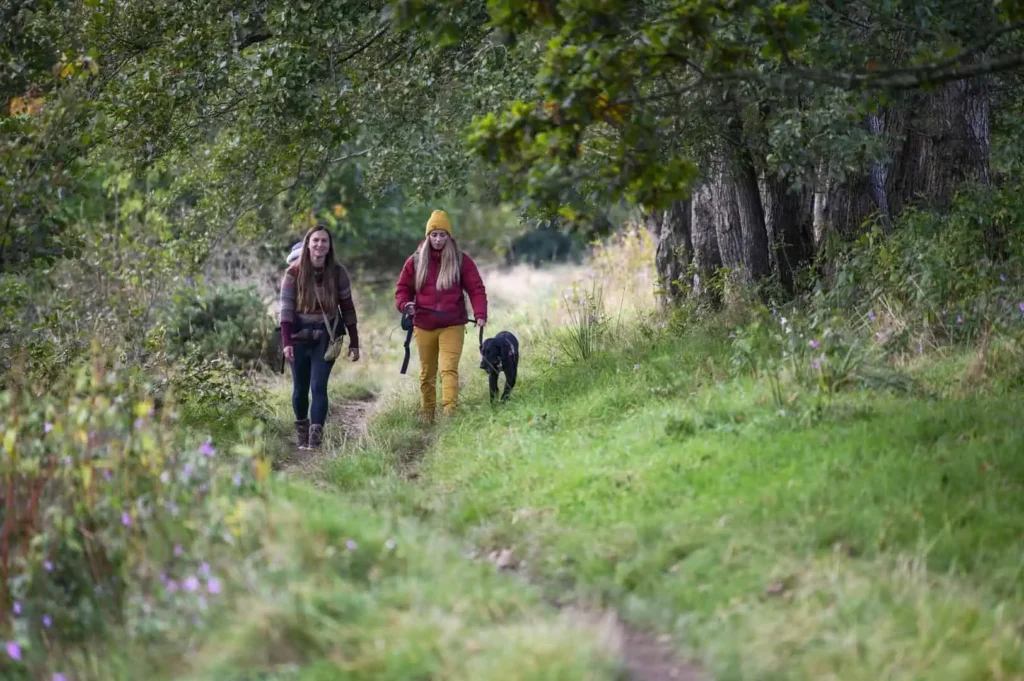
Closer to Eglwysbach, Llanrwst has a different character. It’s a working market town rather than a purpose-built visitor destination, with local shops, the historic Pont Fawr bridge and the distinctive Tu Hwnt i’r Bont building beside the river. It’s worth stopping to explore, particularly if you’re already visiting the nearby forest or lakes.
Wherever you choose to eat, check the individual establishment’s dog policy before visiting. Some welcome dogs indoors, while others restrict them to bar areas or outside seating, and arrangements can change.
For more ideas that don’t involve demanding walks, our North Wales for Non-Hikers guide explores other ways to enjoy the area.
A few things to know before exploring North Wales with your dog
The variety of landscapes around the Conwy Valley is one of its strengths, but it’s also worth remembering that much of the countryside is actively farmed, and access conditions aren’t always the same as those in urban parks or managed recreation areas.
Livestock is probably the most important consideration. Sheep and cattle are common on the hills, around farmland and occasionally near woodland routes. Keep your dog on a short lead whenever livestock is nearby, even if its recall is normally excellent. During spring and early summer, ground-nesting birds are another reason to keep dogs close.
If cattle approach and you feel threatened, official countryside guidance advises letting go of your dog’s lead rather than putting yourself at risk by holding on.
Weather can also make a considerable difference to your plans. Conditions on the coast may be quite pleasant while the mountains are covered in cloud or experiencing strong winds. After rain, woodland paths can become muddy and rocky descents slippery, while hot summer days can make strenuous walks uncomfortable or unsafe for dogs.
It’s sensible to carry drinking water, waste bags, a suitable lead and a towel for muddy paws. For longer walks, take more water than you think you’ll need, particularly in warm weather or on exposed routes.
Finally, remember that public access doesn’t always mean unrestricted access for dogs. Conwy Council requires dogs to be on leads on roads and pavements with speed limits of 40 mph or less, and in car parks. Forestry operations may temporarily affect woodland routes, while seasonal restrictions apply to some beaches and gardens.
Checking the relevant visitor information before travelling is a small task that can save a disappointing journey.
Staying at Conwy Valley Getaway with your dog
Our two neighbouring holiday cottages, Fig Tree and Laurel, are in Eglwysbach, surrounded by countryside on the eastern side of the Conwy Valley. Both welcome up to two dogs, making them a convenient base for exploring the beaches, forests and mountain walks we’ve covered.
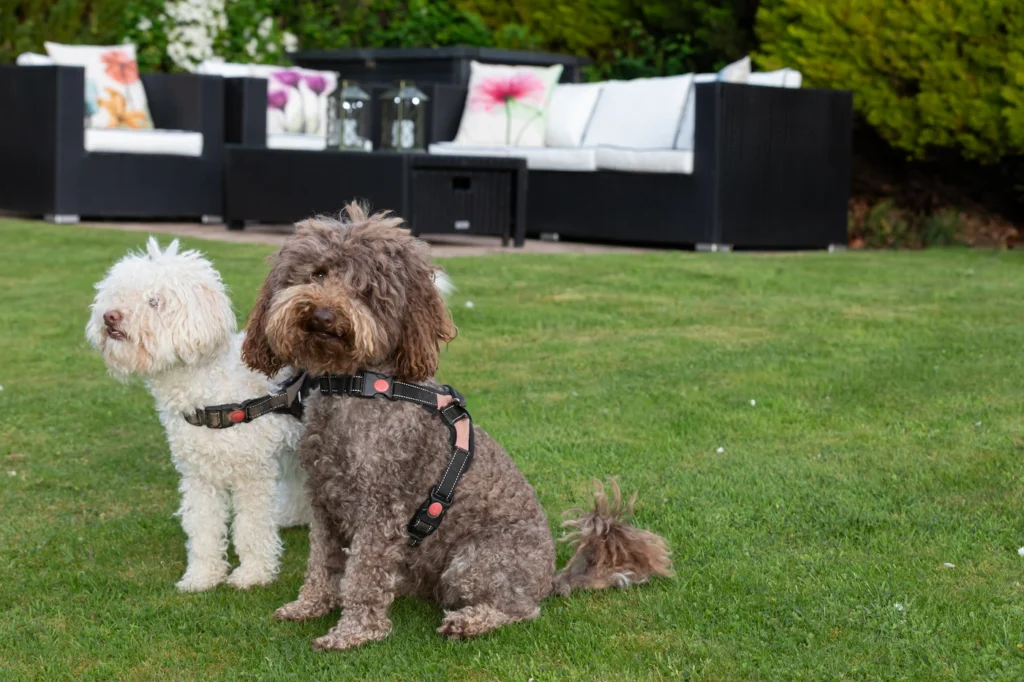
Each cottage has its own private hot tub, and guests can also enjoy our heated indoor swimming pool. There’s a shared one-acre garden, although it’s worth knowing that this isn’t fully enclosed because the driveway remains open.
We provide practical facilities for visiting dogs, and you can find full details of our dog policy, garden layout and what’s included on our dog-friendly holiday cottages page.
FAQs
Which beaches near the Conwy Valley allow dogs all year?
Conwy Morfa welcomes dogs throughout the year and isn’t included in Conwy Council’s established seasonal beach exclusion areas. Penmaenmawr and Llandudno West Shore also have sections where dogs are permitted during summer, although designated areas are restricted between 1st May and 30th September. Always check current council guidance and beach signs before visiting.
Can I take my dog walking in Gwydir Forest?
Yes, Gwydir Forest has several walking trails suitable for dogs, although conditions and difficulty vary. Some paths are steep, narrow or rocky, and forestry operations can lead to temporary closures. The trails at Sawbench are currently closed, and work is affecting the Hafna area, so check Natural Resources Wales notices before setting off.
Are dogs allowed at Bodnant Garden?
Yes. Dogs on short, non-extendable leads are welcome every day from October to March, and from Thursday to Sunday between April and September, excluding Bank Holiday Mondays. Dogs must remain on leads throughout the garden, including the woodland.
Do dogs have to be on leads in Eryri?
On open access land, dogs must be on a lead no longer than two metres between 1 March and 31 July. On public rights of way, dogs must remain under close control, although a lead isn’t always compulsory. Keep dogs on short leads around livestock and wildlife, and follow any additional local restrictions.
Is the Conwy Valley suitable for a holiday with an older dog?
The variety of shorter walks makes the Conwy Valley a good option for many older dogs. The 0.6 km Afon Crafnant Amble offers a well-surfaced, gentle woodland route, while coastal promenades and visits to towns such as Conwy provide alternatives to steep hillwalking. Choose outings according to your dog’s mobility and stamina, and remember that even relatively short countryside walks can involve uneven ground.
Some images: © Crown Copyright