Walk through Gwydir Forest and you’ll come across ruined stone buildings among the ferns, capped mine shafts beside the paths and hillsides covered in loose rock. They seem strangely out of place in such quiet woodland, but they’re the remains of an industry that once transformed the hills between Llanrwst and Betws-y-Coed.
For generations, miners worked underground extracting lead and zinc, while processing mills, workshops and tramways occupied land now covered by trees. The mines have long since closed, but a surprising amount remains.
I explored the area on a longer woodland walk in September 2026, taking in Llyn Parc and several of the old workings around Hafna. What struck me most wasn’t any single ruin, but just how widespread the remains were. Almost around every corner there seemed to be another reminder of the forest’s industrial past.
If you’d like to explore the old mines yourself, there are several walking options, from a short heritage trail at Cyffty to more demanding routes through the woodland. Once you know what you’re looking at, an ordinary forest walk becomes a far more interesting one.

Which Gwydir Forest mining walk should you choose?
Natural Resources Wales (NRW) maintains three particularly useful waymarked walks for exploring the area’s mining heritage. They vary considerably in length and difficulty, so it’s worth choosing one that suits the time you have available.
| Walk | Distance | Difficulty | Best for |
|---|---|---|---|
| Cyffty Mine Trail | 0.5 km, around 20 minutes | Easy | A short introduction to mining remains |
| Hafna Miners’ Trail | 5 km, 1½–2½ hours | Moderate | Exploring several mining sites and the old processing mill |
| Llyn Parc Walk | 6.9 km, 1½–3 hours | Strenuous | Combining a woodland lake, mining ruins and a more challenging walk |
Hafna is my first choice if you’re particularly interested in the mines. Its surviving buildings and interpretation panels provide the best opportunity to understand how the industry operated, while the trail takes you through a varied section of forest.
Cyffty is a good alternative if you’re short of time or prefer a shorter walk. The Llyn Parc Walk involves substantially more climbing and is better suited to experienced walkers comfortable with steep, uneven ground.
All three involve outdoor paths rather than fully accessible visitor attractions, and even the short Cyffty trail has steps and rough surfaces.
Check access before you travel: Forestry work can occasionally affect access to Gwydir Forest’s walking trails, with temporary closures or diversions sometimes necessary. Before setting off, check the latest information on the Hafna and Sawbench pages, and always follow any restrictions or notices on site.
Getting there and parking
Gwydir Forest is within Eryri (Snowdonia), between Llanrwst and Betws-y-Coed. From our cottages at Conwy Valley Getaway, allow approximately 20-25 minutes to reach the forest, depending on which trail you’re visiting.
For Hafna, Cyffty and Sawbench, take the B5106 from Llanrwst towards Betws-y-Coed. Turn left at the brown and white sign for Gwydir Castle, then immediately right onto the minor road that leads into the forest.
- Hafna car park: Approximately 1½ miles south-west of Llanrwst, beyond Sawbench car park. Free parking. OS grid reference SH 781 600.
- Cyffty Mine: Continue past Hafna and Llyn Sarnau to the small roadside parking area on the left. Free parking. OS grid reference SH 772 588.
- Llyn Parc Walk: The official waymarked route begins at Pont y Pair car park in Betws-y-Coed, where parking charges apply.
The forest roads are narrow in places, and postcodes cover fairly wide areas. NRW’s directions and mapped car park locations are more reliable than entering a postcode alone.
For the longer Llyn Parc Walk, our guide to Betws-y-Coed is also useful if you’re planning to spend some time in the village.
When Gwydir Forest was a mining district
Gwydir’s mining history stretches back well beyond the nineteenth-century boom. In 1625, Sir John Wynn of Gwydir wrote to Sir Hugh Myddelton in London, describing substantial deposits of lead ore on his land and seeking advice about exploiting them. There are suggestions of earlier activity, possibly dating to the Roman period, although the evidence for this is less certain.
For centuries, mining remained relatively small-scale and speculative, but that began to change after 1850.
Larger operations developed across the hillsides west of Llanrwst and around Betws-y-Coed, including the mines at Hafna, Parc, Cyffty, Pandora and Aberllyn. Lead and zinc ores were extracted from mineral veins within the rock, with shafts and tunnels driven underground to reach the deposits.
Getting the ore to the surface was only the beginning, however. It then had to be broken up, sorted and processed to separate the valuable minerals from the surrounding stone. This required machinery, water power, transport routes and workshops, along with the people needed to operate them.
The fortunes of the mines varied considerably. Some closed relatively early, while others reopened when improvements in technology or changing economic conditions made further extraction worthwhile.
Parc Mine proved particularly persistent, operating intermittently between 1855 and 1963 and producing more than 10,000 tons of lead and 4,000 tons of zinc. Its underground workings eventually connected with eleven other mines, giving some indication of just how extensive the network beneath the hills had become.
Meanwhile, the woodland we recognise today was taking shape. The Forestry Commission began extensive planting in 1920, transforming large areas of open hillside and former mining land into productive forest.
As the industry declined and the trees matured, the abandoned buildings, shafts and spoil heaps gradually became part of the woodland landscape. The result is the unusual mixture of forest scenery and industrial archaeology that makes Gwydir so interesting to explore today.
Hafna Mine: An industrial site hidden among the trees
Of all the former workings in Gwydir Forest, Hafna has some of the most extensive surviving remains. Its ruined buildings provide a particularly interesting record of how mining technology developed during the nineteenth century, when improvements in machinery and processing methods allowed companies to recover more valuable material from the ore.
A waterwheel-powered crushing floor was established here in the 1860s, but by the 1880s it had been replaced by a much more substantial processing mill. Built in tiers up the hillside, the new arrangement made use of gravity to move ore through the different stages of treatment, reducing the need to repeatedly lift heavy material between processes.
The mill was extended in 1893-94 and again in 1907, incorporating mechanical, physical and chemical methods of recovering minerals, along with a furnace for smelting ore. Its power sources changed over time too, with water, steam and eventually electricity all playing a part in the operation.
Processing continued until around 1915, although the mine site was last used in 1919. By then, the industrial complex had developed a long way from the relatively simple waterwheel-powered workings of the 1860s.
What can you still see at Hafna?
Although only part of the original complex survives, the remains are substantial enough to give visitors a sense of its scale.
The stepped arrangement of the mill can still be identified on the hillside, together with sections of stone wall, machinery foundations and ore bins. Other surviving features include parts of the furnace facilities, an incline and a distinctive round chimney. Each had a practical purpose within an operation designed to keep ore moving through the various stages of processing. When the mill was working, this would have been a busy and noisy industrial site, with machinery operating, carts moving between buildings and workers handling ore across the hillside.

Today, much of the complex is surrounded by woodland, with ferns growing beside the remaining walls and trees occupying areas that once held machinery. The structures haven’t been rebuilt into a conventional visitor attraction, which makes understanding their original purpose all the more rewarding.
Understanding what the miners left behind
Hafna and its neighbouring workings contain more than the remains of a processing mill. Across the former mining areas are shafts, ore-handling structures, workshops and spoil heaps, each revealing something about how the industry operated.
NRW’s interpretation boards are particularly useful for making sense of features that might otherwise be difficult to identify.
Bringing the ore to the surface
At one former shaft, a substantial concrete covering now protects an opening into the old workings.
The interpretation board explains how miners lowered metal buckets underground, filled them with lead ore and hauled them back to the surface using a hand-operated windlass. It took two men to raise a single loaded bucket, a detail that gives some idea of the physical effort involved before more powerful machinery became available.
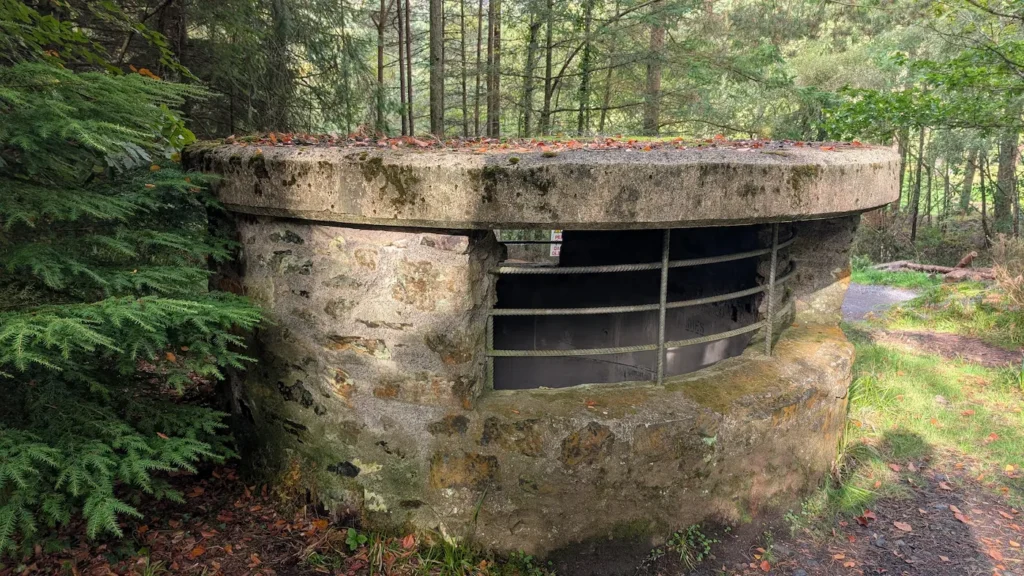
Even after miners had extracted the rock, there was still the demanding business of getting it above ground before processing could begin.
Breaking and transporting the ore
Miners would use an ore chute and storage area where material was prepared for transportation to the processing mill. Workers broke the extracted rock into smaller pieces using hammers, a process known as bucking, before loading it into carts that were pushed along a tramway.
These relatively simple structures were essential to the operation, allowing ore to be moved between the underground workings and the buildings where it would be processed. They also illustrate how much manual labour was still involved, even as mining machinery became increasingly sophisticated.
Offices, stores and blacksmiths
Not everyone employed at a mine worked underground. The remains associated with Parc Mine’s former office, stores and blacksmith’s workshop illustrate the supporting activities required to keep the business running. The office dealt with administration, including paying workers and selling ore, while the stores supplied equipment and the blacksmiths made and repaired the metal tools used by the miners.
Mining companies needed an organised operation above ground as well as workers extracting minerals beneath it. These buildings are a reminder of the range of people and skills involved.
The spoil heaps scattered through the forest
Some of the most extensive evidence of mining is less immediately recognisable.
Waste rock brought to the surface was dumped around the workings, creating spoil heaps and broad slopes of loose stone that remain visible in many parts of the forest. Some have gradually disappeared beneath moss, ferns and young trees, while others stand out clearly against the surrounding woodland.
Their size provides an indication of how much material had to be moved to recover the valuable minerals, and how far the industrial activity extended beyond the surviving buildings.

Walking the Hafna Miners’ Trail
The official Hafna Miners’ Trail starts from Hafna car park and covers 5 km (3.1 miles), normally taking between 1½ and 2½ hours. The waymarked route passes several former lead mines, following a mixture of forest roads and narrower woodland paths, with deep cuttings, capped shafts, ruined buildings and interpretation panels along the way.
NRW grades the trail moderate. Expect rough and uneven sections, steps, exposed tree roots and potentially muddy ground, particularly after rain. Some of the narrower paths are less than 70 cm wide, so this isn’t a suitable route for pushchairs or anyone needing a smooth, level surface.
Unlike a conventional heritage attraction where everything is concentrated in one place, the remains are scattered through the woodland. You might pass a stretch of ordinary forest before coming across another building or shaft, and not everything is immediately recognisable. Taking time to read the interpretation boards makes a considerable difference to the experience.
NRW also provides a downloadable audio guide about the miners and their working lives. It’s worth downloading before you arrive, as mobile coverage can be unreliable in the forest.
You can find the route map and audio guide on the official Hafna Miners’ Trail page.

My longer walk: Sawbench, Llyn Parc and the old mines
The official Hafna trail isn’t the only way to appreciate Gwydir’s mining history.
In September 2026, I walked a longer circuit starting from Sawbench car park, on the Llanrwst side of the forest, heading down towards Llyn Parc before climbing through some of the former mining areas towards Hafna and eventually returning to Sawbench.
I’d planned it using OS Maps rather than following a single official waymarked trail, which meant it covered a wider area than the shorter heritage walks.
| My recorded walk | Details |
|---|---|
| Start and finish | Sawbench car park |
| Distance | 9.41 km (5.8 miles) |
| Total ascent | 365 metres |
| Recorded time | 3 hours 4 minutes |
| Navigation | OS Maps, following my own route |
Llyn Parc: More than a woodland lake
Surrounded by trees, Llyn Parc looks like an entirely natural lake with little obvious connection to industry. Although the lake itself is natural, it was dammed to supply water power for mining machinery in the Aberllyn gorge below, making it part of the wider network of infrastructure that supported the mines.
It’s an interesting connection because there’s little about the lakeside setting today to suggest its industrial role. The miners relied on more than the ore beneath their feet, adapting watercourses and natural features to provide the power needed for their machinery. Llyn Parc is a reminder of how extensively the surrounding landscape was altered to support mining.

From the lake towards Hafna
Continuing through the forest towards Hafna, what struck me most was just how extensive the old mining remains were. Almost around every corner, there seemed to be something else: ruined stone buildings among the trees, capped shafts beside the paths or rocky slopes covered with waste from the workings. I’d expected to find evidence of the area’s mining history, but the sheer number of remains, scattered across such a wide area, made a much bigger impression than any individual structure.

Some were obviously industrial, while others were difficult to identify without the interpretation boards explaining their purpose. As I walked, it became easier to appreciate that these weren’t a handful of isolated mines but part of a much larger operation, with workings, water systems, processing areas and transport routes spread throughout the forest.
It’s one thing to read about Gwydir’s industrial past, but repeatedly coming across physical evidence of it makes the scale of the industry much easier to understand.
Could you follow the same walk?
My Sawbench circuit was a half-day walk, with nearly six miles to cover and 365 metres of ascent. It involved a combination of forest tracks and narrower paths, so suitable footwear and reliable navigation were important. Because I’d planned it myself on OS Maps, it wasn’t a single official waymarked trail.
I’m including my circuit as an example of exploring the wider mining area rather than a set of turn-by-turn directions. Anyone planning a similar walk should check current access conditions and plan their route accordingly.
For visitors mainly interested in the mining remains, the shorter Hafna Miners’ Trail is a more straightforward option, provided it’s open and accessible.
Other places to discover Gwydir’s mining heritage
Although Hafna is the main focus of this guide, other parts of Gwydir Forest offer opportunities to discover the area’s industrial past, whether you’re looking for a short heritage trail or a more demanding woodland walk.
Cyffty Mine: A short heritage trail
Cyffty is a useful alternative for visitors who want to see old mining structures without committing to a lengthy walk. The official 500-metre trail takes around 20 minutes and passes former machine houses, wheel pits and mine shafts, with interpretation panels explaining the surviving features.
One of the more unusual features comes near the far end, where the trail crosses a protected shaft and visitors can look down into the opening beneath.
Although the route is graded easy, it includes rough stone surfaces and several short flights of steps, so it isn’t entirely level or suitable for pushchairs. For anyone particularly interested in industrial archaeology but unable to manage the longer Hafna walk, Cyffty offers a worthwhile introduction.
Llyn Geirionydd and Pandora Mine
Llyn Geirionydd is now better known for its lakeside setting and walking opportunities, but the surrounding landscape also has a mining history. The former Pandora workings occupied part of this area, and even the present car park stands on a former mine waste tip, close to an old mine entrance.
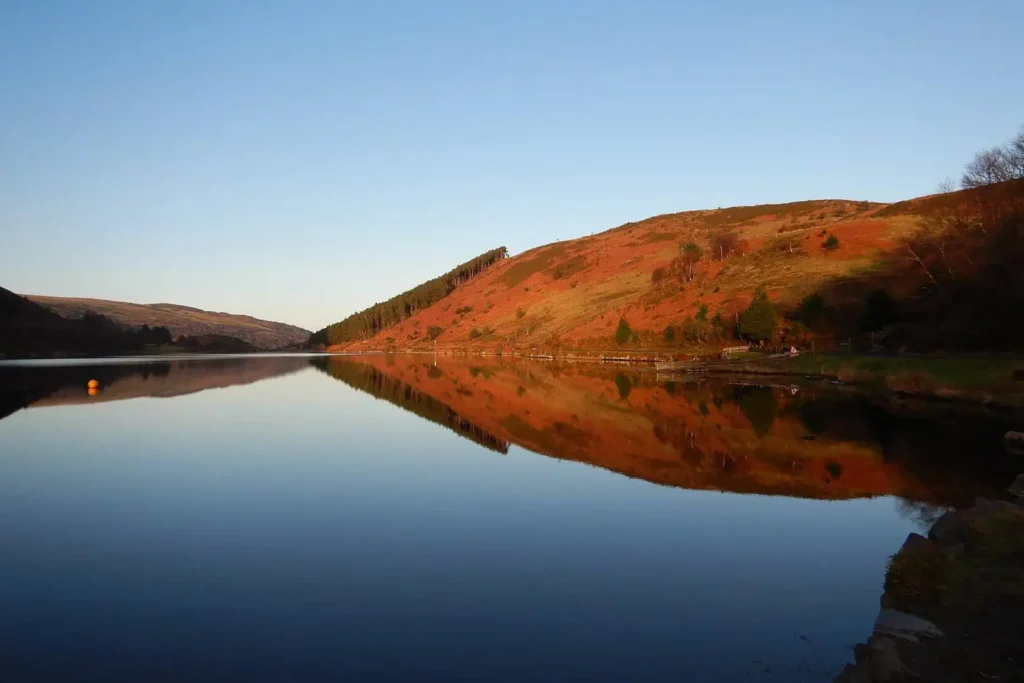
It’s another example of how thoroughly mining altered places that are now visited mainly for their scenery, with relatively little remaining to suggest the industrial activity that once took place there.
Llyn Parc and Aberllyn Gorge
For a more demanding walk, the official Llyn Parc Walk starts from Betws-y-Coed and climbs steeply through woodland before reaching the lake. The route then descends through Aberllyn Gorge, passing former mine entrances and ruined structures along the way.
At 6.9 km with 331 metres of ascent, NRW grades it strenuous. The combination of steep paths, uneven surfaces and unprotected drops makes it unsuitable for anyone expecting a gentle lakeside stroll. Allow between 1½ and 3 hours for the walk, depending on your pace and how often you stop.
The environmental legacy of the mines
The mining industry left more than buildings and shafts behind.
At Parc Mine, a large spoil tip remained after the final closure in 1963, and subsequent flooding and erosion carried metal-rich material downstream, depositing contaminated sediment on farmland more than a kilometre away.
Reclamation work in 1977 reshaped and capped the spoil tip and improved drainage to stabilise the site, but the environmental effects of the former workings have continued to require attention. That legacy is worth remembering when exploring the forest. The old mining areas are historically interesting, but they’re not simply harmless ruins that have been reclaimed by nature.
Underground shafts, unstable buildings and loose spoil can remain dangerous long after vegetation has grown around them, and some former workings continue to affect the surrounding environment. The safest way to appreciate the remains is from the designated paths, without attempting to enter shafts or climb over ruined structures.
Practical advice for visiting the old mines
- Walking conditions: Expect uneven paths, loose stones, exposed roots and muddy sections, particularly after heavy rain. Sturdy walking footwear is advisable, especially for the longer routes.
- Dogs: The woodland trails can make interesting walks with dogs, but keep them under close control around shafts, unstable ruins and steep drops. Avoid allowing dogs to drink from watercourses around former mine workings, where water quality may be affected by historic mining contamination.
- Children: The short Cyffty trail is a more manageable introduction for families, although it still requires care around steps, shafts and unprotected drops. The longer trails demand more stamina and supervision.
- Accessibility: These are woodland heritage trails, not accessible surfaced routes. Even Cyffty’s short walk includes rough stone and steps, while Hafna and Llyn Parc have significantly more demanding terrain.
- Forestry operations: Trail closures and diversions may occur during forestry work or after severe weather. Check NRW’s current notices before travelling and follow all instructions on site.
- Facilities: Don’t assume there will be toilets or refreshments at the mining trail car parks. Llanrwst and Betws-y-Coed are the more practical places to plan a food or facilities stop.also lead to temporary trail closures, so check the latest information before travelling, particularly around Hafna and Sawbench.
Why Gwydir’s old mines are worth exploring
Gwydir Forest has plenty to offer walkers who simply want woodland paths, lakes and views, but its mining history gives the area another dimension. Once you begin recognising the old workings, features that might otherwise pass unnoticed start to make sense. A quiet lake once supplied industrial power, a ruined wall marks a former workshop, and a rocky hillside may be the waste left behind by generations of miners.
The industry has gone, and trees have reclaimed much of the landscape, but the evidence remains remarkably widespread. You don’t have to travel far between the old workings to appreciate just how busy these hills once were, and the interpretation boards make it possible to understand something of the people, machinery and processes behind the ruins.
For more on the wider area, see our guide to Gwydir Forest Park, covering its lakes, woodland trails and other places to explore. If you’re interested in other reminders of North Wales’ industrial history, you might also enjoy our Dolgarrog Pipes Walk or our guide to the Welsh slate landscape.
Gwydir Forest is an easy outing from our cottages in Eglwysbach. For guests planning a walking break, Laurel’s separate boot room is particularly useful for muddy footwear and outdoor kit, with a private hot tub waiting back at the cottage.
FAQs
Where can you see old mining remains in Gwydir Forest?
Hafna has some of the most extensive surviving remains, including a former processing mill, capped shafts and ruined buildings. Cyffty offers a much shorter heritage trail, while the Llyn Parc and Aberllyn area combines mining history with woodland scenery.
How difficult is the Hafna Miners’ Trail?
The 5 km route is graded moderate and normally takes between 1½ and 2½ hours. Expect rough woodland paths, steps, exposed roots and some climbing. Suitable walking footwear is recommended.
Where do you park for Hafna Mine?
Hafna has its own free car park, approximately 1½ miles south-west of Llanrwst. Access is via a minor road off the B5106, following signs towards Gwydir Castle and then Hafna. NRW provides detailed directions and a mapped location.
Can you go inside the abandoned mines?
No. The underground workings aren’t open to general visitors. Explore the surface remains from designated trails and keep clear of shafts, barriers and unstable structures.
Is the Hafna Miners’ Trail suitable for dogs?
Dogs can accompany walkers, but they need to be kept under close control around the old mining features and steep drops. Always follow any temporary restrictions and keep them away from potentially contaminated watercourses.
Is Llyn Parc connected to the old mines?
Yes. Although it’s a natural lake, it was dammed to provide water power for mining machinery in the Aberllyn gorge below.
Official trail information
Natural Resources Wales provides route descriptions, maps and downloadable guides. These are the best places to check current trail conditions and access restrictions: