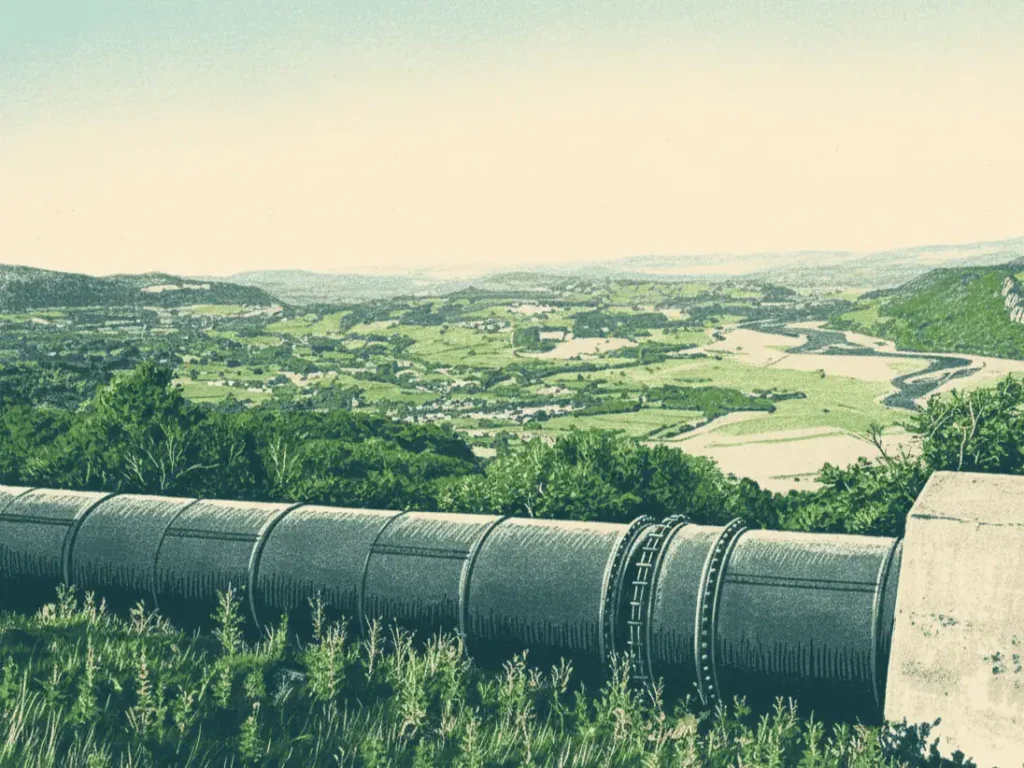
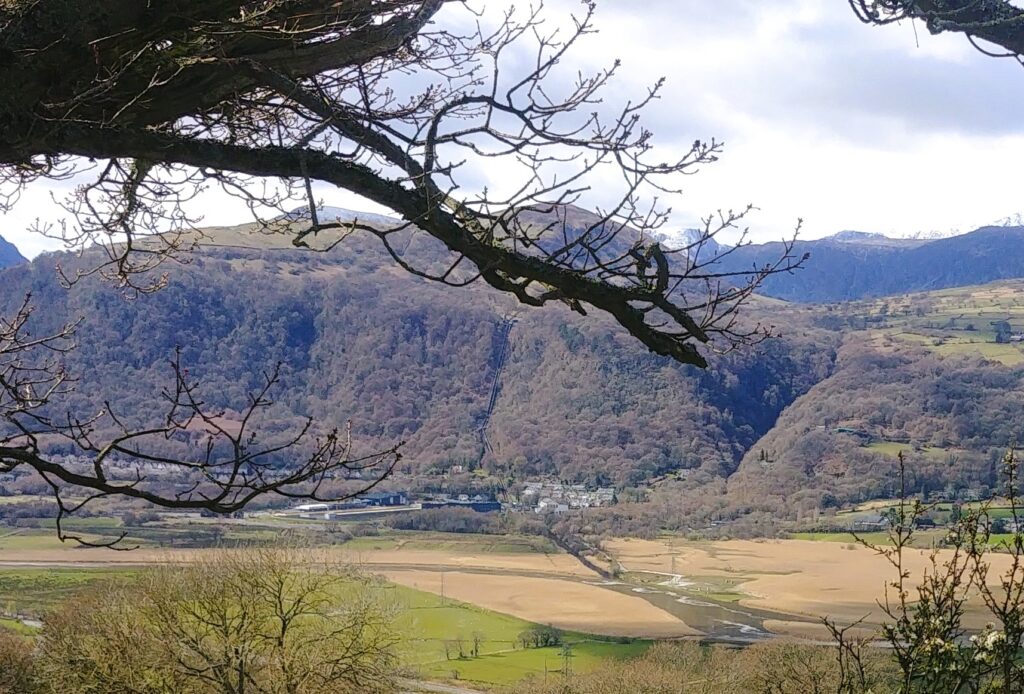
From the windows of Fig Tree and Laurel, two colossal black pipes dominate the view across the Conwy Valley. They plunge down the mountainside above Dolgarrog like giant arteries, impossible to miss.
Guests ask about them constantly. What are they? Why are they there? Can you walk up them? The answers involve extraordinary engineering, immense industrial power and a tragedy that killed sixteen people and changed British law forever.
November 2025 marked the 100th anniversary of the Dolgarrog Dam Disaster. We’re sharing this guide to remember the lives lost on 2 November 1925 and to help you explore one of the most striking walks in the valley – right from our doorstep.
What Are the Dolgarrog Pipes?
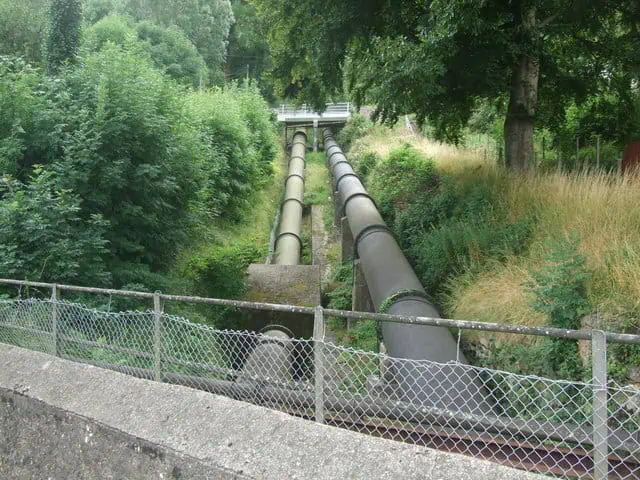
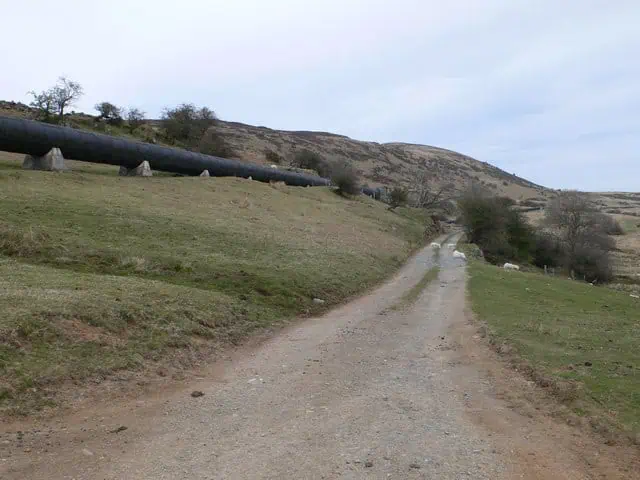
The Dolgarrog pipes are penstocks – massive industrial pipelines built to carry water from mountain reservoirs down to the hydroelectric power station in the village below.
They draw from Llyn Cowlyd and Llyn Eigiau, high in the Carneddau mountains. The system was constructed in the early 20th century to power Dolgarrog’s aluminium works, which chose this location specifically for its hydroelectric potential.
The aluminium works closed decades ago. The power station didn’t. A century on, it still feeds clean electricity into the National Grid, making these pipes a working monument to early renewable energy.
From our cottages: The pipes are clearly visible across the valley from both Fig Tree and Laurel. They plunge down the mountainside above Dolgarrog like giant arteries feeding the valley below.
The 1925 Dam Disaster
Behind the engineering achievement lies a darker story.
On the night of 2nd November 1925, after days of relentless rain, the dam at Llyn Eigiau failed catastrophically. A wall of water tore down the mountainside, overwhelming the smaller Coedty dam below.
In total darkness, millions of gallons of water, mud and massive boulders thundered into Dolgarrog village, destroying homes in the Porthllwyd area and claiming sixteen lives – ten adults and six children.
The disaster shocked the nation. It prompted urgent questions about dam safety and led directly to the Reservoirs (Safety Provisions) Act 1930, the UK’s first dam safety legislation.
The legacy of that terrible night still protects communities across the country.

Walking the Pipeline
These days, the pipes form the backbone of one of the most exhilarating (and leg-burning) walks in the Conwy Valley. A public footpath follows the pipeline’s steep incline via metal steps that seem to climb straight into the sky.
Difficulty: Strenuous
Distance: 3 km (1.9 miles) round trip
Elevation gain: ~300 m
Time: 1.5-2 hours
Terrain: Metal steps, steep incline, exposed
This is no gentle stroll. It’s a serious climb that will get your heart pumping. But the reward is worth every step.
As you ascend, the Conwy Valley opens up below you. Standing beside the pipes gives you a real sense of their scale and the sheer power of the water rushing through them. On clear days, you can see across to Conwy Castle and out towards the coast.
The route takes you up to the remains of the old Coedty dam – the dam that failed on that November night in 1925. From here, most walkers return the same way.
For experienced hikers only: You can continue on moorland paths towards Llyn Cowlyd, but this requires good navigation skills and adds several hours to the walk.
Practical Information
Parking:
- On-street parking only in Dolgarrog village (no dedicated car park)
- Park considerately – this is a residential area
- Postcode: LL32 8HX (village center)
- What3Words: ///remove.spit.hotels (start of walk)
From our cottages: 15 minutes
Facilities:
- Public toilets in village
- Small shop for supplies
- No facilities at the walk start or along the route
When to visit:
- Avoid during or immediately after heavy rain (steps become hazardous)
- Clear days offer best views down the valley
- Early morning or late afternoon for best light
What to wear:
- Sturdy walking boots with excellent grip (essential)
- Layers (it’s exposed and can be windy)
- Waterproof jacket
- Bring water – there’s nowhere to refill
Cost: Free
⚠️ Critical Safety Information
This walk has significant hazards:
- The metal steps can be extremely slippery, especially after rain or in winter conditions
- The path is steep and exposed with drops on one side
- Not suitable for young children or anyone uncomfortable with heights
- Poor weather makes this walk genuinely dangerous – if conditions are bad, skip it
- Mobile signal is limited – tell someone your plans before setting out
If you have any doubt about conditions, choose a different walk. The pipes aren’t going anywhere.
The Memorial Garden
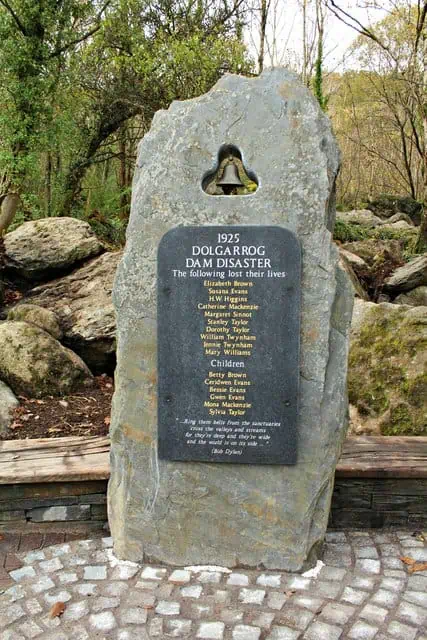
Before or after your walk, visit the Dolgarrog Dam Disaster Memorial Garden in the center of the village.
The garden includes plaques commemorating those who lost their lives, information about the disaster and a peaceful space to reflect. It’s a quiet, dignified tribute to the sixteen people who died that night.
Location: Village center, 2-minute walk from parking area
The memorial garden is maintained by the local community. Please treat it with respect.

After the Walk: Recovery Done Right
Here’s the thing about steep climbs. They earn you something.
After 300 meters of vertical ascent on metal steps, sinking into your private hot tub feels exceptional. Watch the pipes across the valley from the water – the same pipes you just climbed.
If your legs are still complaining, the indoor pool is heated to 28-29°C. It’s shared between a maximum of 9 guests, so you’ll have space to actually swim rather than dodge crowds.


The combination of a challenging walk and serious recovery facilities is exactly why guests keep telling us they’ve found the perfect balance.
FAQs
How long does the Dolgarrog pipes walk take?
Allow 1.5-2 hours for the full round trip to the Coedty dam ruins and back. Experienced hikers who continue to Llyn Cowlyd should add another 3-4 hours, but this requires good navigation skills and mountain experience.
Is the Dolgarrog pipes walk suitable for children?
No. The metal steps are steep, exposed and can be very slippery. There are drops on one side with no barriers. We’d recommend this walk for fit adults and teenagers only, and only in good conditions.
Where do you park for the Dolgarrog pipes walk?
There’s no dedicated car park. Park on-street in Dolgarrog village (postcode LL32 8HX). Please park considerately – this is a residential area. The start of the walk is a short walk from wherever you park in the village.
Can you see the Dolgarrog pipes from Conwy Valley Getaway?
Yes. The pipes are clearly visible from both Fig Tree and Laurel cottages. They’re one of the most distinctive features in our view across the valley.
What’s the best time of year to walk the Dolgarrog pipes?
Late spring through early autumn offers the most stable weather conditions. Avoid winter unless you’re experienced in winter hill walking – the steps become extremely slippery with ice or frost. Never attempt this walk in heavy rain or high winds.
How fit do you need to be for the Dolgarrog pipes walk?
You need good fitness and no issues with steep climbs or heights. The ascent is relentless – 300 meters of elevation gain in just 1.5 km. If you’re comfortable with strenuous hill walks and have no knee problems, you’ll manage it, but expect tired legs afterwards!
Related Walks & Guides
Looking for more walks in the area?
- Gwydir Forest Park: A Complete Guide – Gentler forest trails just 20 minutes away
- Autumn Walks in Eryri – Our favourite routes for all abilities
- Best Things to Do in the Conwy Valley – The complete guide to the area
- Rainy Day in North Wales – This is NOT a rainy day walk, here’s what to do instead!
A Story Etched into the Hillside
The Dolgarrog pipes are far more than a striking landmark in our view. They’re a testament to industrial ambition, a memorial to those who were lost, and the starting point for one of the most memorable walks in the valley.
The climb is tough. The history is sobering. The views are exceptional.
And afterwards? Your private hot tub is waiting, with those same pipes visible across the valley.