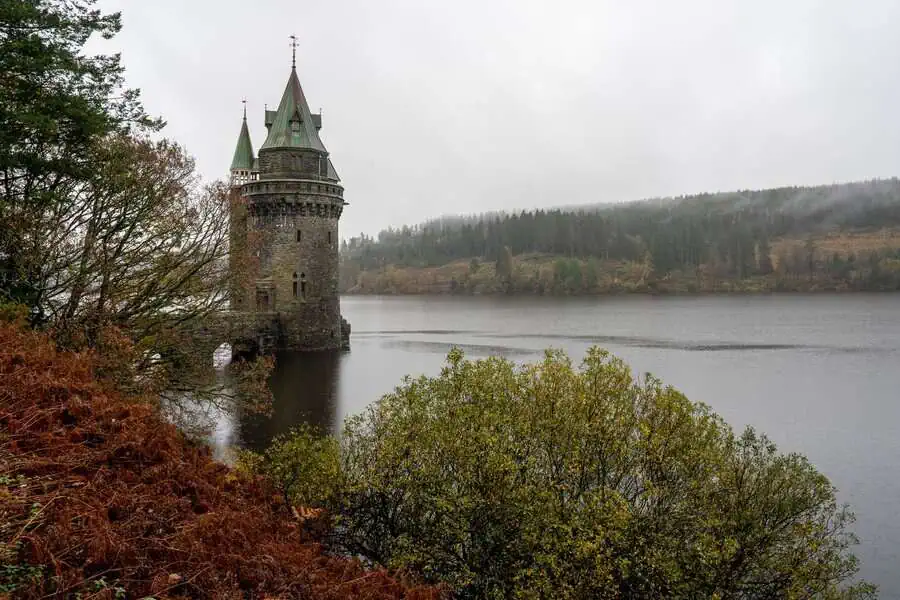
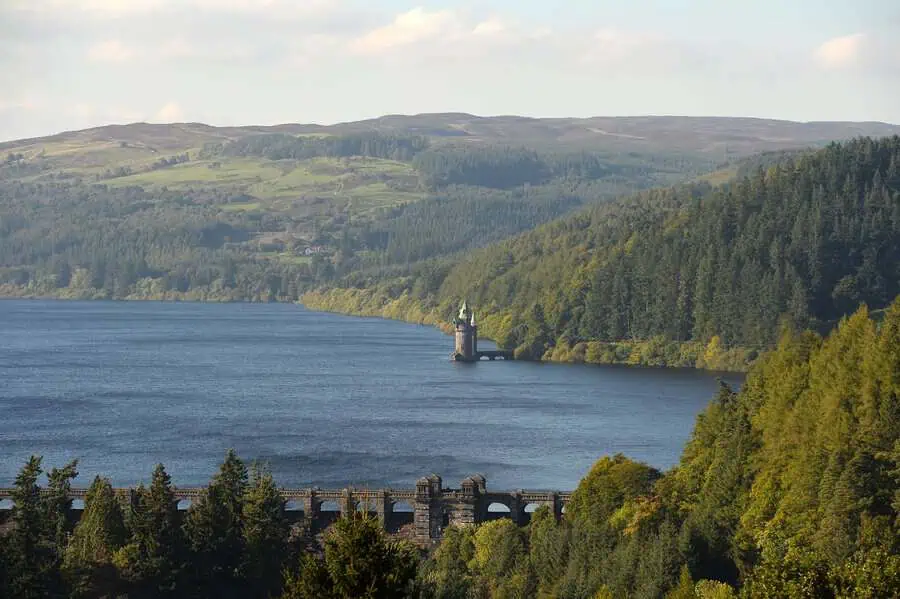
Stand at the shore of Lake Vyrnwy and look across the still water toward the stone tower rising from the depths. Beautiful, isn’t it? Peaceful. The kind of place where you might spend an afternoon watching red kites circle overhead, listening to nothing but wind and birdsong.
Now, imagine this.
Beneath your feet, under 84 feet of water, lies an entire village. A 13th-century church where generations were baptized. A school where children learned their lessons in Welsh. Farms where families had lived for centuries. Streets where neighbors walked to chapel on Sunday mornings.
All deliberately drowned. All sacrificed so that Liverpool, 70 miles away, could turn on its taps.
Lake Vyrnwy is one of the most striking sights in Mid Wales, crowned by that fairytale stone tower. But this landscape is not natural. It is a man-made reservoir with a haunting secret beneath its surface: the lost village of Llanwddyn, submerged in 1888.
This is the true story of the village that was sacrificed for progress and a guide to exploring the “ghosts” that still appear when the water runs low.
The Timeline: A Valley Condemned
The destruction of Llanwddyn was not a sudden catastrophe, but a slow, bureaucratic suffocation. It began with a surveyor’s tripod and ended with the roar of 13 billion gallons of water.
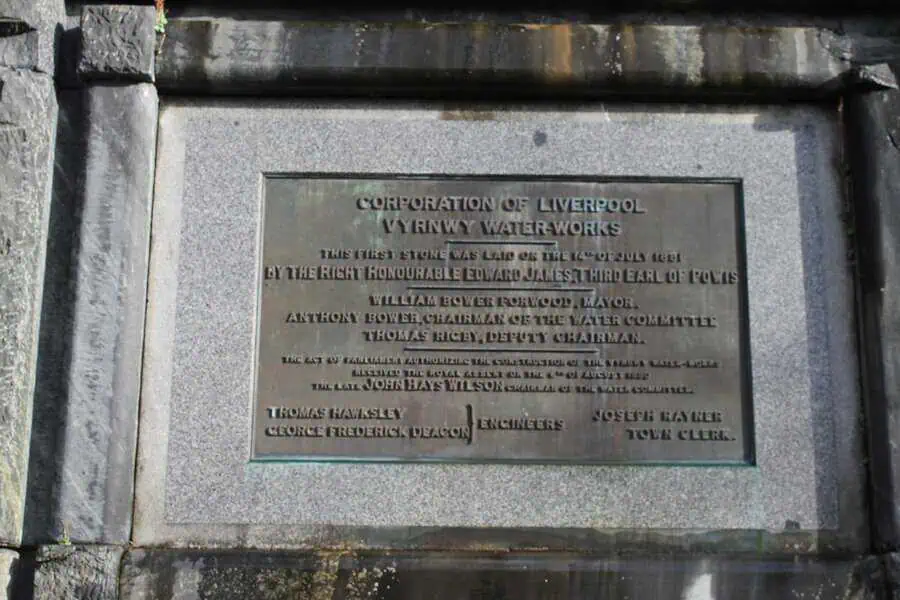
- 27 November 1877: Liverpool’s Borough Engineer, George Frederick Deacon, presents his plans to the Liverpool Corporation. He identifies the Vyrnwy valley as the perfect vessel for a massive reservoir.
- August 1880: The Liverpool Corporation Waterworks Act is passed by Parliament. The village’s fate is sealed. The residents are not consulted.
- 1881: Construction begins. A massive workforce descends on the quiet valley.
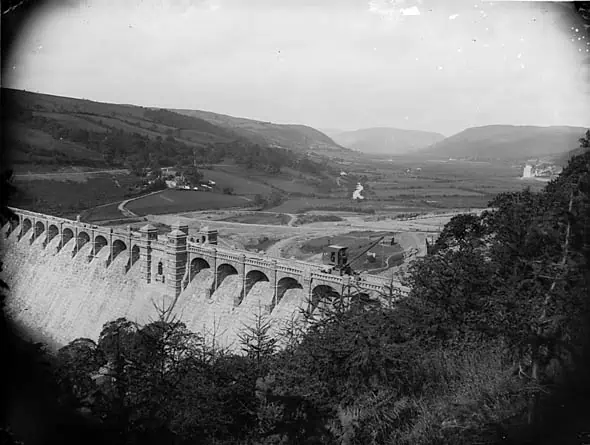
- 1888: The dam is completed. It is the first large stone-built dam in the United Kingdom.
- 22 November 1889: The valves are closed. The water begins to rise.
- 14 July 1892: The first water flows 68 miles to Liverpool.
By The Numbers: The Cost of Progress
- Construction Cost: £620,000 (Approx. £90 million today).
- The Dam: 144 feet high, 128 feet thick at the base, and 1,170 feet long.
- The Water: 59.7 gigalitres (approx. 13 billion gallons).
- The Displacement: 10 farmhouses, 37 cottages, 3 inns, 2 chapels and the parish church of St John.
The Narrative Core: “Purified by Fire”
The story of the lost village of Llanwddyn is often romanticized, but the reality was brutal. In the 1880s, Liverpool was expanding rapidly and its sanitation was in crisis. They needed clean water, and the Vyrnwy valley, with its high rainfall and geological “rock bar” suitable for a dam, was the perfect target.
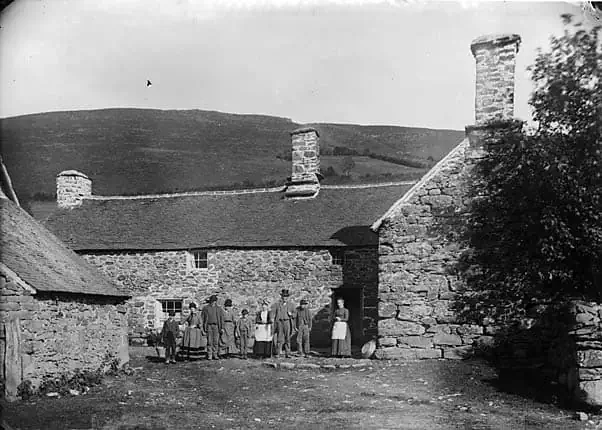
But the valley was alive. It was a community of farmers, shopkeepers and families who had lived there for generations. They had a school, a post office and a distinct culture.
The Demolition
When the time came, the authorities did not simply flood the village; they dismantled it. The sheer thoroughness of the destruction is chilling. Roofs were stripped, timbers removed and stone walls toppled.
The most macabre task was the relocation of the dead. The bodies in the churchyard of St John were exhumed and reburied in the new church cemetery built by the corporation. This was a “model village” constructed lower down the valley to house the displaced – a sterile, planned replacement for their organic, ancestral home.
Once the bodies were moved and the valuables stripped, the remaining shells of the cottages were, according to records, “purified by fire.” They burned the village to the ground to ensure no contamination of the water supply.
The Loss of Eunant Hall
It wasn’t just cottages that fell. Eunant Hall, a grand estate owned by Sir Edmund Buckley, stood in the valley. Unlike the villagers who were moved to new (albeit forced) housing, the Hall was demolished entirely. No replacement was ever built. A single tree was planted to mark its former site before the waters claimed it.
Myths vs. Truths
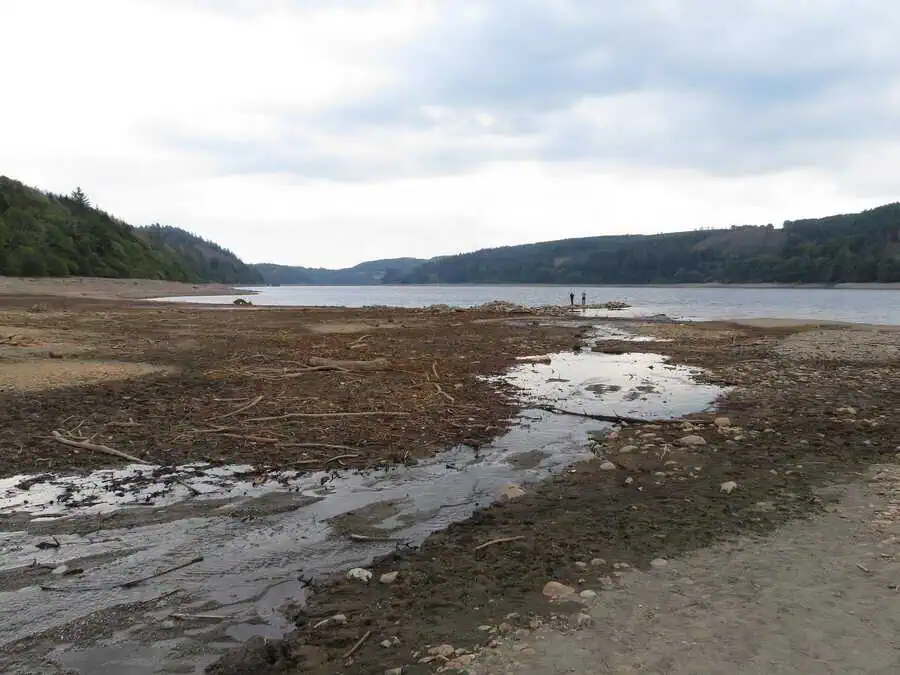
There’s a persistent myth that when the water level drops, you can spot the church steeple rising from the reservoir. In reality, the church was demolished before the valley was flooded. The truth is that what has emerged during extreme droughts, most notably in 1976 and 2022, are the ghostly traces of what once stood there: fragments of stone walls, the foundations of bridges and even the faint grid of the old roads.
Another common misconception is that the villagers were content to leave, trading up for better housing. While the new homes may have been sturdier, the move was far from welcome. The lack of consultation left deep resentment in its wake – an entire community uprooted and divided by an Act of Parliament they had no power to resist.
The “Is It Worth It?” Verdict
This is not a quick nip down the road.
Who is this for?
- Engineering Geeks: The Victorian infrastructure is world-class.
- Walkers & Cyclists: The 12-mile flat road around the lake is perfect for bikes, and the surrounding hills offer rugged hikes. For scenic walks closer to home, see our guide to Gwydir Forest Park.
- Melancholy Historians: If you like places with “atmosphere” and a dark backstory, you will love this.
Who should skip it?
- Those in a Rush: It is a solid 1.5 hour drive from our cottages in Eglwysbach. It is a full day out, not a morning trip.
- Drivers who hate single-track roads: The route from Bala involves some winding mountain passes.
Honest Drive Time
From our holiday cottages, expect a scenic but slow drive of around 45 miles. You will pass through Bala, which is a great place to stop for coffee to break up the journey.
The Practical Guide: Visiting Today
The valley that was drowned for Liverpool’s water supply has found an unexpected second life. Lake Vyrnwy is now a 24,000-acre RSPB nature reserve, managed in partnership with Hafren Dyfrdwy (the water company). The moorland, woodland and meadows surrounding the reservoir are home to Pied Flycatchers, Redstarts, Wood Warblers and hunting Peregrines.
The reserve holds multiple conservation designations (Special Protection Area, Site of Special Scientific Interest, Special Area of Conservation), making it one of the most important wildlife habitats in Wales. It’s also, remarkably, the largest organic farm in England and Wales.
While the history is somber, the location today is undeniably spectacular. The Victorian engineering, specifically the dam and the Straining Tower, represents Gothic revival architecture in its most theatrical form.


Practical Information:
- Sat Nav: SY10 0LZ (Lake Vyrnwy Hotel / Visitor Centre).
- Parking: The main car park (300m from the dam) and Artisans car park charge £2 for up to 2 hours or £4 all day. RSPB members receive 50% discount when displaying their membership card with the ticket.
- Free Alternatives: The Old Village car park and Llechwedd-du car park are free. Several smaller laybys exist around the accessible sections of the perimeter road.
- Opening Times: The reserve itself is open 24/7, 365 days a year. The RSPB shop operates 10:30am-5:30pm (summer: 1st April-31st October) and 10:30am-4pm weekdays, 10:30am-4:30pm weekends (winter: 1st November-31st March). Toilets are available 9am-5pm daily.
- Admission: Entrance to the reserve is free for all visitors.
Current Access Note (April 2026):
Following Storm Darragh in December 2024, parts of the site remain closed:
- Road: South side of the lake is closed
- Car Parks: Rhiwargor (waterfall end) is closed; Old Village and Llechwedd-du remain open
- Trails: Reservoir View Trail is closed. Dam Trail, Wildlife Way, Wildlife Trail, Ty Uchaf Trail and Waterfall Trail are all open.
- Bird Hides: Centenary Hide is closed; Lakeside Hide and Coed y Capel Hide are open.
The main village area, dam and most trails remain accessible, but parking is more limited than usual. Check the HD Cymru Storm Darragh updates page for the latest information before you visit.
Where to Eat
- Artisans Café sits right next to the Coed y Capel car park, making it the most convenient stop for coffee, cake or a light lunch. They serve hot drinks, sandwiches and snacks throughout the day. It’s also where you’ll find bike hire if you fancy cycling the perimeter road. Dogs welcome. Seasonal opening.
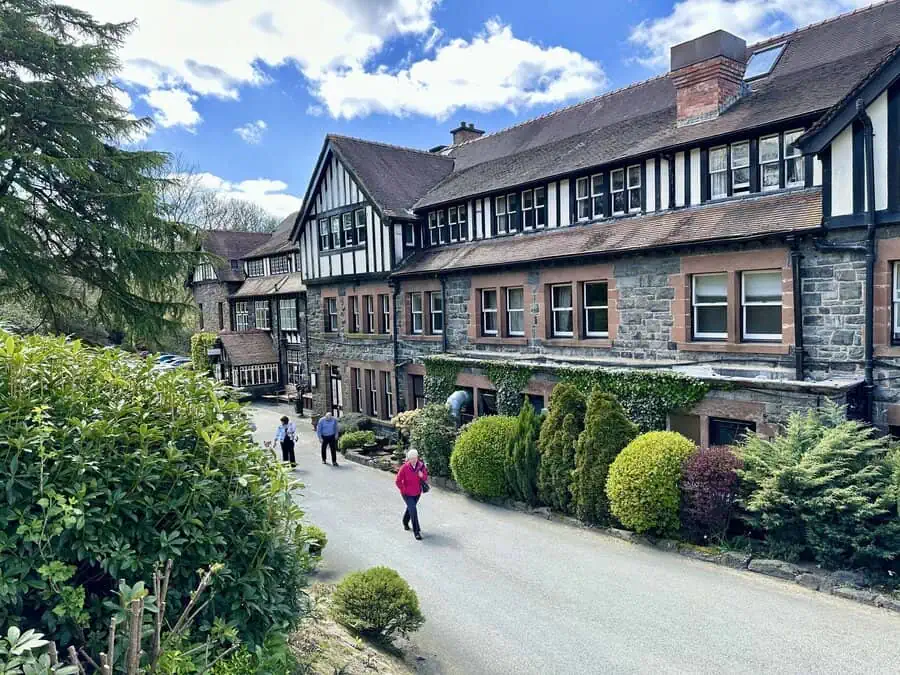
- Lake Vyrnwy Hotel (about 1 mile from the dam) offers two options: the fine-dining Tower Restaurant with panoramic lake views or the more casual Tavern for hearty pub-style meals. Both welcome non-residents, but booking is strongly recommended, especially for the Tower Restaurant. The terrace is perfect on sunny days.
- Dafarn Newydd Stores in Llanwddyn village (1 mile from the dam) stocks groceries, sandwiches and takeaway options if you’re planning a picnic by the water.
If you’re driving from the Conwy Valley, consider stopping in Bala (roughly halfway) for lunch to break up the 90-minute journey. It has several cafés and pubs, and the lakeside location makes it a natural stopping point.
Dogs
The reserve welcomes dogs throughout, but they must remain on leads at all times. This is mandatory, not optional – the reserve is home to ground-nesting birds like Pied Flycatchers and Redstarts, plus grazing livestock on the surrounding moorland.
The 12-Mile Perimeter Road:
The road that circles the lake is the main attraction for dog walkers. It’s mostly flat, entirely car-free on the south side (currently closed post-storm, but normally quiet), and offers constant views across the water to the Berwyn Mountains. There are multiple laybys and benches where you can stop for photos or let your dog have a sniff break.
Allow 4-5 hours to walk the full circuit, or drive it in 30-40 minutes with photo stops. Most people don’t attempt the full walk – instead, they park at one of the free car parks (Rhiwargor, when re-opened, or Old Village) and do an hour or two out-and-back section.
Shorter Alternatives:
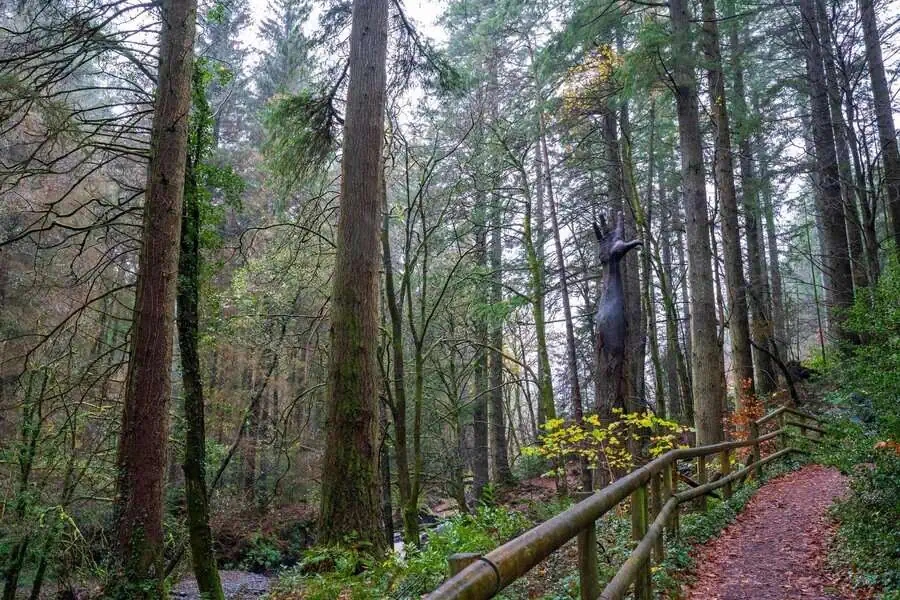
If a 12-mile walk sounds ambitious, several woodland trails branch off from the car parks. The Waterfall Trail (1.5 miles return) takes you through forest to the dramatic Rhiwargor cascade, though note the dedicated car park at that end remains closed following storm damage – you’d need to walk further from other parking areas. The sculpture trail near the dam is shorter still, under a mile, and features giant wooden carvings that make excellent photo ops.
Practical Notes:
Water bowls are available at Artisans Café near the dam. The toilets are open 9am-5pm if you need a comfort break. And yes, poo bags – don’t forget them! This is a nature reserve, and the RSPB takes it seriously.
With limited parking currently available due to storm closures, arriving early (before 10am) or visiting on weekdays gives you the best chance of finding a space.
The Highlights
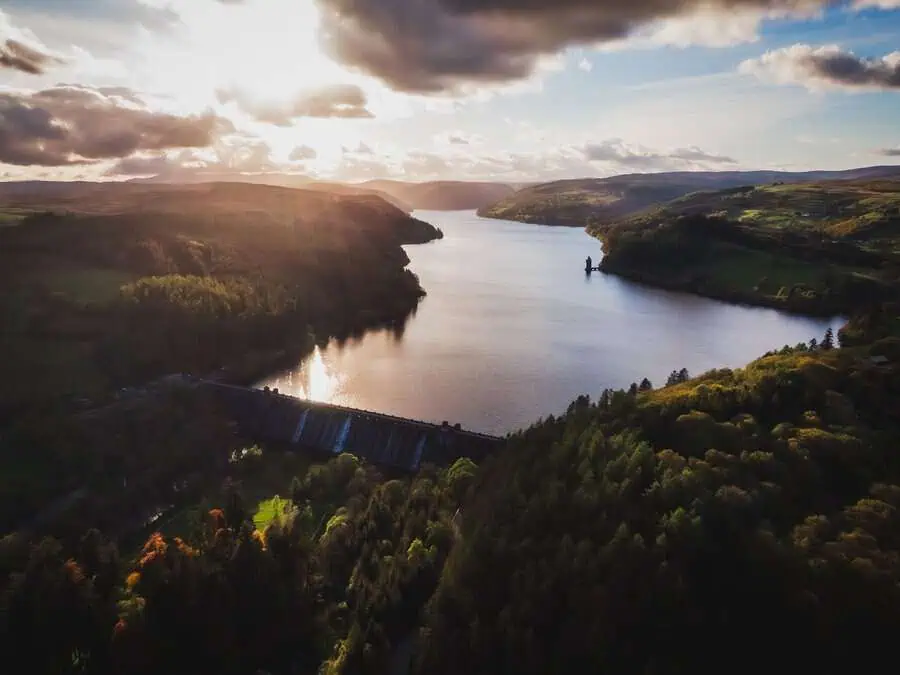
- The Dam Walk: Look over the edge to see the sheer drop of the stone face – 144 feet to the valley floor.
- The Straining Tower: This looks like a witch’s tower from a fantasy novel. It stands 100 feet offshore and filters the water before it begins its journey to Liverpool. You can’t go inside, but it’s the definitive photo spot.
- The Sculpture Trail: A fascinating walk through the woods near the dam, featuring giant wooden carvings.
- Rhiwargor Waterfall: At the top end of the lake (furthest from the dam), a short walk takes you to this impressive cascade. If you enjoy waterfall walks, Conwy Falls and the Fairy Glen are much closer to our cottages – just 15-20 minutes away.
The Conwy Valley Connection
Lake Vyrnwy is a powerful day out, but it’s also a reminder of why location matters. At 45 miles and 90 minutes each way from our cottages, this is one of the furthest attractions you’d reasonably visit from the Conwy Valley. Most of North Wales – Conwy Castle, Betws-y-Coed, the beaches, Yr Wyddfa’s trails – sits within 20-30 minutes instead.
If you’re planning a week in North Wales and want to see what’s actually achievable from a central base, our ultimate guide to the Conwy Valley covers 30+ attractions, all mapped by distance and drive time.
After a day exploring the drowned village and walking the windswept dam, the drive back reinforces what our guests tell us repeatedly: our central valley location saves hours of your holiday. You’re not stuck on the coast wishing you could reach the mountains or based in Llanberis watching every beach trip eat half your day.

Return to Fig Tree, Laurel or book both for your group. Sink into your private hot tub, look out over the Carneddau and plan tomorrow’s adventure.
FAQs
When is the best time to see the ruins?
You need a significant drought. The ruins only emerge when water levels drop to roughly 60% capacity – the summers of 1976, 1995, and 2022 were the most famous occurrences.
Is there anywhere to eat?
Yes, there are cafes near the dam, and the Lake Vyrnwy Hotel offers high-end dining.
Why is the tower called a “Straining Tower”?
Its function is literal. It forces the water through fine metal meshes to “strain” out debris and sediment before it enters the 68-mile aqueduct to Liverpool.
Is the water still used?
Yes. Lake Vyrnwy is still a critical water source for Liverpool and Merseyside, supplying up to 210 million liters a day.
Some images: © Crown Copyright