Most people arrive in Eryri (Snowdonia) with a simple plan: climb Yr Wyddfa (Snowdon), find somewhere to stay and take it from there. It sounds straightforward – until you open the map and see what you’re dealing with.
Eryri isn’t a single place you can neatly “do” in a weekend. It’s 823 square miles of mountains, forests, valleys, castles and coastline, all pulling in different directions. The challenge isn’t a shortage of things to see. It’s understanding how it all fits together.
What helps is thinking of Eryri as a collection of distinct areas, each with its own feel and pace. Once you see that structure, planning your time becomes much simpler – and you spend less of it driving between places that don’t quite match what you’re after.
This guide offers a clear starting point for your first visit, whether you’re here for mountain walks, medieval castles, family days out or simply the view over the Carneddau range with a coffee in hand.
Understanding Eryri National Park
Before getting into what to do, it’s worth having a proper sense of the place.
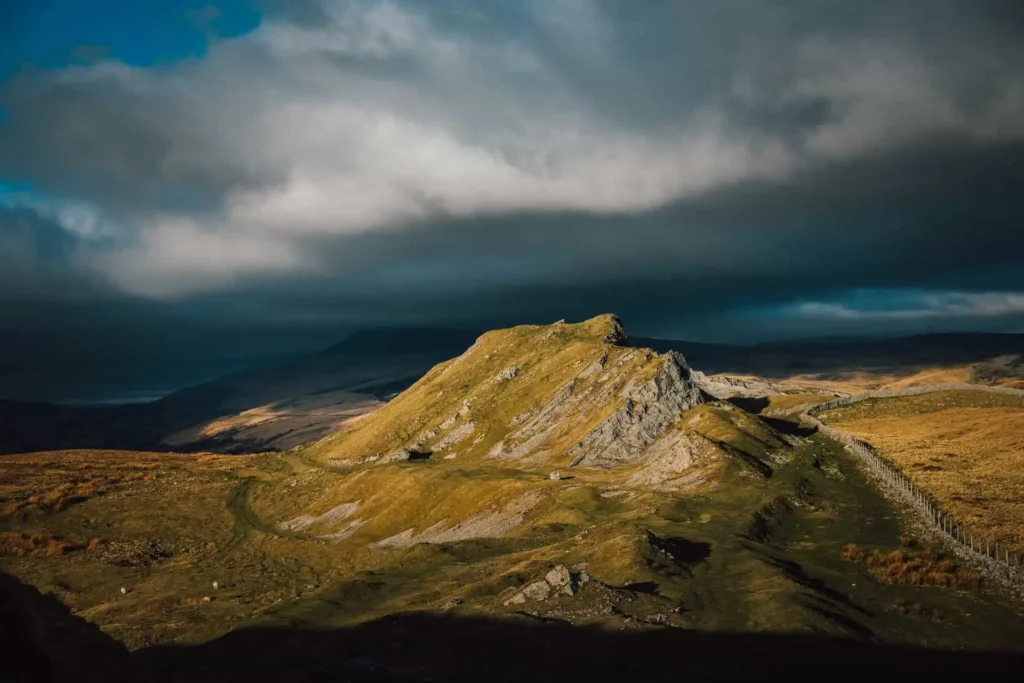
The scale – Eryri covers 823 square miles, larger than Greater London. Established in 1951 as Wales’ first National Park, it contains nine mountain ranges, not just Yr Wyddfa. The Welsh name “Eryri” (pronounced eh-RUH-ree) means “Place of Eagles” and was officially restored as the primary name in both Welsh and English in 2022, though you’ll still see “Snowdonia” used widely.
The working reality – This isn’t a preserved wilderness behind a fence. Around 60% of the land is privately owned working farmland, and 26,000 people live within the park. Fifty-eight percent of residents speak Welsh as a first language. What you experience here is shaped as much by communities and centuries of culture as by the mountains themselves.
How it fits together – Think of Eryri in five broad areas, each with its own character, pace and access requirements. Understanding this prevents the most common first-timer mistake: spending half the holiday in the car chasing attractions that don’t suit your interests.
Quick reference
| Item | Statistics |
|---|---|
| Size | 823 square miles |
| Highest peak | Yr Wyddfa (1,085m / 3,560ft) |
| Recommended stay | 4–7 days |
| Useful apps | JustPark, PayByPhone, OS Maps |
| Busiest months | July–August |
| Quietest months | November–February |
| Park entry | Free |

A good base makes a great day out.
Fig Tree and Laurel sit high above the Conwy Valley, a short drive from the mountains, the coast and everything in between. Private hot tubs, a heated indoor pool and a warm welcome for dogs.
Explore the cottagesThe Five Areas of Eryri
Area 1: The Northern Peaks (Carneddau, Glyderau, Yr Wyddfa)
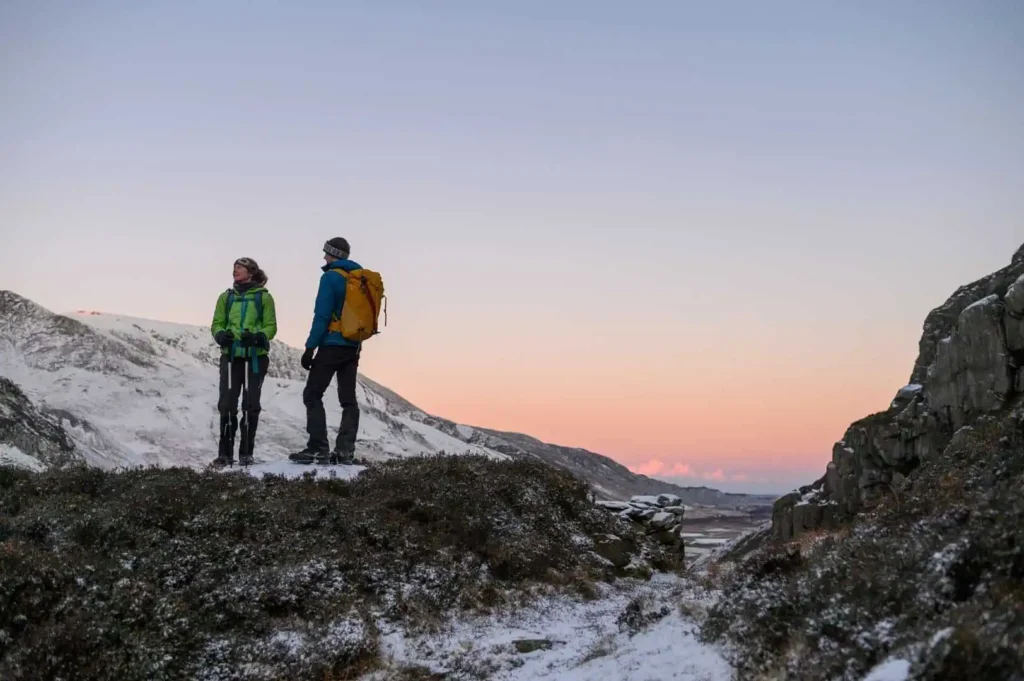
This is where Eryri earns its dramatic reputation. The highest mountains in Wales and England cluster here, with Yr Wyddfa rising to 1,085 metres at the centre.
The Carneddau mountain range forms a broad, wild plateau to the north – quieter than Yr Wyddfa, with several peaks over 900 metres, semi-feral Carneddau ponies grazing the upper ridges and very few crowds even in peak season. The Glyderau to the south offer some of the most rugged terrain in the park, with rocky scrambles and striking formations around Cwm Idwal.
From our two holiday cottages, the Carneddau fill the northern horizon. On a clear morning, you can watch weather patterns develop across the ridges over breakfast, which often decides where, and whether, to head out.
- Best for: serious walkers, photographers after mountain drama, anyone set on summiting Yr Wyddfa.
- What to expect: peak summer brings real pressure. Yr Wyddfa’s summit can see over 1,000 visitors a day, and car parks fill by 7–8am on fine weekends. Weekday visits, or choosing the Carneddau instead, usually make for a much better experience.
- From our cottages: Pen-y-Pass (start of the Pyg and Miners’ Tracks) is around 45 minutes; Llanberis (Llanberis Path) takes a similar amount of time. The Carneddau trailheads are closer – some accessible in 30 minutes.

Area 2: The Central Valleys (Conwy Valley, Lledr Valley)
Eryri at its most accessible. Historic market towns and villages sit between gentler terrain, where riverside walks replace mountain scrambles and cultural attractions take centre stage.
Conwy Castle anchors the coast 20 minutes from the valley. Betws-y-Coed sits an equally short drive away, with outdoor shops, cafés and the National Park’s main visitor information centre. Bodnant Garden’s 80 acres of world-class planting lie just 10 minutes from our cottages – close enough for a genuine half-day rather than an expedition.
- Best for: castle enthusiasts, garden lovers, families with younger children, and anyone wanting to balance culture with the outdoors.
- From our cottages: almost everything in this area is within 20-25 minutes. You can build varied, unhurried days without spending your morning in the car.


Area 3: The Forests (Gwydir, Coed-y-Brenin)
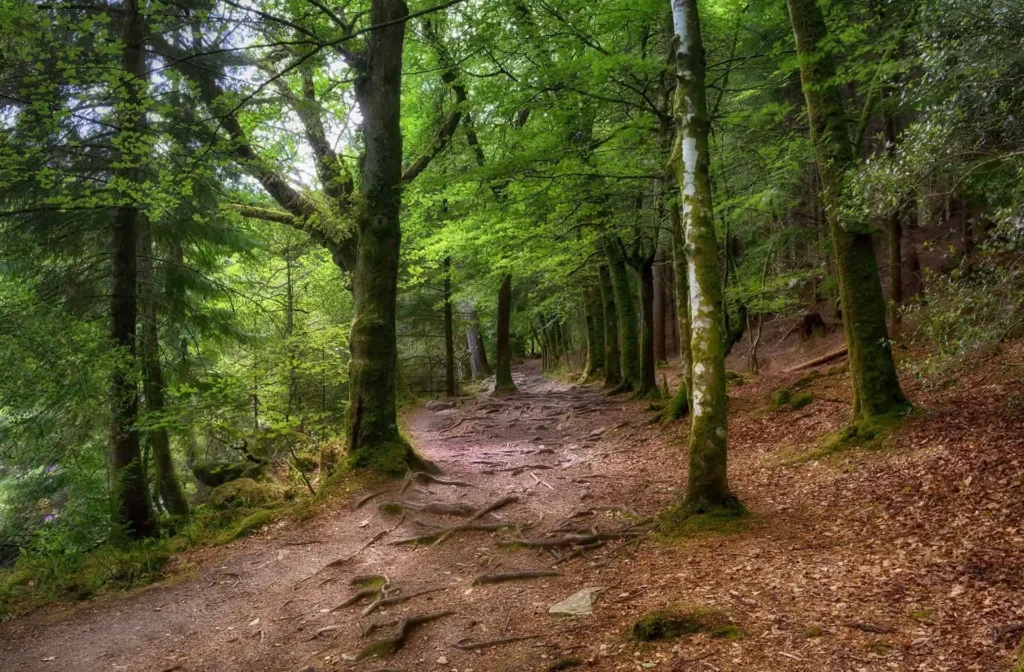
Ancient woodland and plantation forest fill the valley floors, hiding lakes, waterfalls and the industrial remains of Wales’ lead and slate past.
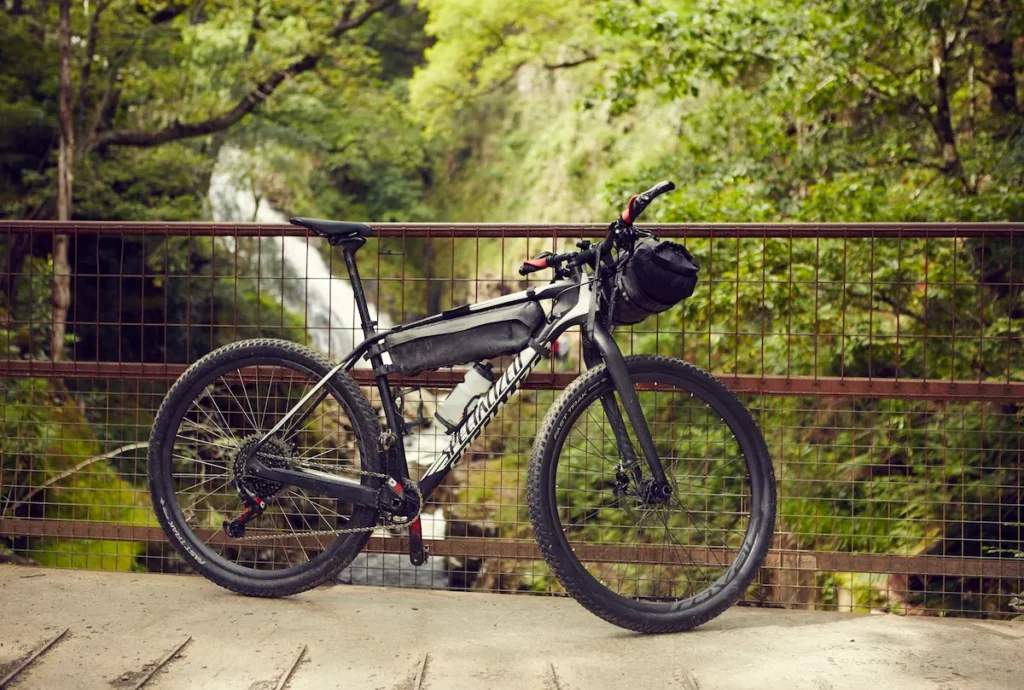
Gwydir Forest Park, 20 minutes from our cottages, offers everything from gentle lakeside walks to challenging mountain bike trails and abandoned lead mine workings. Further south, Coed y Brenin is widely regarded as the UK’s premier purpose-built mountain biking centre.
After a muddy day in the forest, Laurel’s dedicated boot and utility room earns its place: boots off, dogs rinsed, kit sorted before you step inside.
- Best for: mountain bikers, waterfall hunters, families wanting moderate walks with good scenery and anyone drawn to quieter corners of the park.
- From our cottages: Gwydir Forest is 20 minutes; Coed y Brenin is around 45-50 minutes.
Area 4: The Coastal Edge
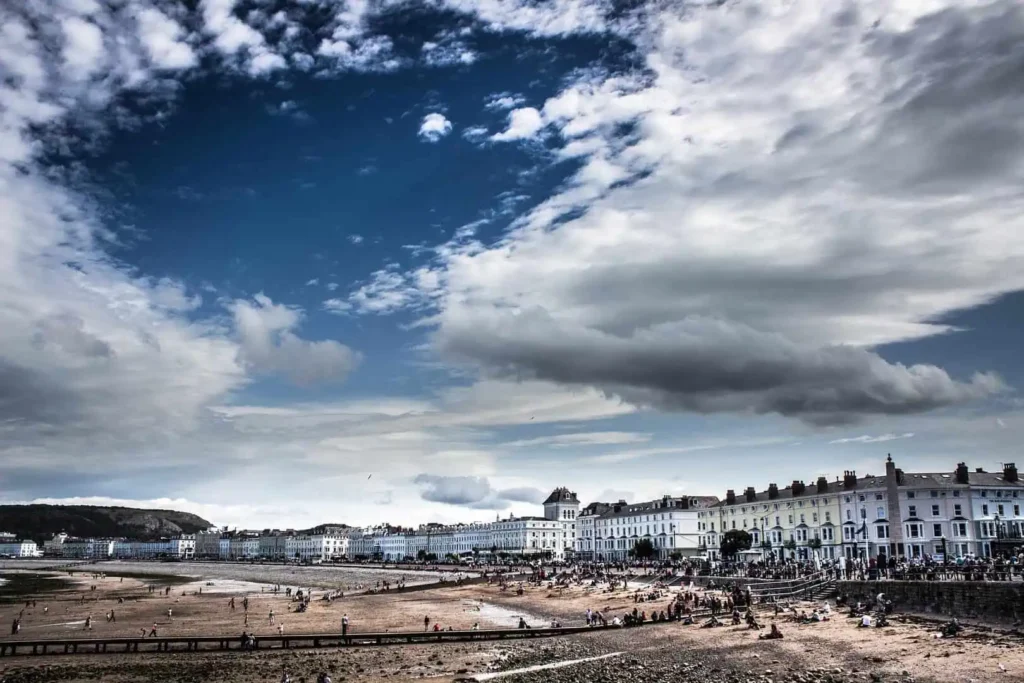
Where Eryri’s mountains meet the Irish Sea. Llandudno delivers a classic Victorian resort experience, while quieter beaches at Conwy Morfa and Deganwy offer salt air and space without the summer crowds. The Great Orme headland combines coastal walks with Bronze Age copper mines and regular seal sightings at Angel Bay.
When mountain cloud rolls in and the ridges disappear, the coast is 20-25 minutes away. That flexibility turns unpredictable Welsh weather from a problem into an opportunity.
- Best for: beach days, wildlife watching and a complete change of pace from the mountains.
- From our cottages: Conwy Morfa and Deganwy beaches are around 20 minutes; Llandudno and the Great Orme are 25 minutes.
Area 5: The Southern Wilderness (Rhinogydd, Cadair Idris)
The most remote and least visited part of Eryri.
The Rhinogydd are rugged and genuinely wild, while Cadair Idris offers one of the most rewarding day walks in Wales. Beautiful, demanding and usually better suited to return visits or longer stays.
- Best for: experienced walkers seeking real solitude and those looking to go beyond the classic first-time itinerary.
- From our cottages: Cadair Idris is around 90 minutes. Doable, but it makes for a long day when combined with the walk itself. Most first-time visitors focus on the enormous variety available within 20-50 minutes and save the southern wilderness for next time.
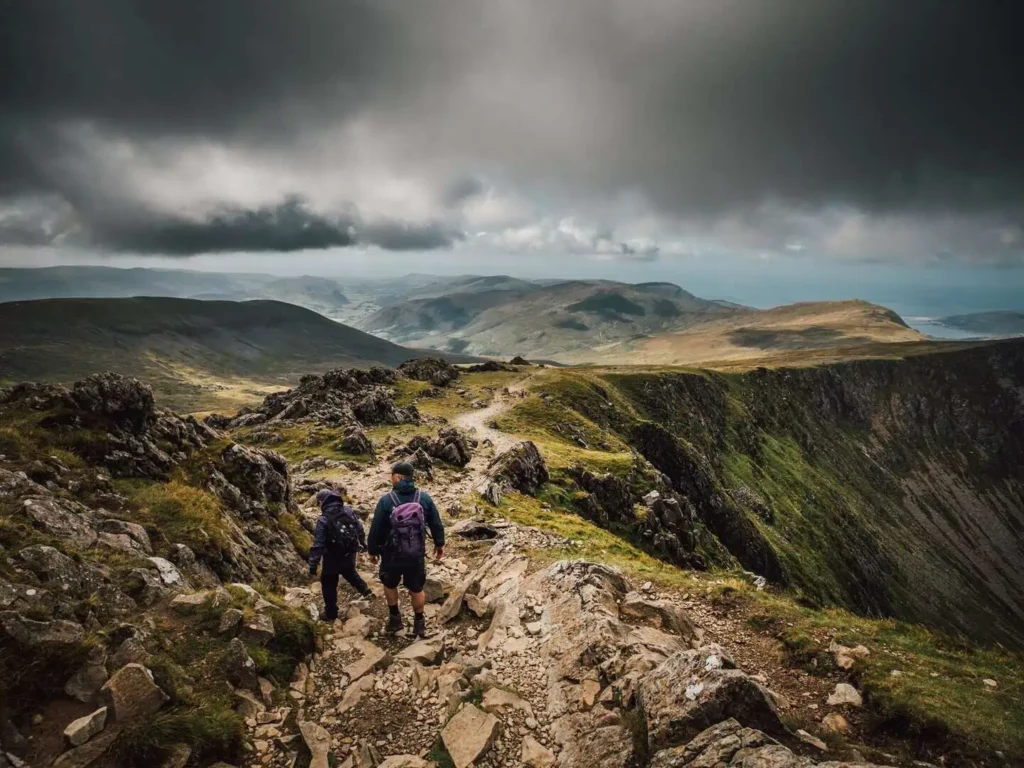
What to Do in Eryri: Activities by Interest
Walking and Hiking
Over 1,500 miles of public footpaths cross Eryri, ranging from flat riverside strolls to technical routes requiring full navigation skills and mountain experience.
1. Yr Wyddfa: the summit question
Six routes reach the top of Wales’ highest peak, each rated Hard/Strenuous by the National Park Authority. Allow 6-8 hours for any of them, even at good fitness levels.
| Route | Distance (return) | Best for |
|---|---|---|
| Llanberis Path | 9 miles | First-timers; most gradual, clearest path |
| Pyg Track | 7 miles | Confident walkers; rugged from the start |
| Miners’ Track | 8 miles | Good for groups; gradual start, steep finish |
| Snowdon Ranger | 8 miles | Quieter alternative to Llanberis Path |
| Rhyd Ddu | 8.5 miles | Least busy route; exposed ridge |
| Watkin Path | 8 miles | Hardest route; not recommended for first-timers |
For most first-time visitors, the Llanberis Path is the right choice: the most gradual, best-signposted and starting directly from the village. The Snowdon Ranger Path is a solid quieter alternative.
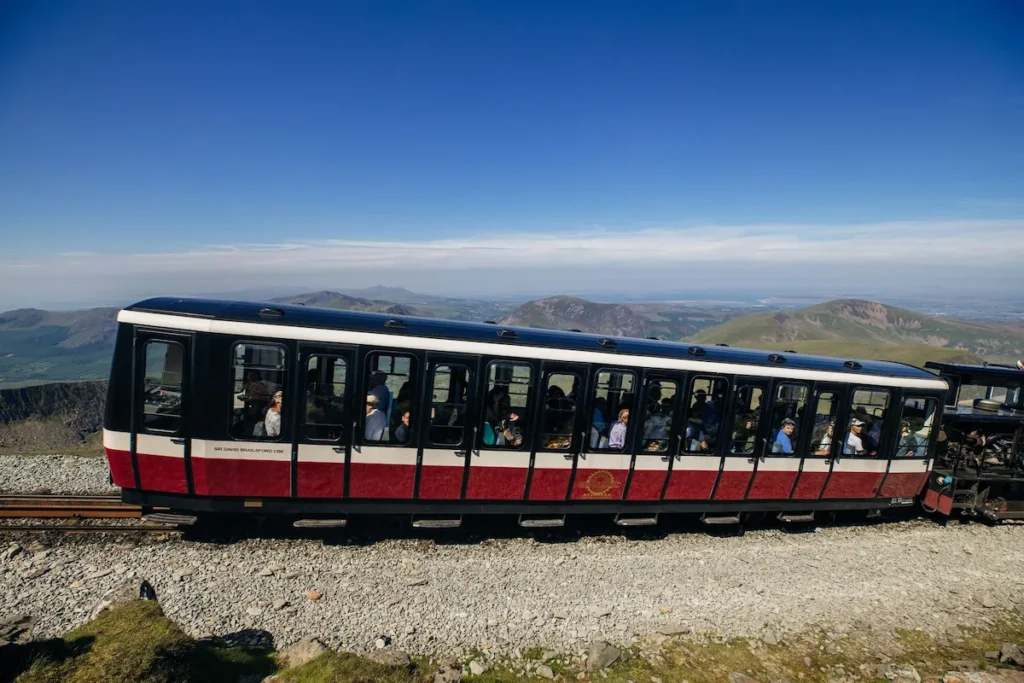
The Snowdon Mountain Railway offers the summit without the walk. The 2026 season runs from 28th March (diesel service) and 4th May (heritage steam), with summit services weather-permitting from 1st May. Return prices start at £45 (adult, off-peak diesel) and £62 (adult, heritage steam). Book in advance at snowdonrailway.co.uk – peak services sell out quickly.
2. Safety: what first-timers need to know
Summit and valley weather are completely different, and conditions can change within an hour. Before any mountain day, check the Met Office Yr Wyddfa summit forecast and the Mountain Weather Information Service (MWIS) – the evening before, and again on the morning.
Take full waterproofs (jacket and trousers, not a shower-proof shell), walking boots with ankle support (not trainers), warm layers, a minimum of two litres of water per person, food, a torch and a downloaded offline map. Tell someone your planned route and expected return time before you leave. Start no later than 10am on peak days; most mountain rescues on Yr Wyddfa happen in the late afternoon when walkers have underestimated the time needed for the descent.
3. Cwm Idwal: the mountain experience without the summit
For anyone who wants dramatic high-mountain scenery without committing to a full summit day, Cwm Idwal in the Ogwen Valley is one of the best walks in the park.
Wales’ first National Nature Reserve, Cwm Idwal is a glacial hanging valley shaped by the last Ice Age, with polished boulders, scree slopes and rare arctic-alpine plants including the Snowdon Lily. The circular walk around Llyn Idwal is moderately strenuous with rough paths and some steep sections, but far less committing than Yr Wyddfa. Dogs are welcome on lead.
4. The Carneddau: the range on your doorstep
The range visible directly from our cottages offers rewarding mountain walking with a fraction of Yr Wyddfa’s footfall. Several peaks exceed 900 metres, the paths are well-established and the semi-feral Carneddau ponies are a genuine highlight. See our dedicated Carneddau guide for detailed route information.
5. Lower-level options
Aber Falls (45 minutes) is a straightforward 2-hour return walk suitable for most fitness levels, finishing at one of the tallest waterfalls in Wales. Gwydir Forest Park offers dozens of waymarked trails through ancient woodland, with several routes passing old lead mine remains.

6. Parking: the practical reality
This is where first-timers most often come unstuck. Pen-y-Pass car park – the start point for the Pyg and Miners’ Tracks – must be pre-booked in advance via the JustPark app from April through October, and peak-weekend slots can sell out weeks ahead.
The best alternative is the Sherpa’r Wyddfa bus, which connects all six Yr Wyddfa trailheads and costs £7.50 for an all-day adult pass. Park at Llanberis or Nant Peris and take the bus to Pen-y-Pass.
Download the JustPark and PayByPhone apps before leaving the cottage – mobile signal in the mountain valleys is unreliable.
Castles and History
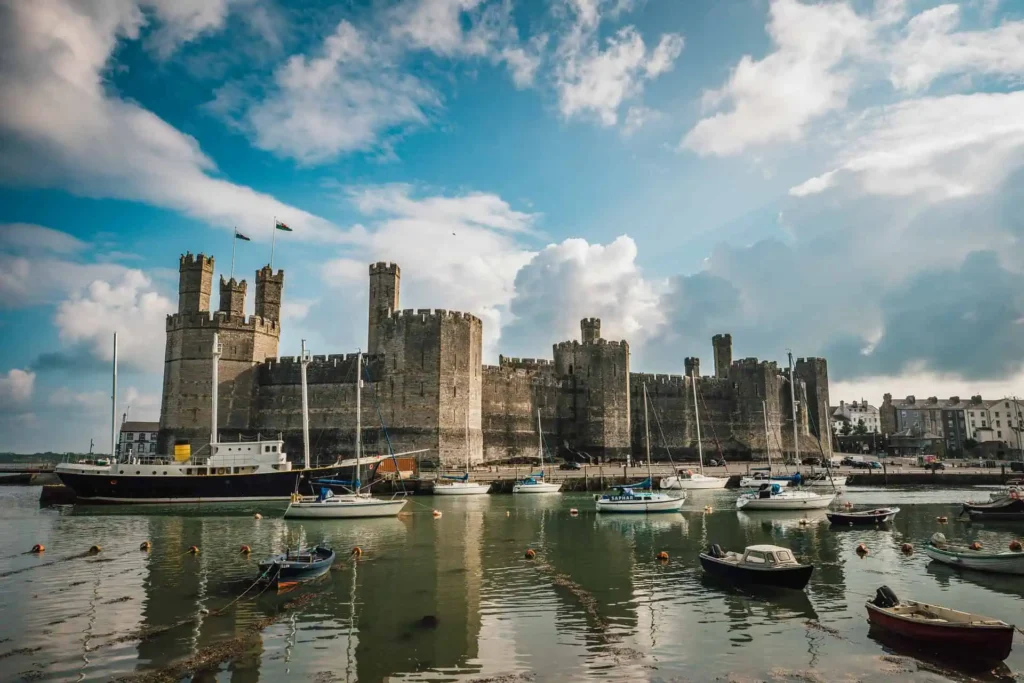
North Wales has a stronger concentration of medieval castles than almost anywhere in Europe. The four UNESCO World Heritage fortresses built by Edward I during his conquest of Wales – Conwy, Caernarfon, Harlech and Beaumaris – each sit within reasonable reach of the Conwy Valley, and each has a distinctly different character.
Conwy Castle (20 minutes) is arguably the most complete medieval fortress in Britain, with the town walls still largely intact. Caernarfon (40 minutes) is built on a grander scale and houses the regimental museum of the Royal Welch Fusiliers. Harlech (50 minutes) sits on a clifftop with views across Tremadog Bay that justify the drive on their own. Beaumaris on Anglesey (50 minutes) is the most technically perfect of the four despite being unfinished, with a concentric moat still filled with water.
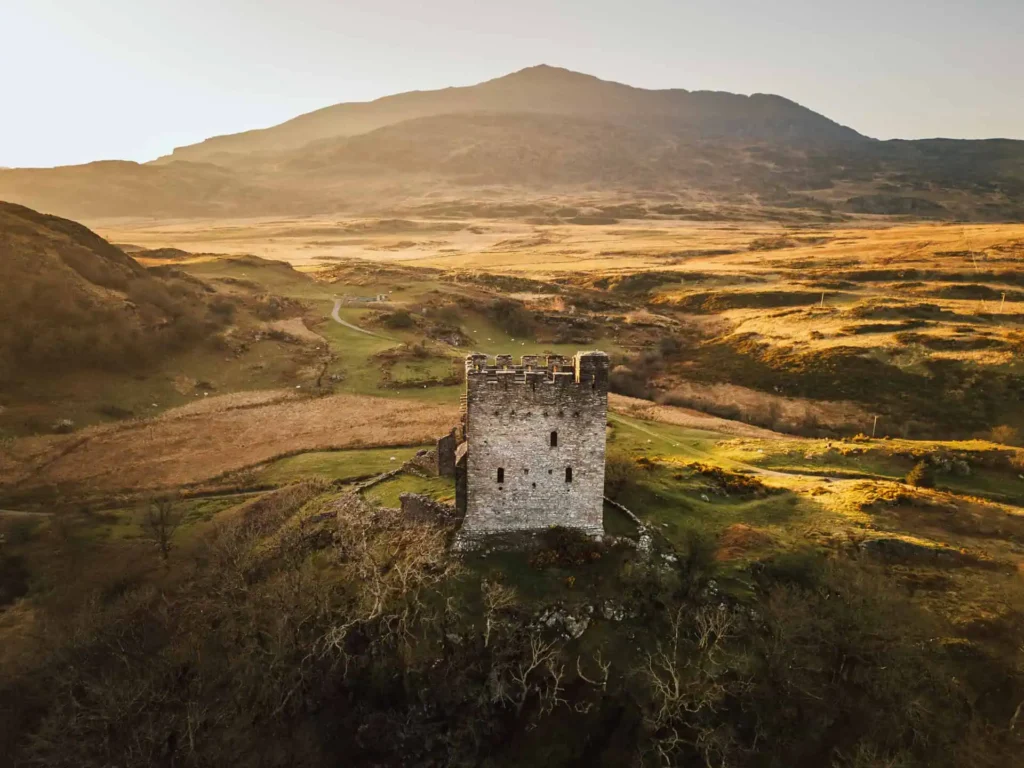
For a different perspective on Welsh history, Dolwyddelan Castle (25 minutes) shows what Welsh princes built before English conquest transformed the country’s architecture. Smaller, older, and far less visited, it sits in a mountain setting that the great Iron Ring fortresses can’t match.
All Cadw-managed sites are covered by the Cadw Explorer Pass – worth checking current prices on the Cadw website before you go.
Family Adventures
The Welsh Mountain Zoo (20 minutes) focuses on conservation rather than spectacle, with red pandas, snow leopards and views across Colwyn Bay that the animals clearly appreciate as much as the visitors.
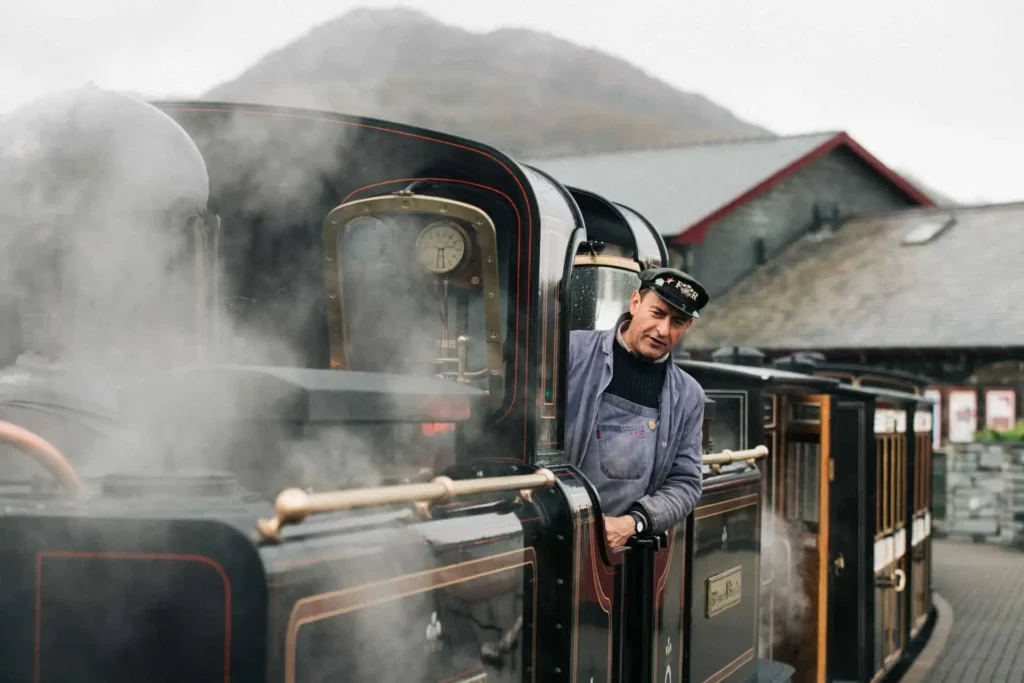
Heritage railways provide scenery without requiring mountain fitness. The Ffestiniog Railway climbs from Porthmadog through tunnels and across Victorian viaducts to Blaenau Ffestiniog; the Conwy Valley Line from Llandudno Junction to Blaenau Ffestiniog passes through Betws-y-Coed on one of the most scenic rail journeys in Wales.
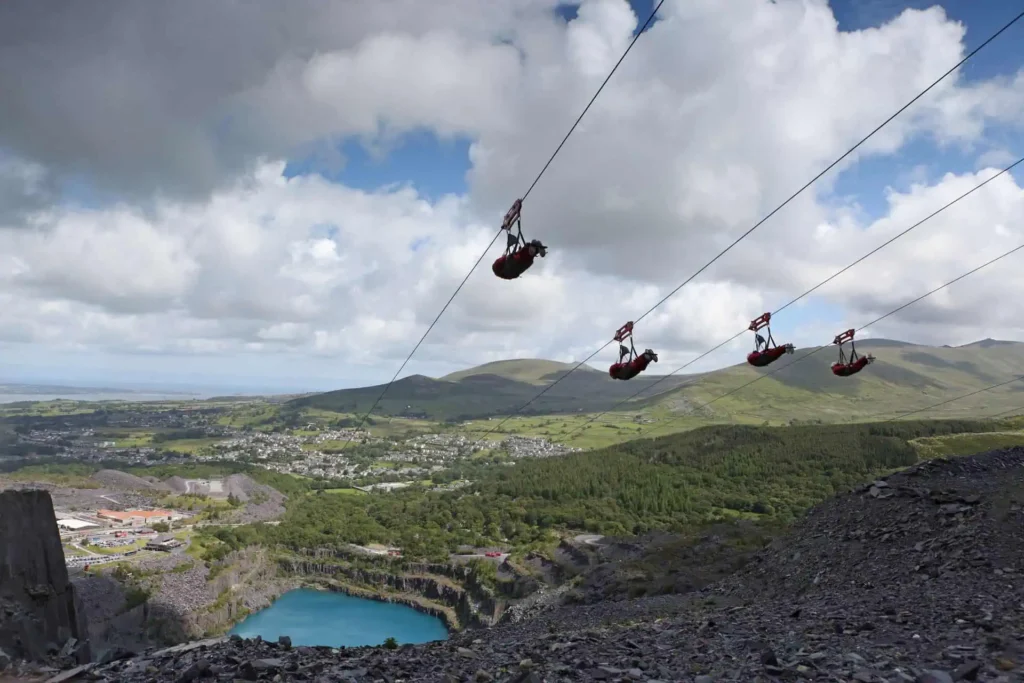
Zip World’s three North Wales sites cover a wide range of ages and appetites. Zip World Betws-y-Coed (20 minutes from our cottages) is the most family-accessible, with a forest coaster, tree adventures and a junior zip line. Zip World Penrhyn (40-45 minutes) is the other end of the spectrum: Velocity 2, the world’s fastest zip line, reaches over 100mph over a flooded slate quarry.
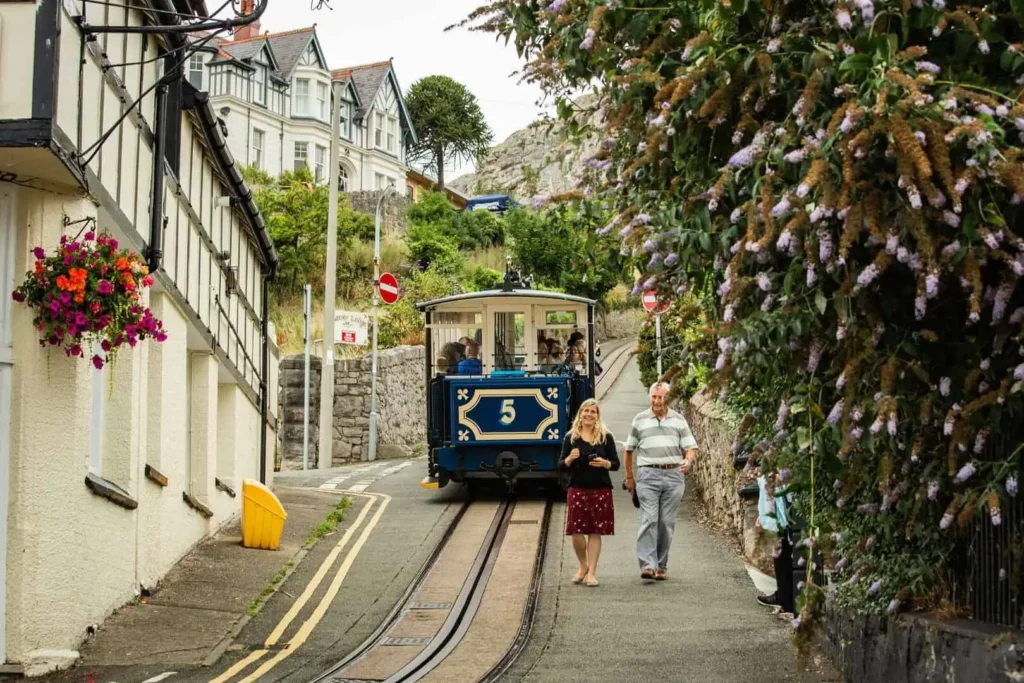
The Great Orme Tramway in Llandudno (25 minutes) is a Victorian cable tramway that has been running since 1902 – genuinely good fun and properly historic.
When the Weather Turns
Welsh rain shouldn’t derail your plans – it should redirect them.
The Llechwedd Slate Caverns at Blaenau Ffestiniog (40 minutes) offer underground zip lines and a Victorian miners’ experience inside a working slate mountain. The Great Orme Bronze Age Copper Mines (25 minutes) are 4,000 years old and genuinely fascinating for adults and children alike. Portmeirion village (70 minutes) – the Italianate fantasy built between 1925 and 1975, and the location for cult television series The Prisoner – makes for an excellent rainy-day trip where the architecture demands your attention more than the sky does.
For a comprehensive list of indoor and weather-resilient options, see our full rainy day guide to North Wales.

Practical Information
1. Parking
Parking causes more frustration in Eryri than almost anything else. Plan for it.
Pen-y-Pass requires advance booking via JustPark from April through October – peak weekends sell out weeks ahead. Most other National Park car parks use pay-and-display. Roadside parking at popular spots is strictly enforced and attracts immediate fines or towing. Download JustPark and PayByPhone before you travel, and add payment details while you have a reliable connection – mobile signal drops out in several of the mountain valleys.
For Yr Wyddfa specifically, check current parking arrangements on the Eryri National Park website before setting off. The park now has a real-time parking availability app. The Sherpa’r Wyddfa bus network removes parking stress entirely for the Yr Wyddfa trailheads.
2. Costs
Eryri National Park entry is free. Budget for:
- Parking: £2-45 depending on location and duration
- Cadw castles: check cadw.gov.wales for current prices; Explorer Pass covers all sites for seven days
- Heritage railways: £15-40 depending on journey
- Snowdon Mountain Railway: from £45 adult return (diesel off-peak) to £62 (heritage steam)
- Zip World activities: £25-95 depending on experience
- Cwm Idwal, Aber Falls, most viewpoints and forest trails: free once parked
3. What to Pack
Mountain weather changes rapidly – summit conditions on Yr Wyddfa are typically 10°C colder than the valley, with stronger winds and frequent rain even in summer. Pack waterproof jacket and trousers (not a shower-proof shell), walking boots for any mountain or upland route, layers (merino or synthetic, not cotton) and plenty of water. For lower-level walking, trail shoes are usually adequate.
Eryri receives over 200 rainy days a year at higher elevations. Pack for rain and treat sunshine as a bonus.
4. Safety
Mountain Rescue responds to around 200 callouts a year in Eryri, most involving inadequate clothing, navigation errors in poor visibility, or slips on wet rock.
Download the OS Maps app for offline navigation. Check the Met Office Yr Wyddfa summit forecast before any mountain day. Tell someone your route and expected return time. Emergency: 999, ask for Police, then Mountain Rescue. Mobile signal in the mountains is unreliable – another reason never to rely solely on a phone for navigation.
5. Dogs in Eryri
Dogs are welcome on most walking routes, including Yr Wyddfa, Cwm Idwal and the Carneddau – keep them on a lead near livestock and near the summit to protect ground-nesting birds and rare plants. Dogs are not permitted inside Cadw castles, though most castle grounds allow them. National Trust properties have varying policies; check before you go. Dogs are not permitted on the Snowdon Mountain Railway (assistance animals excepted).
Read more about visiting the Conwy Valley with your dog in our dedicated guide.

6. Welsh Language
Welsh is the everyday first language for the majority of people in Eryri. Road signs show Welsh names first with English below. Place names describe the landscape: afon means river, llyn means lake, cwm is a valley, bwlch is a pass. English is widely spoken at all visitor attractions. A few words go a long way: bore da (good morning), diolch (thank you), hwyl (goodbye).
For help making sense of the place names you’ll encounter throughout the park, see our guide to Welsh pronunciation.
Sample Days from the Conwy Valley
These work because the distances are short. From our cottages, you’re never more than 45 minutes from a trailhead and always close to the heated indoor pool and private hot tubs at the end of the day.
- An easy cultural day – Morning: Bodnant Garden (10 minutes) – 2-3 hours in the terraces and woodland garden, with lunch at the Furnace café at Bodnant Welsh Food on site. Afternoon: Conwy Castle (20 minutes) – allow 1-2 hours for the castle and a walk along the town walls. Back at the cottages for 5pm.

- An active day on the mountain – Early start for Yr Wyddfa via the Llanberis Path. Park in Llanberis and catch the Sherpa’r Wyddfa bus to Pen-y-Pass if you’d prefer the Pyg Track. Allow a full day: up and back takes most walkers 6-7 hours. Evening: hot tub, long dinner, sleep.
- A forest and waterfall day – Morning: Aber Falls walk from the Coedydd Aber car park (45 minutes from the cottages) – a 2-hour return walk, accessible for most fitness levels, finishing at a 37-metre waterfall. Lunch in Betws-y-Coed (20 minutes back). Afternoon: a walk in Gwydir Forest Park or simply the cafés and outdoor shops of Betws-y-Coed. Back by 5pm.

- A castle and coast day – Morning: Caernarfon Castle (40 minutes) – 2 hours exploring the fortress and town, with lunch in Caernarfon. Afternoon: Great Orme Tramway from Llandudno (25 minutes from Caernarfon) – the Victorian cable car to the summit takes 20 minutes each way and covers the Bronze Age copper mines on the descent. Dinner in Llandudno before the drive back.
- A family day – Morning: Welsh Mountain Zoo (20 minutes) – 3-4 hours, with the zoo café for lunch. Afternoon: beach at Rhos-on-Sea (10 minutes from the zoo) or Conwy Morfa (dog-friendly year-round, 20 minutes). Back at the cottages in time for a swim.
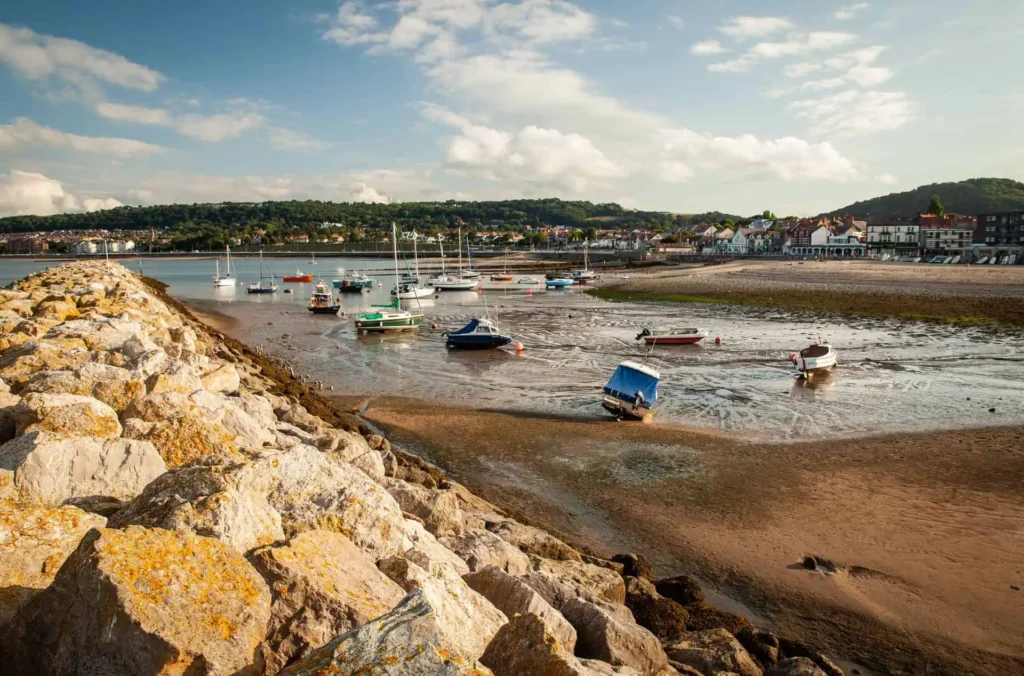
- A weather backup day – Llechwedd Slate Caverns at Blaenau Ffestiniog (40 minutes) – 2-3 hours underground, with the town’s cafés for lunch. Or the Great Orme Copper Mines, the Electric Mountain tour at Dinorwig or simply a morning in Betws-y-Coed followed by an afternoon in the pool.
Seasonal Considerations
🌸 Spring (March-May):
- Lambing season – keep dogs on leads near farmland throughout.
- Late April and early May bring bluebells to the valley floors and lower woodland, and the Carneddau foals are usually born in May. Weather is unpredictable: fine weeks alternate with grey ones.
- Easter brings summer-level crowds at popular spots; mid-April and early May are often quieter.
- The Snowdon Mountain Railway runs to Clogwyn (three-quarters of the way up) from late March, with summit services weather-permitting from 1st May.
☀️ Summer (June-August):
- The longest days and the warmest weather, though rain remains a constant possibility.
- July and August are the busiest months: Yr Wyddfa’s summit can exceed 1,000 visitors a day, Pen-y-Pass car park booking is essential and popular coastal spots fill quickly at weekends. Midweek visits improve almost every experience.
- Best season for wild swimming, though mountain lake temperatures rarely exceed 15-16°C even in August.
🍂 Autumn (September-October):
- One of the best times to visit. Crowds drop significantly after the school summer holidays end in early September, conditions remain good for walking through October and the forest colours in Gwydir are at their best in late October.
- Red deer rutting season (late September to October) offers excellent wildlife viewing on the higher ground. Many regard September as Eryri’s finest month.
❄️ Winter (November-February):
- The quietest season, with lower prices for accommodation and attractions.
- Mountain conditions become serious on the high peaks: ice axes and crampons may be required on Yr Wyddfa from October onwards, and winter routes should not be attempted without proper winter mountaineering skills.
- Lower-level walks, coastal routes and valley attractions remain excellent throughout.
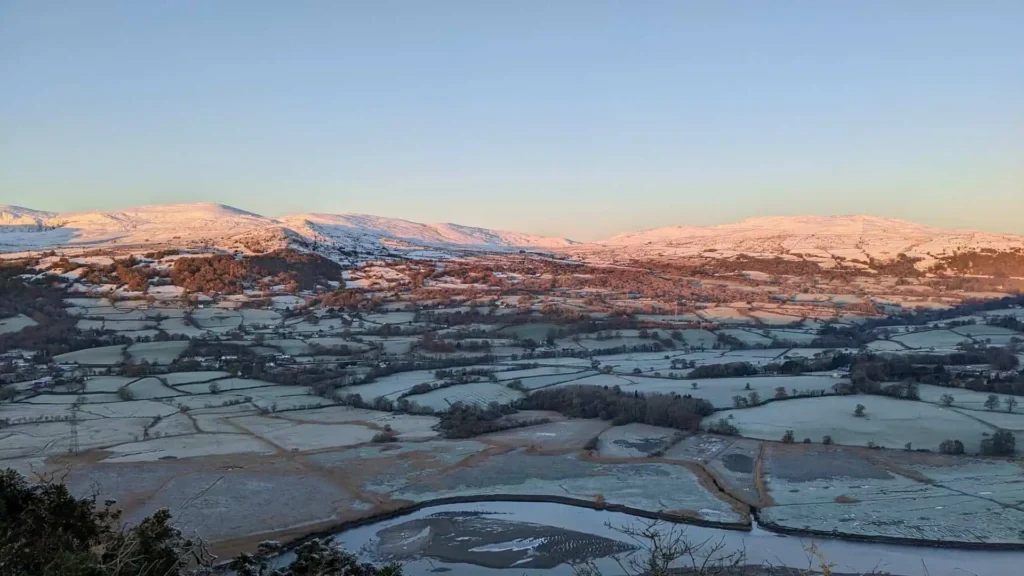
- Shortest days (sunrise around 8:30am, sunset 4pm) limit walking hours but create striking winter light.
Where to Base Yourself
Choosing the right base shapes the whole trip. Stay too deep in the mountains and you’re locked into one part of the park; stay too far from the park and you spend more time driving than exploring.
The Conwy Valley sits in the middle of it all – within straightforward reach of the northern peaks, the forests, the coast and the castles. It’s a position that gives you real flexibility: to follow the weather, change pace mid-week and cover a wide range of the park without long daily drives.
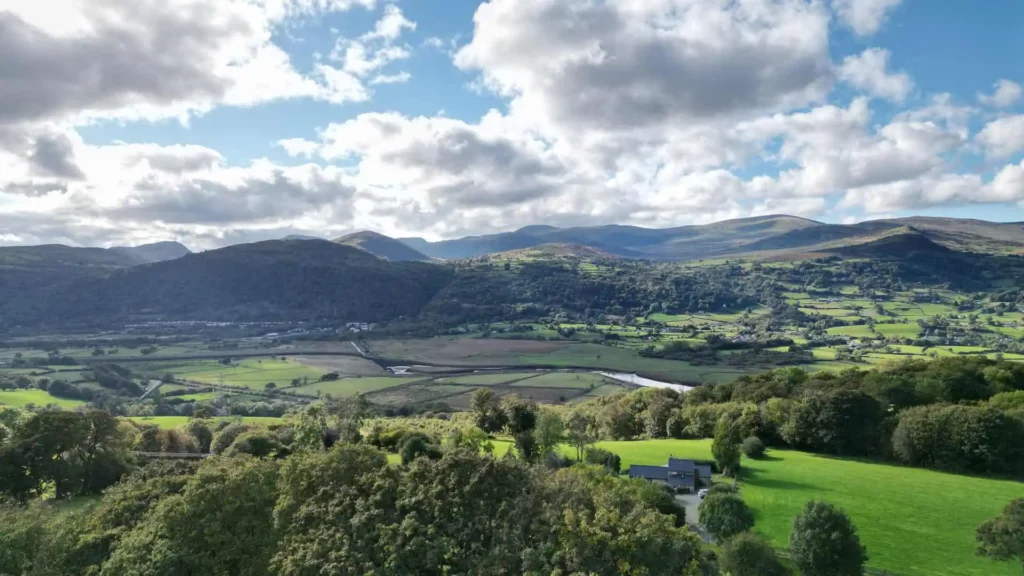
Our two holiday cottages sit just above the valley with the Carneddau range on the northern horizon. The indoor pool and private hot tubs make the base worth returning to at the end of a long day, whatever the weather has done.
Find out more:
- Fig Tree – sleeps 5, open-plan living, ideal for families and groups
- Laurel – sleeps 4, dedicated boot and utility room, perfect for walkers
- The Entire Getaway – both cottages together for up to 9 guests
FAQs
Is Eryri and Snowdonia the same place?
Yes. Eryri is the Welsh name, officially reinstated as the primary name in both Welsh and English in 2022. Snowdonia was an anglicised version derived from the Old English Snawdune (snow hill), first recorded in 1095. Most visitors still search for Snowdonia, but Eryri is the correct current name. Yr Wyddfa is the Welsh name for the mountain previously known as Snowdon.
Do you have to pay to enter Eryri National Park?
No. There are no gates or admission charges to enter Eryri. Individual attractions within the park – the Snowdon Mountain Railway, Cadw castles, the National Slate Museum (closed until later in 2026) and others – have their own separate prices. Parking at National Park car parks carries a charge.
How long does it take to climb Yr Wyddfa (Snowdon)?
Allow a full day. All six routes are rated Hard/Strenuous by the National Park Authority, and a round trip takes most walkers 6-8 hours. The Llanberis Path is the most gradual and the right choice for first-timers. Start no later than 10am – most mountain rescues on Yr Wyddfa happen in the late afternoon when walkers have run out of time on the descent.
When is the best time to visit Eryri?
September and early October offer the best balance of decent conditions and manageable crowds. Spring (April to May) is good for wildflowers and fewer visitors, though the summit railway doesn’t run to the top until 1st May. July and August offer the longest days but the most pressure on car parks and popular spots – arrive early or go midweek.
Can you take a dog to Yr Wyddfa?
Yes, on the walking routes. Keep dogs on a lead near the summit to protect rare alpine plants and ground-nesting birds. Dogs are not permitted on the Snowdon Mountain Railway (assistance animals excepted). Cwm Idwal is another excellent option for dogs, again on lead throughout.
Can you visit Eryri without climbing Yr Wyddfa?
Definitely. Hundreds of lower-level walks, beaches, castles, forests and activities make for excellent visits without any serious mountain climbing. Many first-timers find the Carneddau, Cwm Idwal or the coastal walks just as rewarding – and considerably less crowded. Read our North Wales for Non-Hikers guide for more relaxed adventures.
How many days do you need?
Most visitors need 4-7 days to explore Eryri properly without feeling rushed. That allows for 2-3 mountain or upland days, a castle day, a coastal day and some weather flexibility. A long weekend of 3-4 days works for a focused trip, but the park has too much variety to do it justice in 48 hours.
Some photos: © Crown Copyright