You’ll meet them before you reach the cottage.
Not us. The sheep.
They’ll be standing in the middle of the single-track lane, calmly chewing while you brake and wait. Completely unbothered by your car. Welcome to the Conwy Valley, where Welsh Mountain sheep have lived for thousands of years and genuinely couldn’t care less about your schedule.
This isn’t a tourist quirk. It’s simply how things work here. And once you understand why, you’ll stop seeing them as obstacles and start seeing them as exactly what they are: locals going about their day.

Why Are There Sheep on the Road?
Let’s get the most asked question out of the way first.
In Eryri and across the Conwy Valley, sheep on the road is simply part of life – but for different reasons depending on where you are.
On the higher mountain passes like the Crimea Pass or the roads around Capel Curig, the land is genuinely unfenced common grazing. The sheep have been here longer than the tarmac, and legally, they have the right of way.

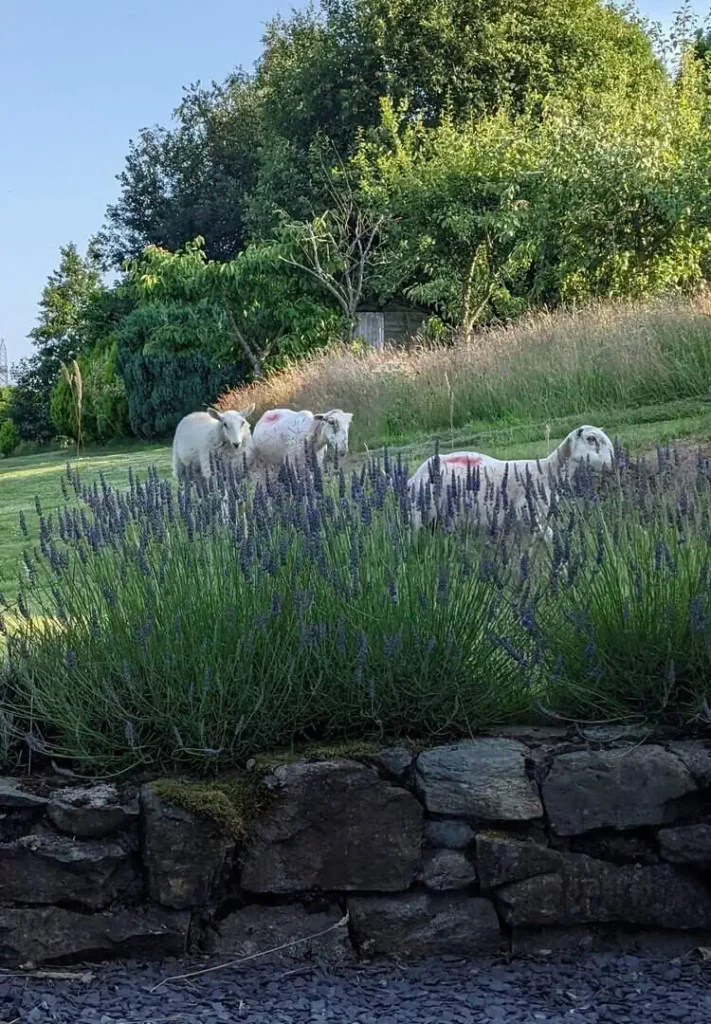
On our lane, it’s a different story. There are fences, but Welsh Mountain sheep treat a four-foot wall as a mild suggestion. They go over, under or through – and occasionally seem to manage all three at once. The result is the same: you’ll round a bend and find a small flock completely unbothered by your presence.
Your job as a driver? Slow down. Be patient. Never honk.
Honking stresses them and makes them scatter unpredictably, which is dangerous for everyone. If they’re licking salt off the winter roads, you wait. If they’re blocking your way to admire the view, you wait. Think of it as enforced mindfulness.
Make eye contact if you like. They’ll stare back. They’re judging your driving.
The Mystery of the Spray Paint
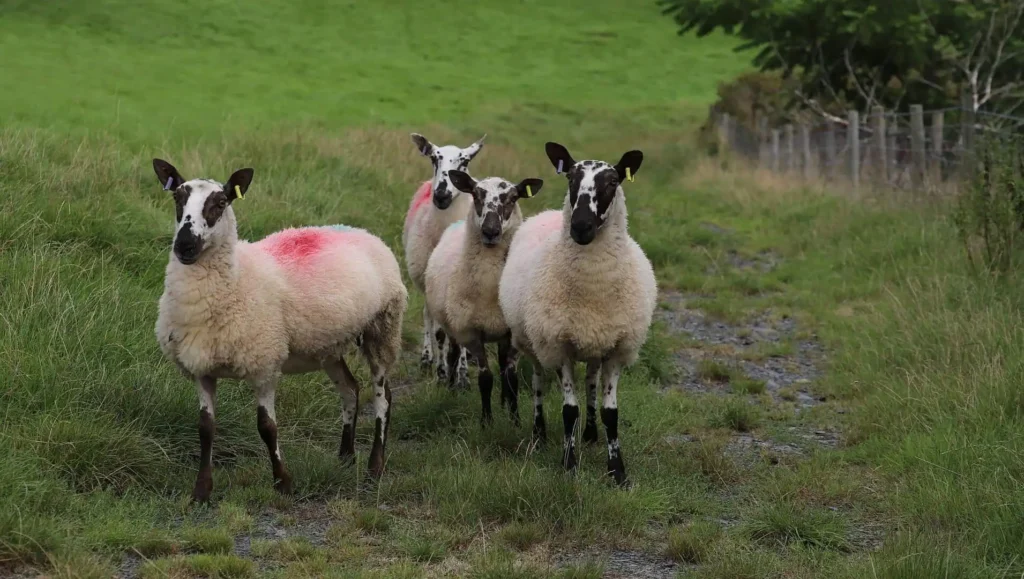
Within your first day in North Wales, you’ll spot a sheep with a bright splash of colour across its fleece. Pink. Blue. Neon green. It looks like graffiti, or some kind of agricultural rave.
Guests always ask us about this. Is it a festival? A fashion statement?
No. It’s farming.

Ownership Marks
On the open mountains where there are no fences, farmers need a way to identify their stock. Each farmer uses a specific colour and pattern. That bright blue blob on the shoulder? That’s not random. It’s saying, “I belong to Dafydd up at Pentre Farm.”
This system works because Welsh Mountain sheep are hefted to the mountain – meaning they’re instinctively bound to a specific area of hillside and rarely wander from it. They know their patch intimately and teach their lambs to stay there too. But when flocks do mix at market or during gathering, the paint tells you exactly who owns who.
Breeding Markers
The second reason for paint is breeding. Rams (tups) wear a harness with a coloured block on their chest. When they mate with a ewe, the paint transfers to her back.
Farmers can then tell at a glance which ewes are pregnant and when they’re due to lamb. Change the colour halfway through the season and you’ve got a rough calendar. Clever, low-tech and completely effective.
So yes, that pink sheep you photographed isn’t making a statement. She’s just been visited by Trevor the ram.
The Great Escapologists
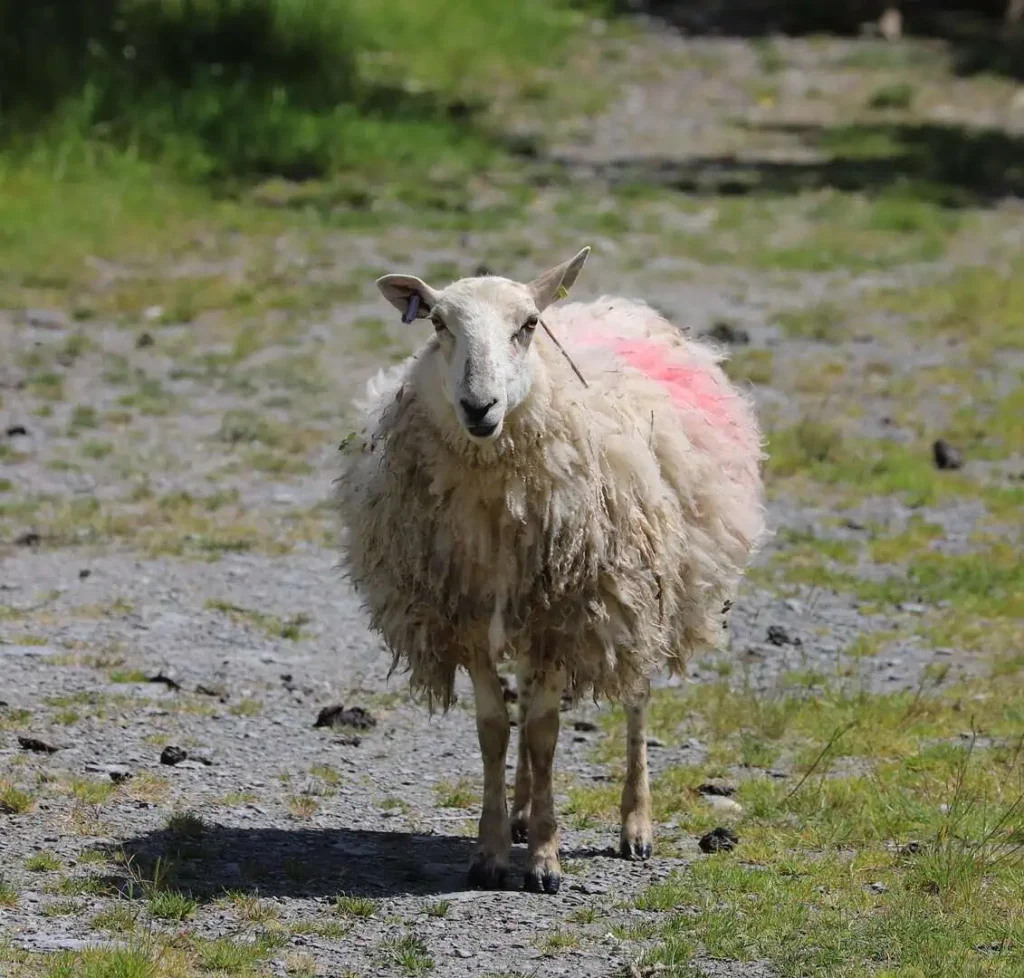
Welsh Mountain sheep are not your average docile lowland breed. They’re agile, stubborn and surprisingly athletic.
They can leap a four-foot wall from a standing start. They can squeeze through gaps you’d swear were too small. They will absolutely find the one weak spot in a fence and exploit it within 24 hours.
This isn’t mischief. It’s survival. These sheep have navigated rocky terrain, avoided predators and endured brutal winters for generations. Farmers here don’t fight it. They just build higher walls.
The Superpower: Cynefin (And Why It Matters)
Here’s where it gets properly fascinating.
Welsh Mountain sheep possess something called cynefin (pronounced kun-ev-in). It’s a Welsh word that roughly translates as “habitat” or “a sense of belonging,” but it goes much deeper than that.
A hefted flock – one that’s bound to a specific area through generations – knows its exact patch of mountain. Not just the general area. The precise slopes, the best grazing, the sheltered hollows. A ewe will graze the same hillside her mother grazed and will teach her lambs to do the same.
This knowledge passes from generation to generation, without fences, without training. It’s instinct and memory woven together. The sheep become part of the mountain, and the mountain becomes part of them.
Farmers treasure hefted flocks because once sheep are bound to their territory through this generational knowledge, they rarely stray. You don’t need to fence the entire mountain. The sheep police themselves.
If a farm is sold, the sheep stay. They’re part of the landscape. To move them would be to break something ancient and irreplaceable.

The Taste (And Why It’s Worth Seeking Out)
All of this history, all of this toughness, ends up on your plate.
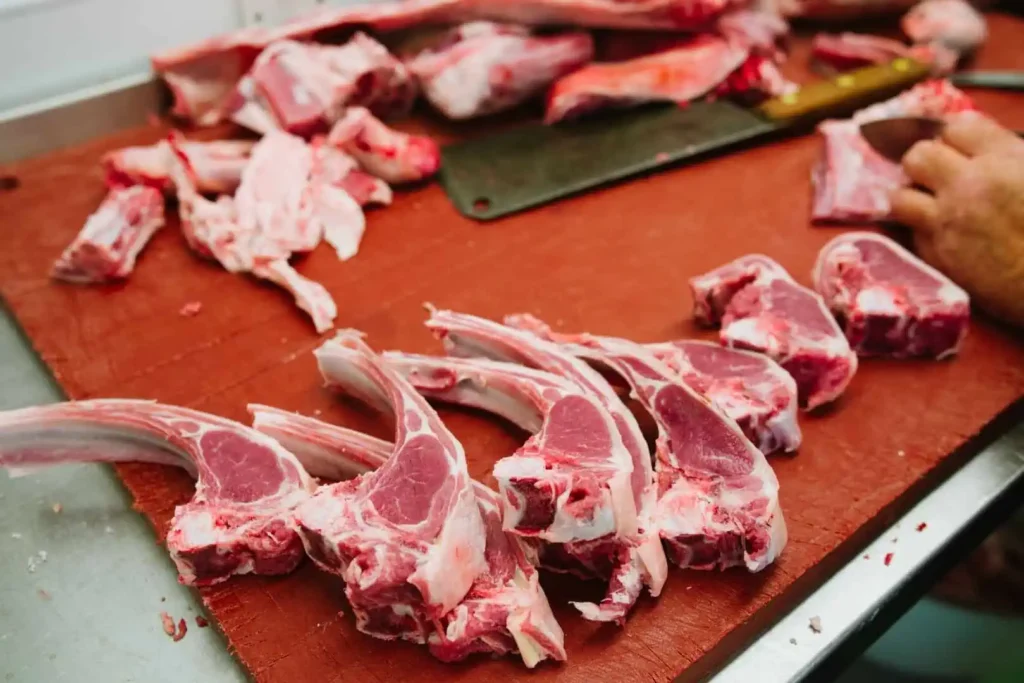
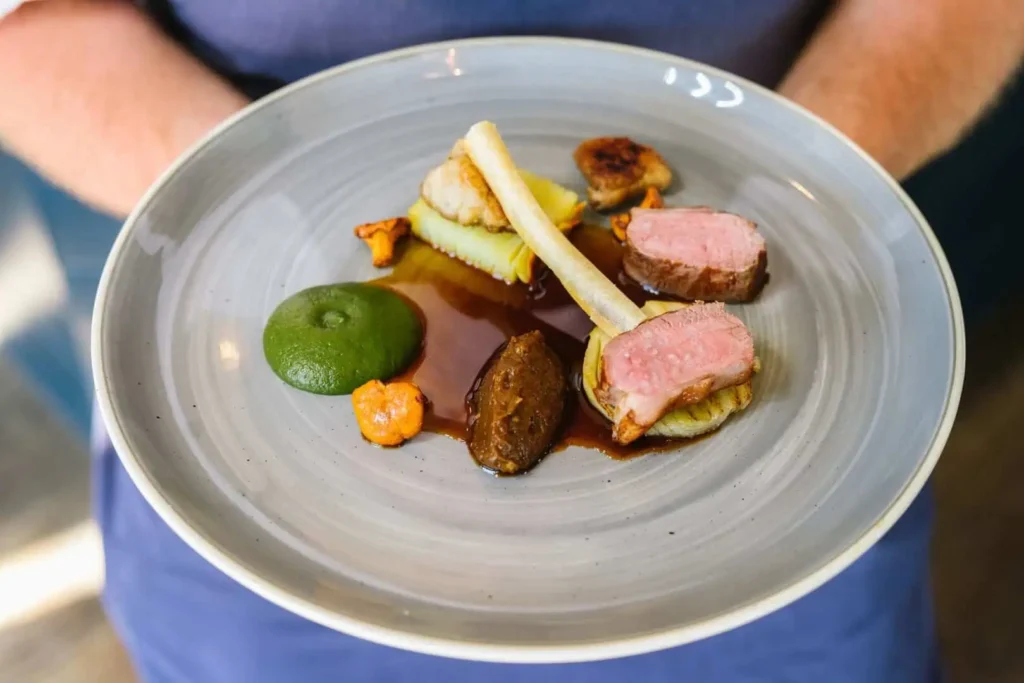
Welsh lamb from the mountains tastes different. It’s leaner than commercial lamb, with a sweet, delicate flavour that comes from wild herbs, heather and sea-salty grass. It’s clean, tender and distinctly Welsh.
Welsh Mountain lamb holds Protected Geographical Indication (PGI) status, recognised across Europe as a product unique to its place of origin. You can’t fake it. It has to come from here.
If you’re staying at Fig Tree or Laurel, the fully equipped kitchens are perfect for roasting a leg of lamb with rosemary and garlic. You won’t get this quality in a hotel kitchenette.
Where to Buy the Best Welsh Lamb
Edwards of Conwy on Conwy High Street is a legendary butcher with exceptional Welsh lamb and staff who’ll talk you through cooking it. Bodnant Welsh Food Centre, a 10-minute drive from the cottages, has an outstanding butchery counter and a restaurant if you’d rather let someone else do the work. Local farm shops across the valley also sell lamb direct, often cheaper than supermarkets and incomparably fresher.
And while you’re thinking about wool, Trefriw Woollen Mills weaves traditional Welsh blankets on Victorian looms. It’s a satisfying, tangible connection between the sheep on the mountain and the craft in your hands.
Celebrating the Woolly Icons
On March 1st, Wales celebrates St David’s Day, the feast day of Wales’ patron saint. There are parades, daffodils, Welsh cakes and a lot of pride in what makes Wales distinct.
But here’s the thing. St David’s Day isn’t just about the saint. It’s about the landscape, the language, the traditions that have survived against the odds. And these woolly, stubborn, brilliant sheep are a huge part of that identity.
They’re not decorative. They’re not a tourist gimmick. They shape the way this land looks, the way it’s farmed, the food you eat and the roads you drive on.
So when you’re crawling along at 10mph behind a slow-moving flock, try to see it differently. You’re not stuck in traffic. You’re being introduced to the locals.

A Few Practical Tips for Driving With Sheep
Slow down on mountain roads, especially at dawn and dusk when sheep move between grazing areas. Never honk. If a flock is being moved by a farmer and their dog, pull over completely and turn off your engine. If a sheep is lying in the road, it’s there for a reason (usually warmth or salt). It will move when it’s ready.
Enjoy it. You’re not going to get this on the M25.
Respect them. Slow down for them. Buy their wool. Roast their lamb. And if one refuses to move, take a photo. That’s not an inconvenience. That’s North Wales saying hello.
Ready to meet the locals? Check availability at Fig Tree and Laurel and experience the Conwy Valley the way it’s meant to be seen.
FAQs
Why are sheep loose on the roads in North Wales?
Many minor roads, single-track lanes and mountain passes in Eryri (Snowdonia) pass through common grazing land where there are no fences. The sheep have lived here for thousands of years and have legal right of way. Drivers must be vigilant, patient and prepared to stop.
What do the colours on sheep mean?
The spray paint identifies ownership, which is essential on unfenced mountains where multiple farmers’ flocks graze together. It also indicates breeding status. Rams wear paint harnesses, so a marked ewe shows she’s been mated and is likely pregnant.
Is Welsh lamb the best in the world?
We’re biased, but yes. Welsh Mountain lamb grows slowly on wild herbs, heather and sea-salty grasses, giving it a distinct sweet flavour and lean texture. It holds Protected Geographical Indication (PGI) status, recognizing its unique quality and connection to this landscape.
What does ‘cynefin’ mean?
Cynefin (pronounced kun-ev-in) is a Welsh word meaning a deep sense of habitat and belonging. Hefted flocks of Welsh Mountain sheep know their specific patch of mountain and pass this knowledge down through generations, grazing the same slopes their ancestors did without needing fences.
Where can I buy Welsh lamb near the Conwy Valley?
Edwards of Conwy (butcher on Conwy High Street), Bodnant Welsh Food Centre and local farm shops across the valley all sell exceptional Welsh Mountain lamb. Ask for cooking tips, and don’t be shy about buying direct from producers.
Some images: © Crown Copyright